Vachetta Leather: What It Is and How It Ages
Vachetta is vegetable tanned cowhide. The name is Italian, from vacchetta, and in the trade it describes the tannage and the hide rather than a particular colour or finish.
Most people meet it as the pale, undyed leather used for the handles and trim of certain luxury bags, which starts almost blonde and darkens dramatically with use. That is the most famous vachetta and it is only one version of it.
The word tells you how the hide was tanned. It does not tell you how it was finished, and those are separate decisions. A vachetta can be left undyed, dyed through with transparent dyes, given a light pigment coat, or fully pigmented. Only the first two will develop a patina.
What is vachetta leather?
Vachetta is cowhide cured with plant tannins over weeks rather than hours, and it is associated above all with Tuscany, where the vegetable tanning tradition runs deepest.
And here is the part worth reading twice, because it is the difference between buying what you think you are buying and not.
Vachetta describes the tannage. The finish is a separate decision, and all four are possible:
| Finish on a vachetta | What is on the surface | Will it patina |
|---|---|---|
| Undyed | Nothing | Yes. The classic, and the most dramatic |
| Aniline, transparent dyes | Colour through the fibre, no pigment | Yes |
| Semi-aniline | A light pigment coat | No |
| Pigmented | A full opaque coat | No |
The tannins that respond to light sit in the leather regardless. What decides whether they can respond is whether anything is covering them. A transparent dye colours the fibre through its thickness and leaves the grain reachable. A pigment coat, however light, is a layer over the top, and the reaction has no route to the leather.
So vachetta alone is not a promise that a piece will age. It is a promise about how the hide was tanned. If the ageing is what you want, the question to ask is what finish is on it, and the answer you want is undyed or aniline.
When a vachetta is aniline or undyed, all three conditions for a patina are present at once: vegetable tanned, full grain, and no pigment between the leather and the world. That combination is what people are really pointing at when they use the word, and it is worth knowing that the word does not guarantee it.
What vachetta is made of, and how
Three decisions make a vachetta, and all three are made before a maker ever cuts it.
The hide. Cattle hide, and the quality has to be high, because there is no finish to hide behind. Hides from cooler climates tend to have denser collagen and a tighter grain.
The tannage. Plant tannins, drawn from barks such as chestnut and mimosa, worked into the hide in drums over weeks. The tannins bind through the full thickness. They are also what makes the leather light sensitive, and therefore what makes patina possible.
The finish, which is chosen separately. For a vachetta meant to age, either no colour at all or transparent dyes that saturate the full thickness rather than coating the surface, leaving the grain legible. In other words, aniline. A pigment coat is equally possible and produces a vegetable tanned leather that will not mature.
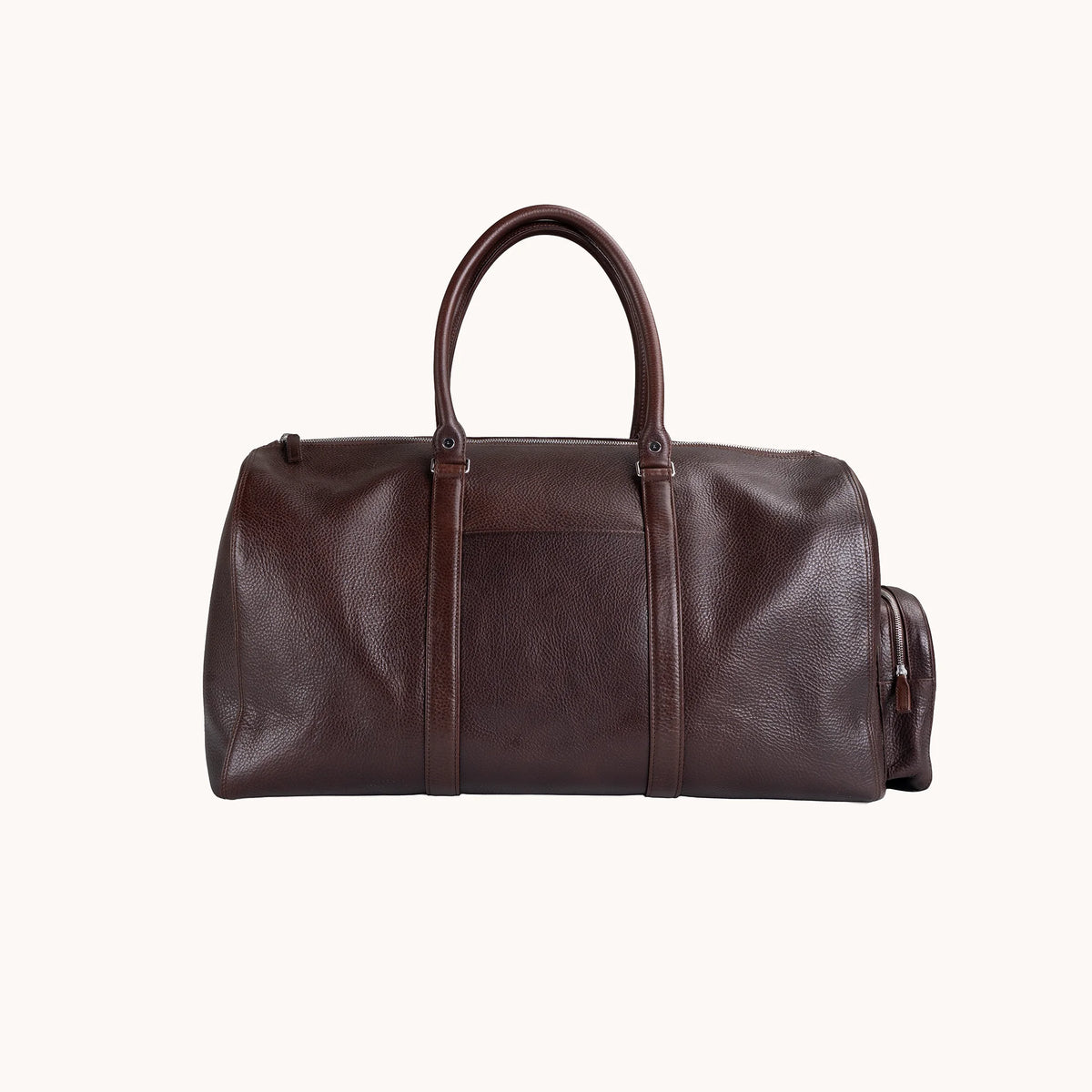
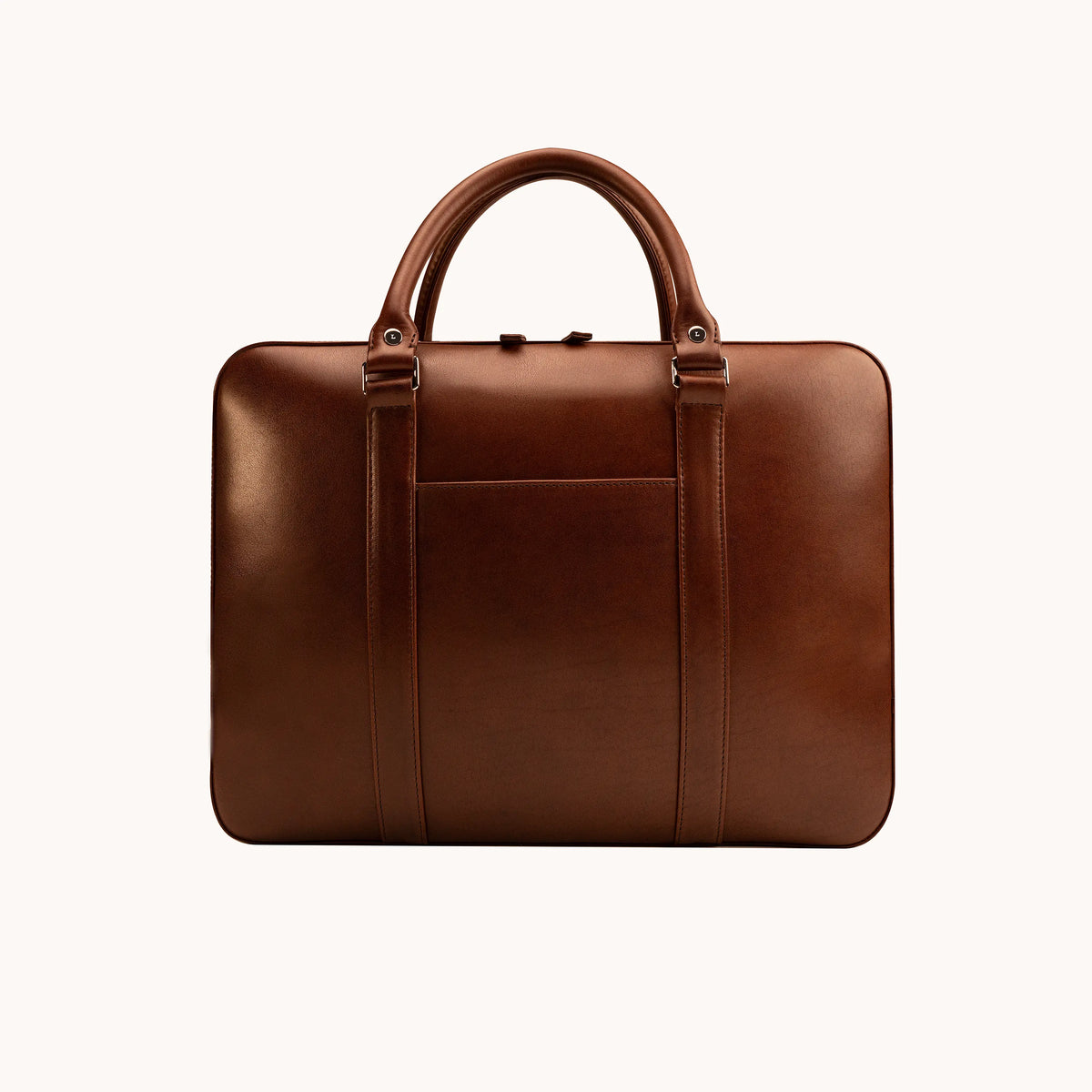
Our own Perpetual Leather is made this way: full grain vachetta selected from the double-bend core, the strip along the spine where the fibre runs most uniformly, at 2.0 mm, and tanned over forty days.
Is vachetta real leather?
It is about as real as leather gets, and the confusion runs the opposite way from usual.
People sometimes assume that unfinished means unfinished business, that a surface without a coating must be a cheaper one. In practice it is the reverse: only a good hide can be sold without a finish, because a finish is what conceals a poor one.
How vachetta ages
This is why anyone chooses it.
Vachetta darkens. An undyed hide begins pale and moves through honey into a deep amber. A dyed one deepens from wherever it started, and the change is no less real for beginning somewhere other than blonde. Either way it happens unevenly, faster where the piece is handled and where light falls. Edges polish. The grain reads more strongly with time than it did when new.
The mechanism is the tannins. They are light sensitive, and under daylight they change, deepening the colour of the leather from within rather than on its surface. Handling does the rest: warmth, pressure and friction raise a lustre where the piece is held.
None of this can be applied at the tannery and none of it can be rushed. It is the record of one object being carried by one person, and it will not be repeated on another piece.
Water marks and darker spots are part of the same story. An open grain absorbs, so a drop of rain will leave a mark. Most fade as the surrounding leather catches up. Some do not, and become part of the record.
The one thing that genuinely damages vachetta is what damages any leather: sustained heat and prolonged direct sun. Ordinary daylight and ordinary use are exactly what it wants.
How to clean and care for vachetta
Less than you think, and the temptation to intervene is the main risk.
- Keep hands clean before handling a new piece. The first months set the tone of the patina.
- Dust with a dry soft cloth. Nothing damp on new vachetta, which water-marks easily until it has darkened.
- Let marks settle before treating them. Most even out. Acting immediately usually leaves a worse mark than the original.
- Work a light scuff away with warmth and gentle pressure, using a clean finger or a soft cloth. The leather is capable of absorbing minor marks.
- Condition rarely, and lightly. Twice a year is plenty. Test on a hidden area first, because anything applied to vachetta will darken it.
- Store it away from radiators and out of direct sun, and let it be carried. A vachetta piece kept in a dust bag develops nothing at all.
Related reading
Leather patina · Italian leather · Aniline leather · Leather conditioner and oils
Read more

Top-Grain Leather: What It Is, and How It Compares
Taken from the outer layer with the surface sanded away. What that costs is the grain and any patina. What it does not cost is strength.
Read more
Corporate Gift Ideas: Choosing for the Recipient, Occasion and Budget
A practical guide to choosing high-end corporate gift ideas by recipient, occasion, format, personalisation, presentation and total budget.
Read moreExplore our Folded Edge Creations