
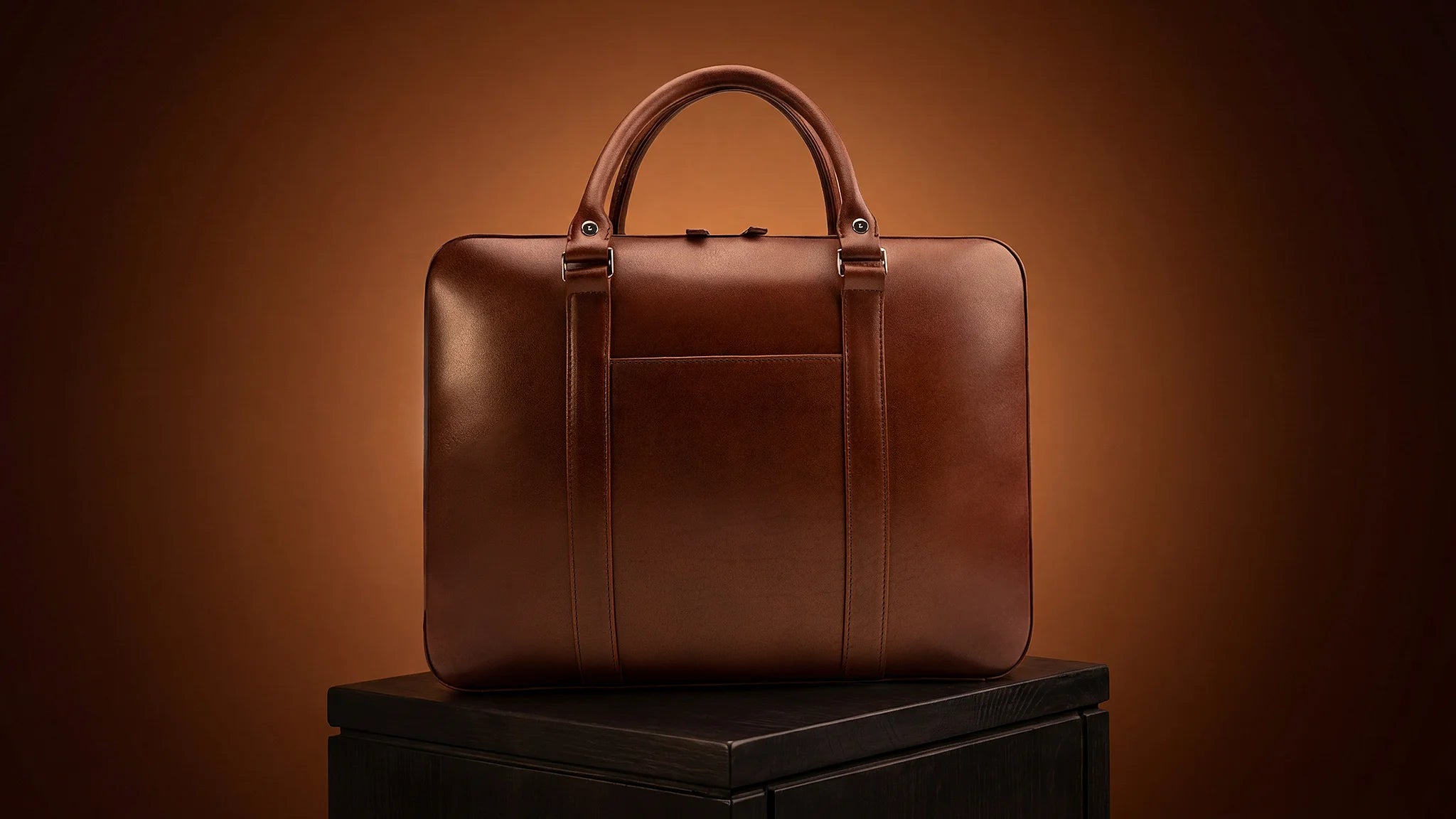
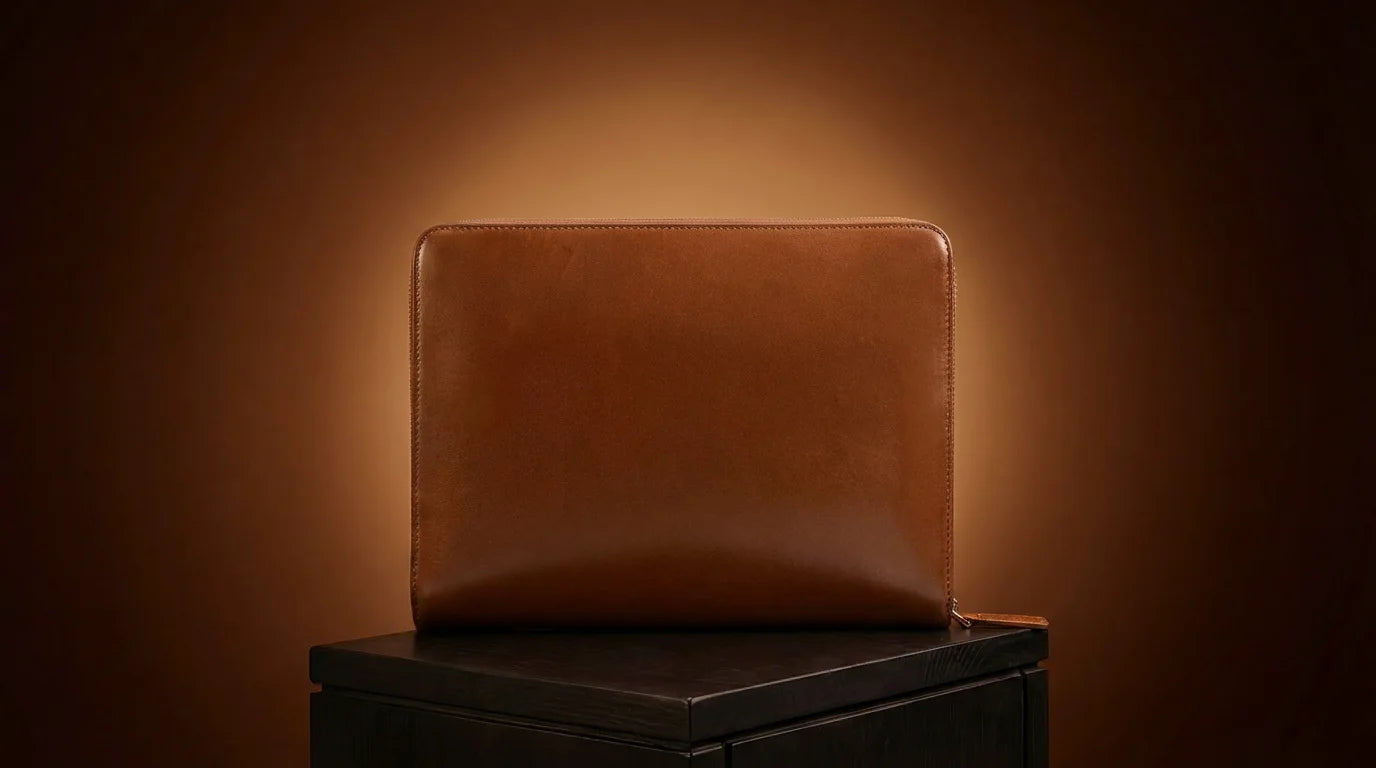

The Lunburg Artisan Fund
Where Patronage Becomes Preservation
Forty percent of the profits of every commission returns to the infrastructure of the craft itself.
This is not philanthropy. It is necessity. The techniques that define Fassi Haute Maroquinerie exist only in the hands of those who carry them. When a Master Artisan retires without successor, a thread of twelve centuries is severed. The Lunburg Artisan Fund exists to prevent that severance: to ensure that knowledge transmits, that masters endure, and that the next generation inherits what this one still holds.
The Four Pillars

The Master Cohort
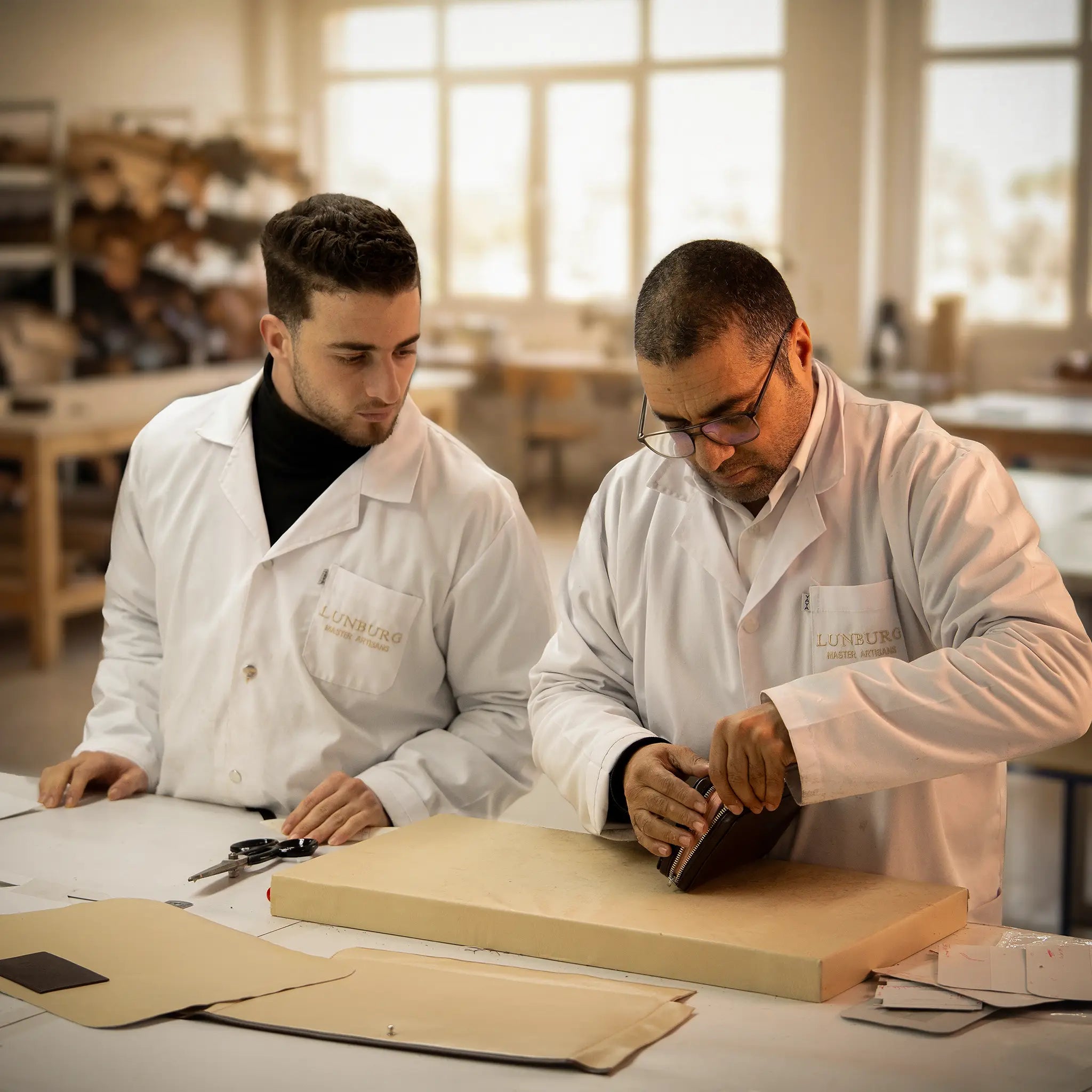
The foundation is the masters themselves. Today, six Master Artisans form the core of our Fes atelier. By the close of 2026, our goal is to grow that number to twenty-five, and to one hundred masters by end of 2027, each compensated at least forty percent above regional standard. Every master mentors at least two apprentices.
Excellence must be retained before it can be transmitted.
The Apprenticeship Program
Heritage knowledge requires years, not months. Beginning in 2026, we aim to engage fifty apprentices in three-year paid formations, pairing with masters in the tradition of the Fassi guild system. Selection is rigorous; only those who demonstrate the discipline and dexterity required are admitted.
The Fes School of Master Artisans
The Fund will establish a new institution. Our aim is to welcome the first cohort in 2027: a centre where twelve centuries of heritage formation meets contemporary materials science. The curriculum will integrate traditional technique with CAD modeling, stress simulation, and bio-materials research. We believe Fes can set the global benchmark for artisan mastery again.
Artisan Welfare and Resilience
No master should abandon the craft due to hardship. Beginning in 2027, the Resilience Fund aims to provide zero-interest loans, health coverage, survivor benefits, and education bursaries for artisan families.
The Cycle of Goodness
When you commission a Lunburg piece, you enter this cycle. Your patronage funds the masters; the masters transmit the craft; the craft creates the object you hold.
Ownership becomes preservation. The knowledge endures.
Common Questions About the Artisan Fund
We take this commitment seriously enough to build governance around it. Beginning end of 2026, a detailed annual report will document how the Lunburg Artisan Fund is allocated across all four pillars. We are also establishing a Board of Patrons, composed of principal investors, partners, patrons, and independent craft experts, who will participate directly in the Fund's strategic decisions. This is not internal reporting alone. It is external accountability, designed to ensure that the forty percent commitment is honoured transparently and with rigour.
The masters already exist. Fes holds one of the highest concentrations of skilled fine leather artisans in the world. The crisis is not a lack of mastery but an exodus: artisans abandoning the craft due to conditions that approach modern exploitation, including widespread undeclared employment that strips them of basic rights. Every artisan in our atelier is fully declared with complete legal protections and compensation forty percent above regional standard. We onboard existing masters first. The apprenticeship programme and Fes School of Master Artisans then sustain long-term growth by making the craft genuinely attractive to a new generation.
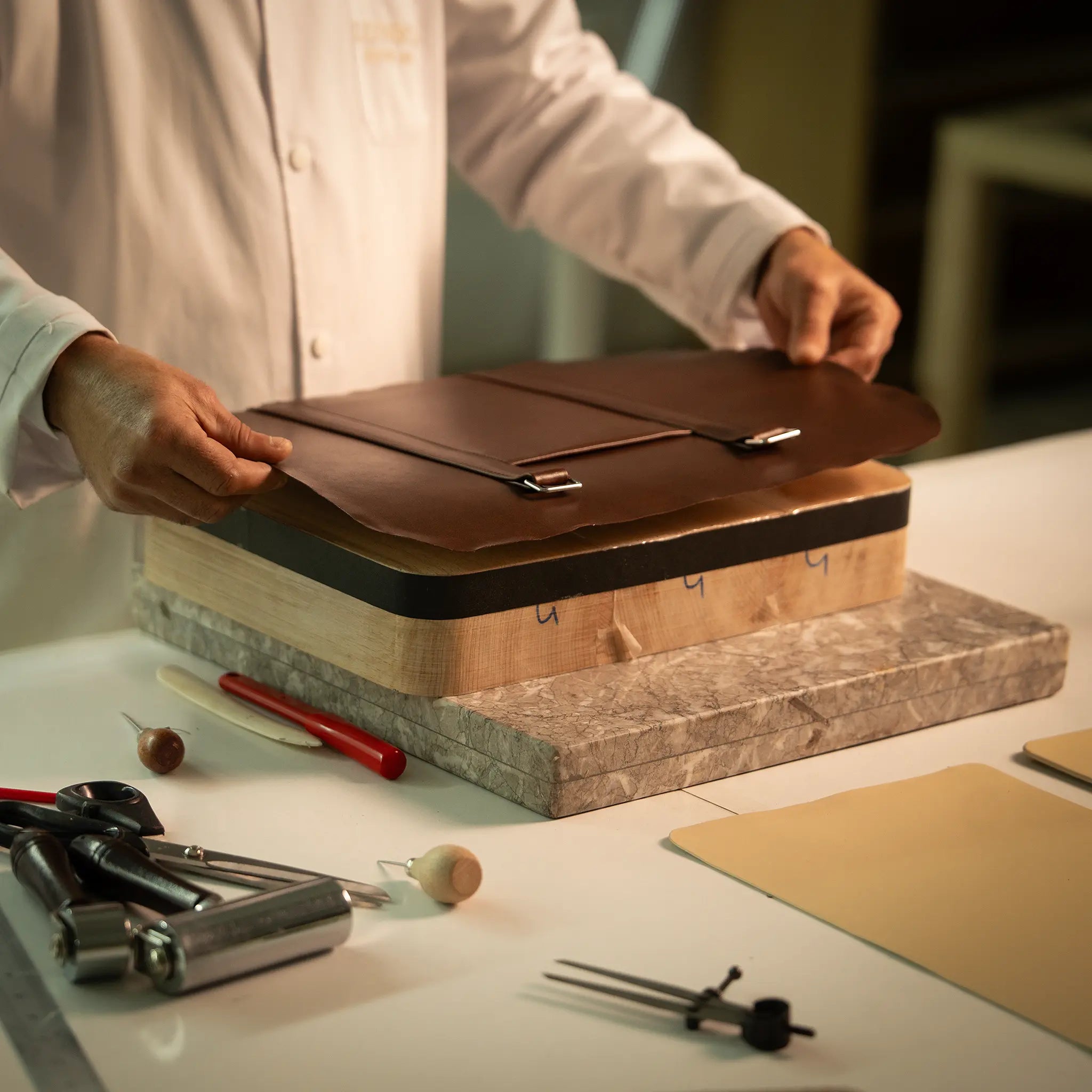
Aniline vegetable-tanned leather is unsealed and reactive. It responds to temperature, humidity, and the pressure of every tool. The artisan must read these variables in real time, adjusting skiving depth, folding pressure, and strike force to conditions that shift with each hide and each hour. Rempliage compounds this further: four to six layers must converge into an edge no thicker than the original surface, calibrated to 0.1 mm (0.004 in). No technology replicates this sensory judgement. CAD and materials science support the process around it.