
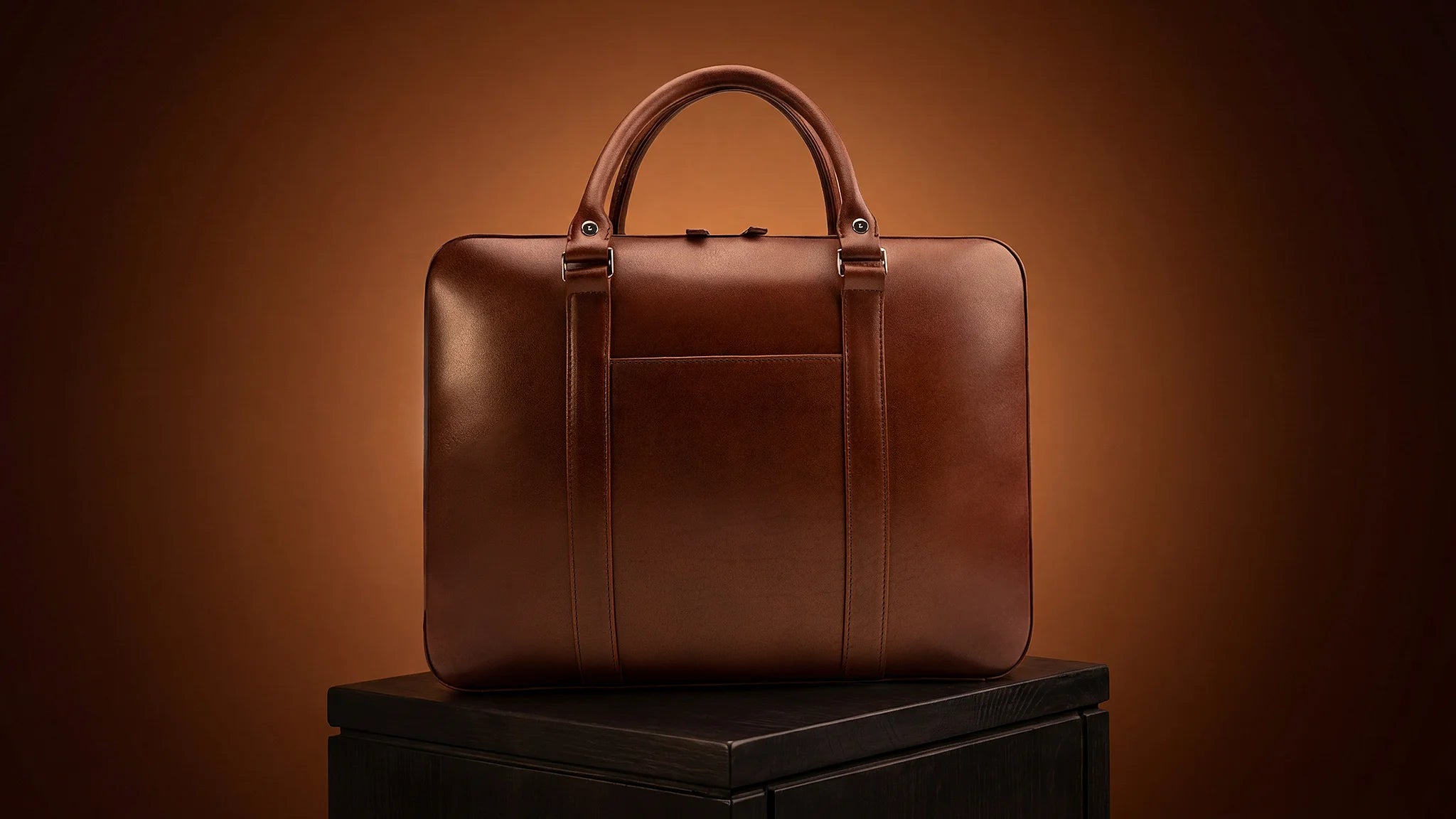

The Seven Dimensions of Perpetual Leather
True patina is not an accident of time; it is the result of intention at every level.
Patina is the visual and tactile maturation of leather: the deepening of color, the emergence of luster, the softening that transforms an object into something singular. Many leathers claim this quality. Few are built for it.
We spent a year studying leather's biology and chemistry, and the result is Perpetual Leather: a material engineered across seven dimensions to record, respond, and mature. It is realized by our world-renowned partners at Tempesti, a Tuscan artisanal tannery founded in 1946.

Provenance
A Foundation of Strength
The hide must begin with strength. Perpetual Leather originates from Northern European farms, where cooler temperatures produce cattle with denser collagen structures. These hides arrive as byproducts of the food industry; nothing is raised for leather alone. Strict cold-chain protocols preserve cellular integrity from farm to tannery, ensuring the foundation is sound before transformation begins.

Structure
The Architecture of Permanence
We select only full-grain Vachetta from the double-bend core: the section along the spine where fibers run most uniformly. This area yields leather of consistent density, capable of holding architectural form without distortion. Each hide is selected at 2.0 mm (0.08 in) thickness. This substance provides the structural memory that lesser cuts cannot sustain.

Transformation
Guided by Hand and Heritage
Ninety percent of the world's leather is tanned industrially, a process completed in hours. Ours requires forty days. In wooden drums, the hides rotate slowly through chestnut and mimosa extracts while artisans monitor and adjust the composition by hand; the precise formula, refined over generations, remains the tannery's closely guarded secret.
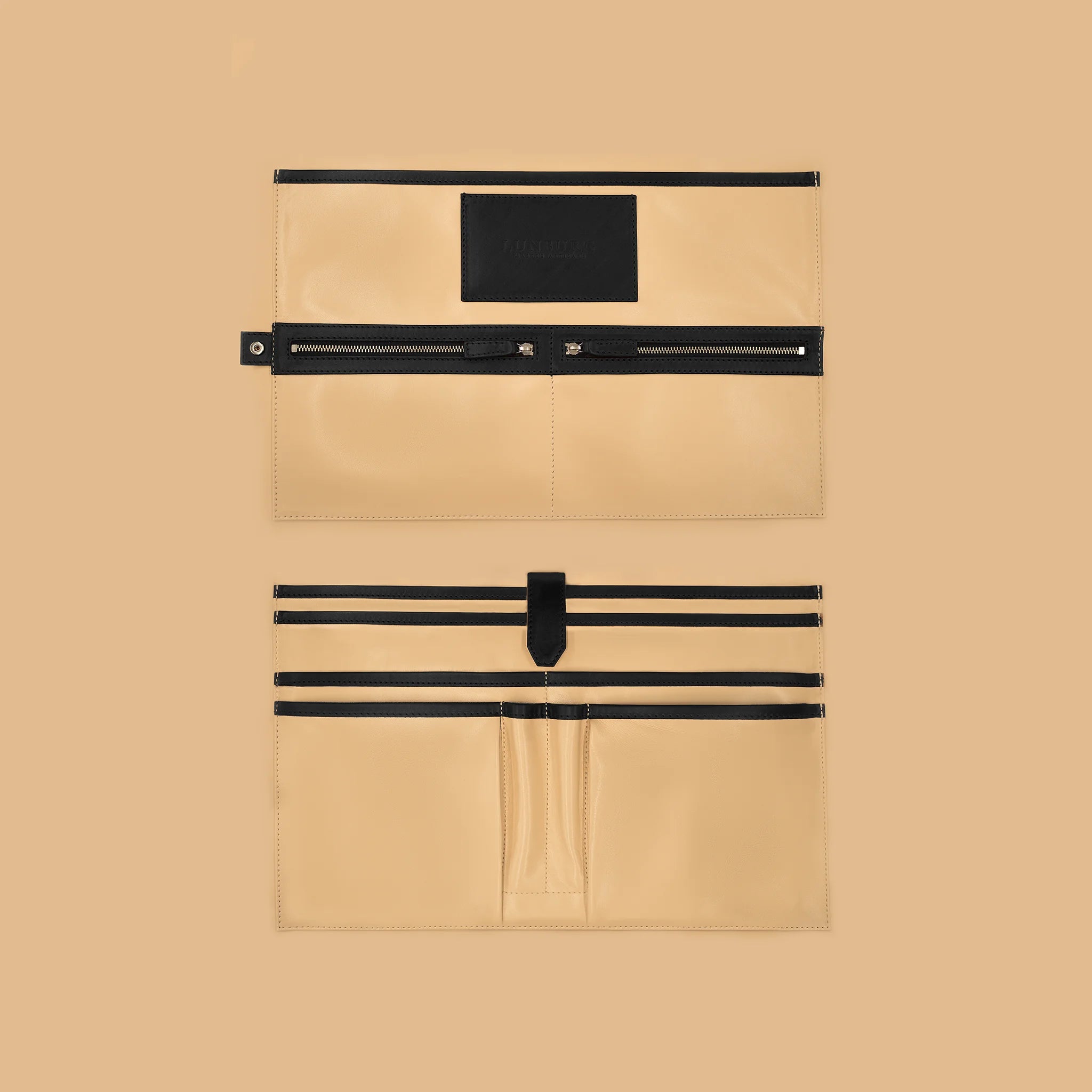
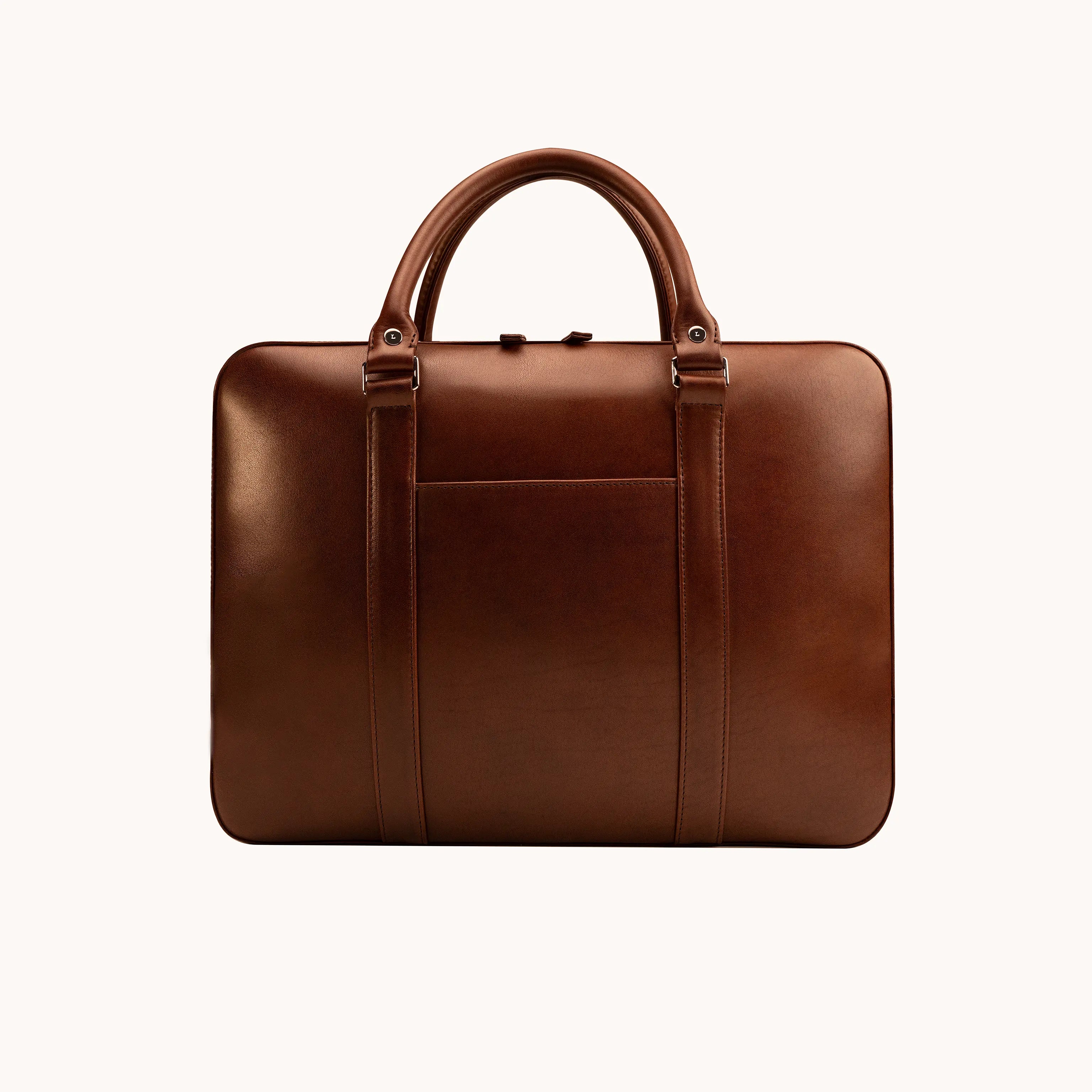
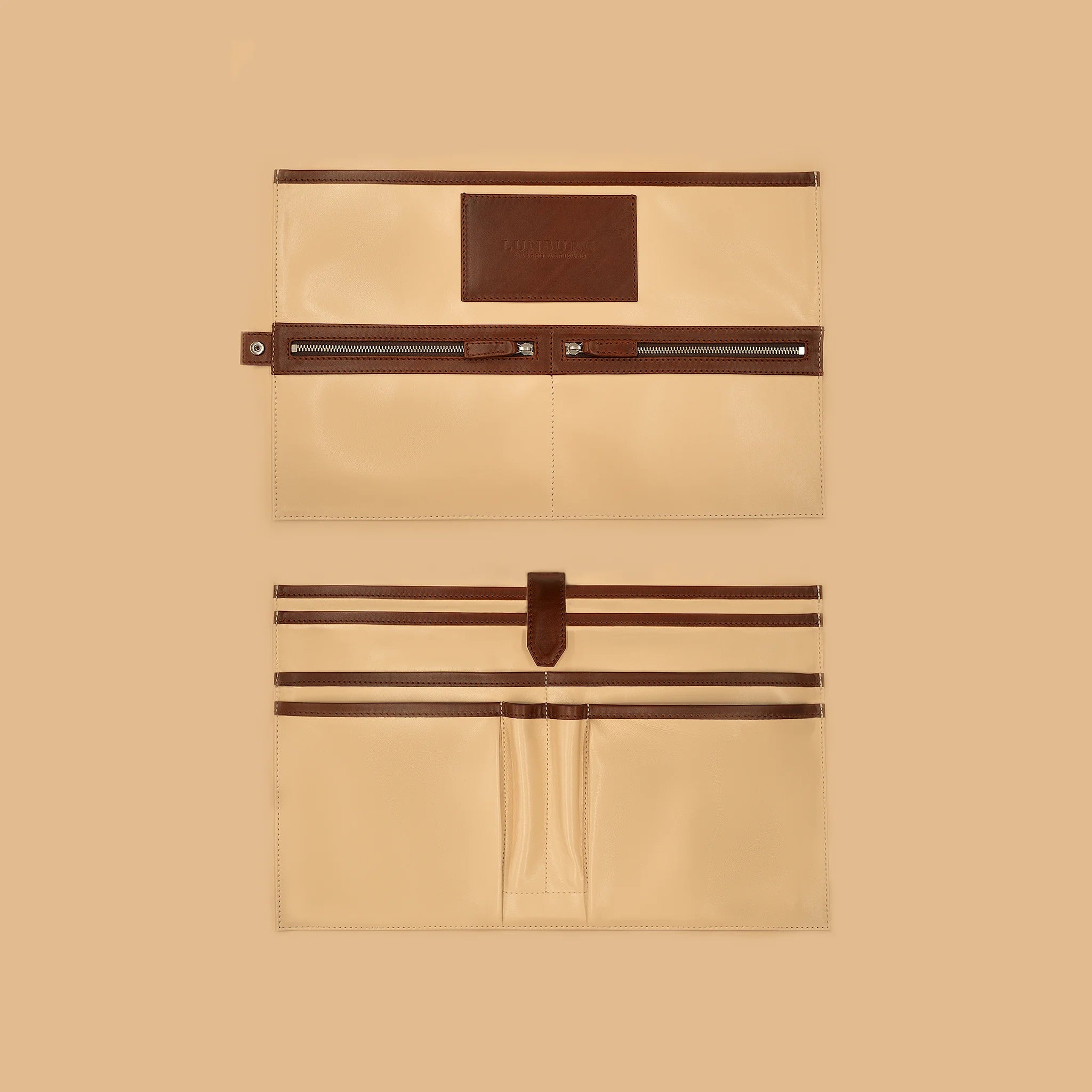
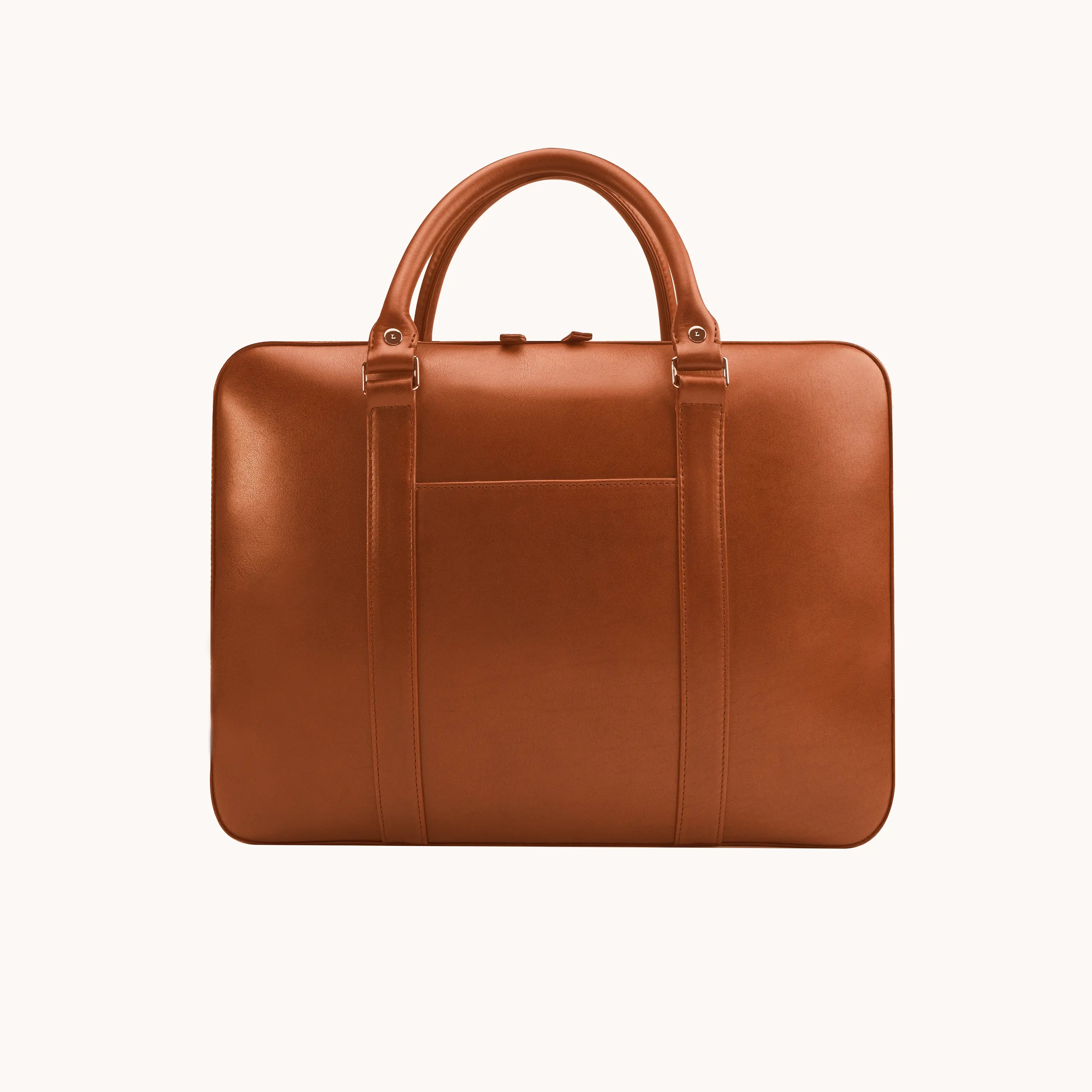
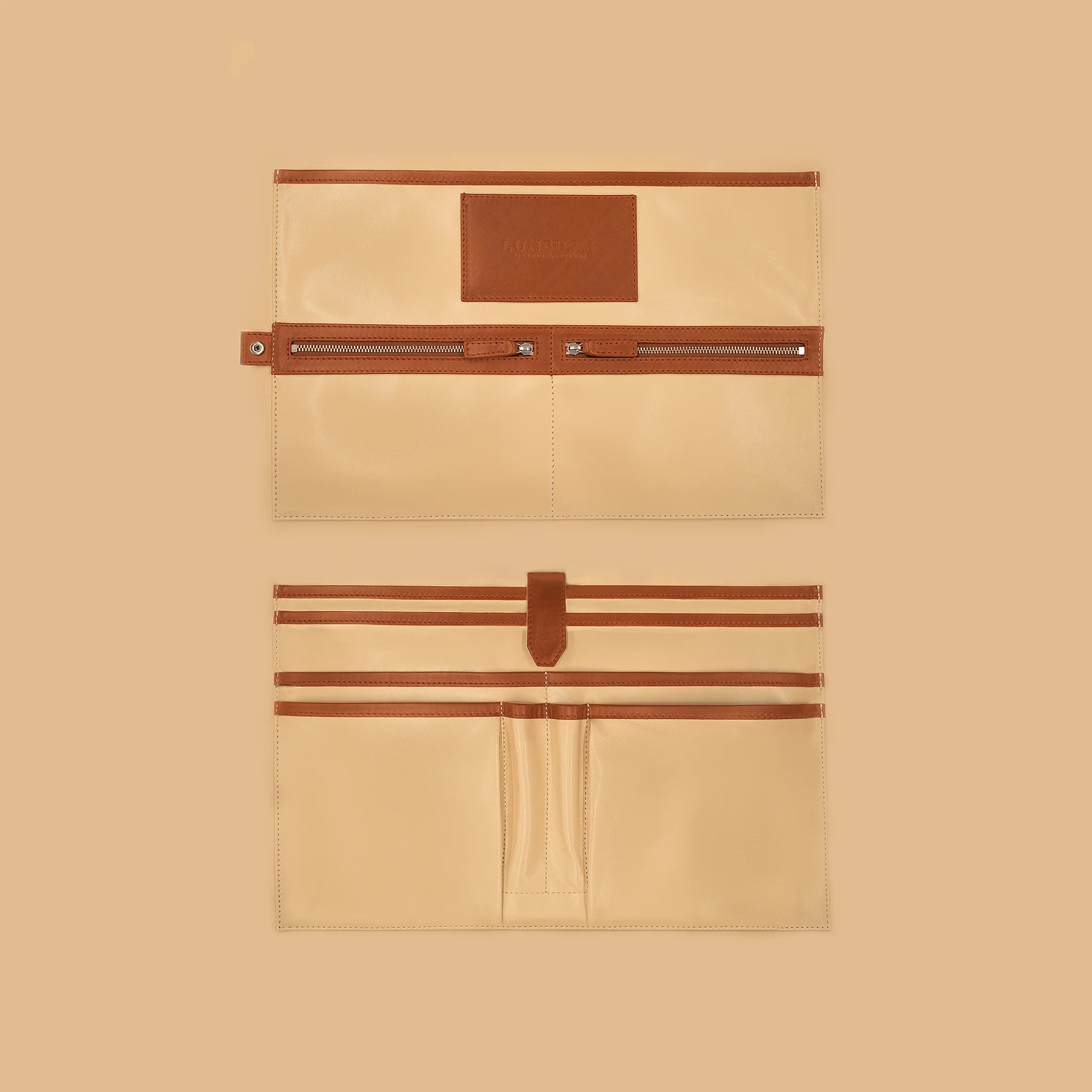
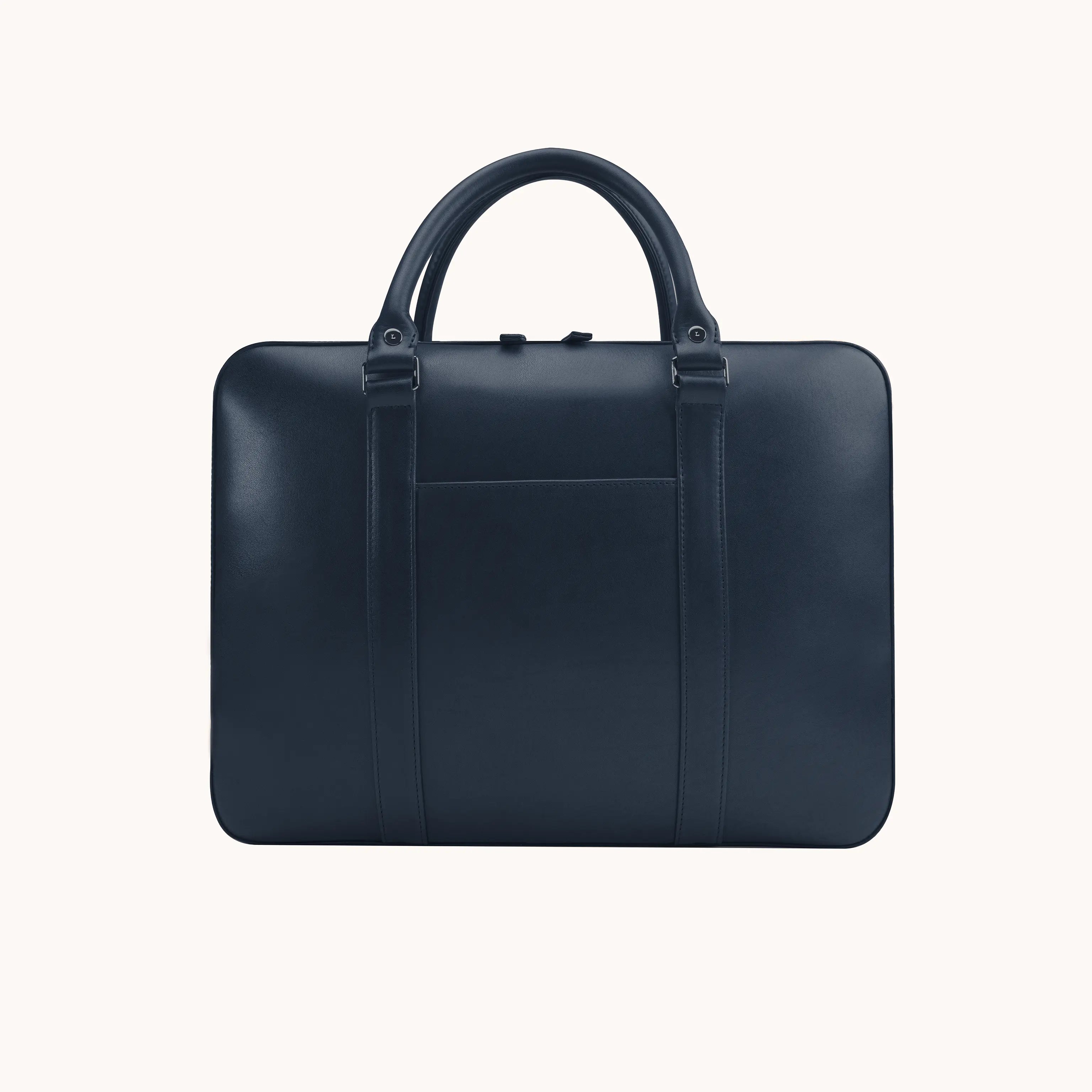
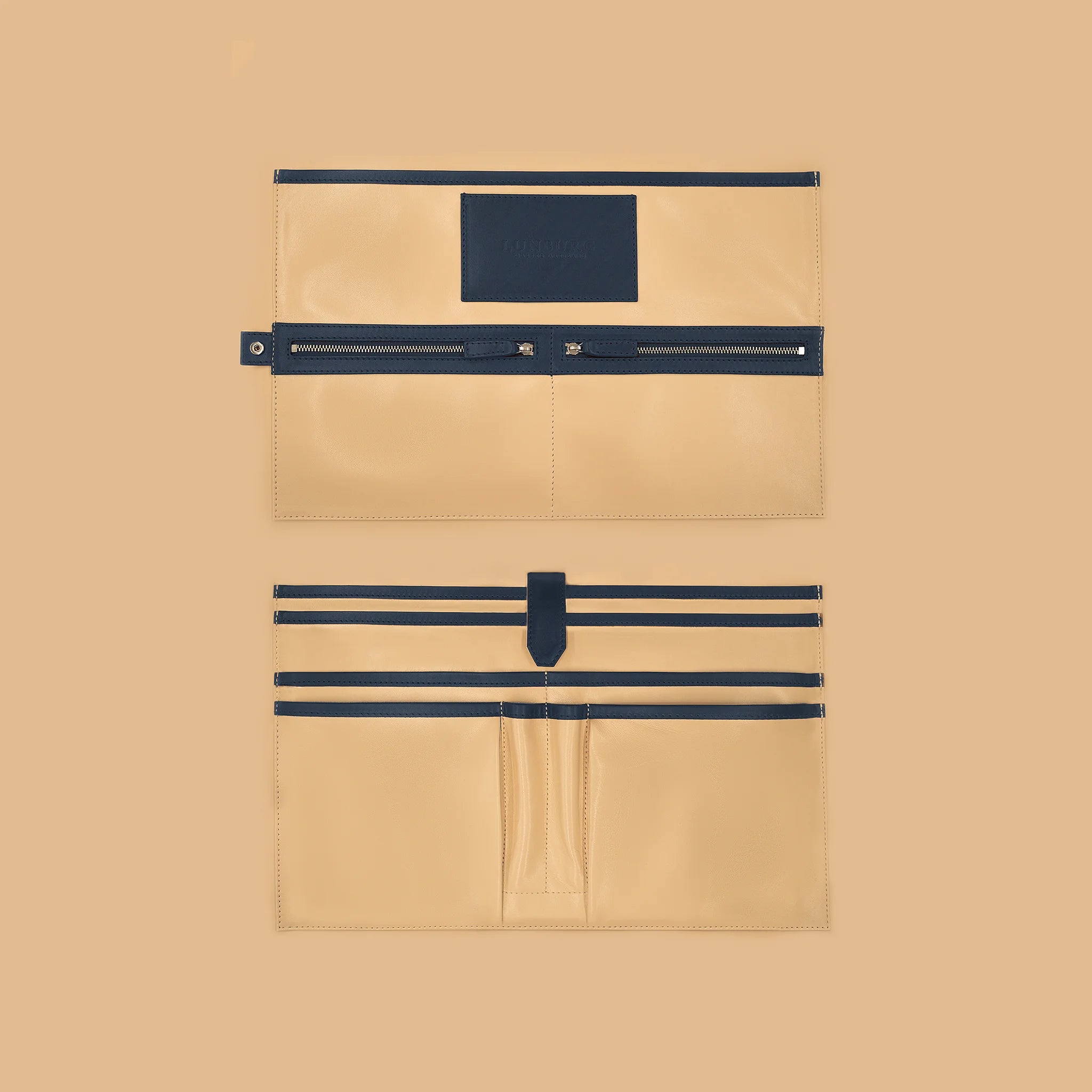
Natural oils are worked deep into the fibers. The result carries no chemical sharpness; only the clean, earthy scent of bark and time. This extended process creates a reactive material that breathes, absorbs, and responds.

Hue
Color Born from Within
Color in Perpetual Leather is not applied; it permeates. Transparent dyes saturate the full thickness of the grain, allowing the natural surface texture to remain visible. The finish is soft and satine, absorbing light with an inner glow. This method ensures that color deepens rather than fades; the leather grows richer as sunlight and elements interact with its open structure.

Patina
A Quiet Ledger of Your Journey
"The leather becomes a quiet ledger of your journey: every mile traveled, every meeting attended, recorded in a pattern that cannot be replicated."
Here the engineering reveals its purpose. Perpetual Leather absorbs sunlight, the natural oils transferred through touch, and the environment itself. Over time, the surface polishes to a luster unique to its owner. No two pieces mature identically.

Resilience
A Self-Healing Material
The same porosity that enables patina grants the leather self-healing properties. Minor scuffs and marks can be absorbed with a simple rub; the infused oils redistribute to nourish and conceal. The deeply greased fibers flex without cracking. The breathable structure naturally resists moisture. This is Self-Healing Aniline Leather: material that recovers rather than deteriorates.

Sustainability
The Promise of Permanence
We define sustainability as permanence. Perpetual Leather begins as a byproduct and transforms through a metal-free process with purified water and circular waste. It is built to outlast decades. Our fifty-year warranty is the physical evidence of this philosophy.
The most sustainable object is the one you never replace.



Common Questions About Perpetual Leather
Chrome tanning cross-links collagen with chromium salts in hours, then seals the surface with pigmented finishes that prevent further interaction with the environment. The leather cannot breathe, cannot absorb conditioning oils, and cannot renew itself. Over years, the sealed surface cracks, pigment coatings degrade, and the fibre structure loses cohesion as its original lubrication gradually depletes without any mechanism for replenishment. Vegetable tanning over forty days with chestnut and mimosa extracts produces a fundamentally different material. The slow saturation allows tannins and natural oils to penetrate deeply and evenly throughout the fibre matrix. The surface remains unsealed and porous, which means the leather can be reconditioned throughout its lifetime, replenishing the oils that allow fibres to move fluidly against one another under stress. This ongoing capacity for renewal is what extends surface life dramatically. One material is sealed at completion and declines from that point. The other remains open to care and matures through it.
A pigmented finish separates you from the leather. An opaque coating provides uniformity but cracks irreversibly when scratched. An aniline finish dissolves dye directly into the fibre, producing a richness and warmth that no surface coating can achieve. Perpetual Leather goes further. A proprietary infusion of natural oils and waxes, distinctive to this material, gives the surface a self-healing quality. Minor scuffs are absorbed with light thumb pressure as the infused oils and waxes redistribute across the grain. The mark diminishes. The surface recovers.
Pigmented leather forgives. Its opaque coating conceals scars, insect bites, and grain irregularities beneath a uniform surface. Perpetual Leather conceals nothing. Every marking on the hide is visible. Our design philosophy compounds this challenge further. To maximise durability, we cut panels as large as possible, reducing the number of seams and eliminating potential failure points. Finding hides with surfaces clean enough to yield large, uninterrupted panels at aniline transparency requires exceptional selection standards. The rejection rate this demands is significant, and it is a primary driver of the cost of our work.
Many Tuscan tanneries produce some of the finest vegetable-tanned leather in the world. What distinguishes Perpetual Leather is a proprietary Tempesti formula of natural oils and waxes integrated into the fibre during the forty-day tanning process. This formulation is exceptionally difficult to execute. Other tanneries have attempted similar results without success. It gives the leather a depth of hue and tactile warmth that is immediately apparent, a self-healing surface that absorbs minor scuffs under gentle thumb pressure, and a patina of extraordinary beauty over years of use.
The same quality that makes vegetable-tanned leather beautiful makes it demanding to craft. Its natural oil and wax composition means the surface is reactive from the moment it enters the atelier. Every tool contact, every touch can initiate patina or leave a mark. Chrome-tanned leather tolerates rough handling without recording it. Vegetable-tanned leather records everything. This demands extraordinary care and precision at every stage of realization. It is one of the primary reasons why pieces crafted in vegetable-tanned leather carry a significantly higher cost than their chrome-tanned counterparts.
Four convictions guided the decision. A Lunburg piece must grow more beautiful with time. It must become increasingly personal, evolving into a unique expression of its custodian's journey. It must be capable of lasting decades when properly maintained. And every interaction must be a pleasure: the deep hue, the tactile warmth, the living surface that only aniline leather with natural oils and waxes can provide. Chrome-tanned leather with its sealed, uniform, pigmented surface cannot fulfil a single one of these commitments.
The "full grain versus genuine leather" hierarchy is a marketing simplification that misrepresents how leather quality actually works. Most brands, from entry-level to high-end, use full-grain leather. Inexpensive full-grain leather exists in abundance.
The factors that genuinely determine whether a leather will age beautifully over decades are far more specific:
Tanning method: forty days of vegetable tanning produces a fundamentally different material than chrome tanning completed in hours.
Surface finish: aniline leather tolerates no imperfection on the hide, while pigmented finishes conceal scars beneath an opaque coating.
Hide provenance and breed: Northern European hides offer the cleanest surfaces and densest fibre structures in the world.
The cut: the double bend, the most structurally dense and uniform section of the hide, commands the highest cost and yields the finest panels.
Tanning chemistry: leather infused with natural oils and waxes during tanning develops self-healing properties and living patina. Dry-tanned leather does not.
Tannery standards: a Gold-rated LWG certified tannery ensures verified sustainability and consistency of process.
And the question that encompasses all others: does the leather develop patina, or does it degrade? These are the dimensions that matter. We chose Perpetual Leather because it delivers the highest standard in every one of them.