
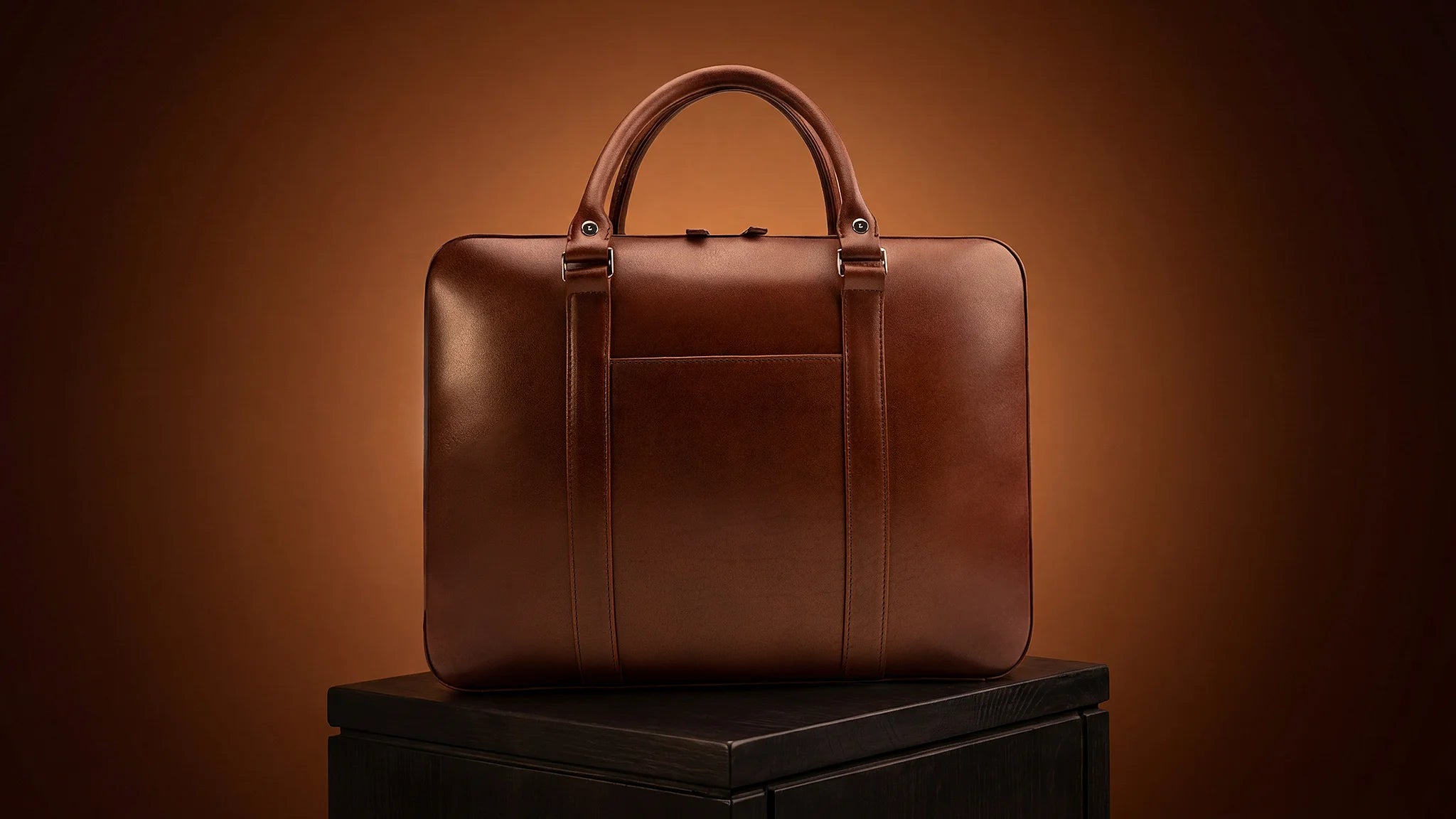

The Master's Eye
How to judge any leather bag, beyond the logo, in under five minutes.
Most judge a leather bag by the logo.
A Milan court found that some of the world's biggest brands sell handbags for 2,600 euros that cost just 53 to make.
Fifty-three euros made the bag. The logo made the price.
This guide shows how to judge the craft itself, on any leather bag, beyond the logo, in under five minutes.
The five-minute test
Four things reveal how a bag was actually made: its edges, its seam, its lining, and its structure.
Each belongs on a craft ladder:
-
Master Craft
Leather shaped, folded, and engineered with authority.
-
High Craft
Difficult work done cleanly.
-
Sound Craft
Competent, honest work.
-
Basic Craft
Acceptable construction.
-
Low Craft
Unresolved or hidden work.
The Edges
Start at the handle.
Look at the edges, the places where the leather ends: the handle first, then the flap, the sides, the pocket lips.
The handle is the hardest place to finish, because the leather has to turn cleanly around the curves and the attachment points, so it is where a shortcut shows first.
-
Master Craft
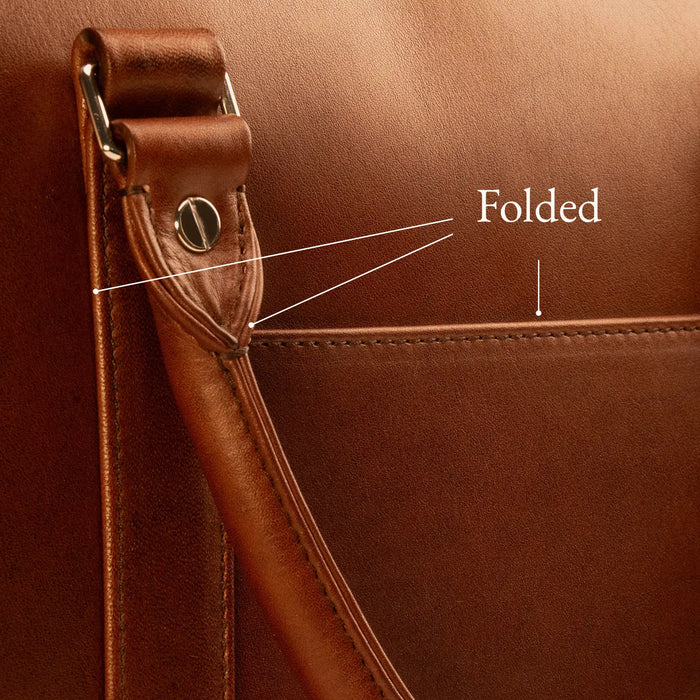
The leather is folded back on itself, so there is no cut edge at all. The edge looks like a smooth, rounded continuation of the surface, and it stays clean even around the handle.
The Opus Integral 7 briefcase uses the folded-edge construction described here.
-
Sound Craft
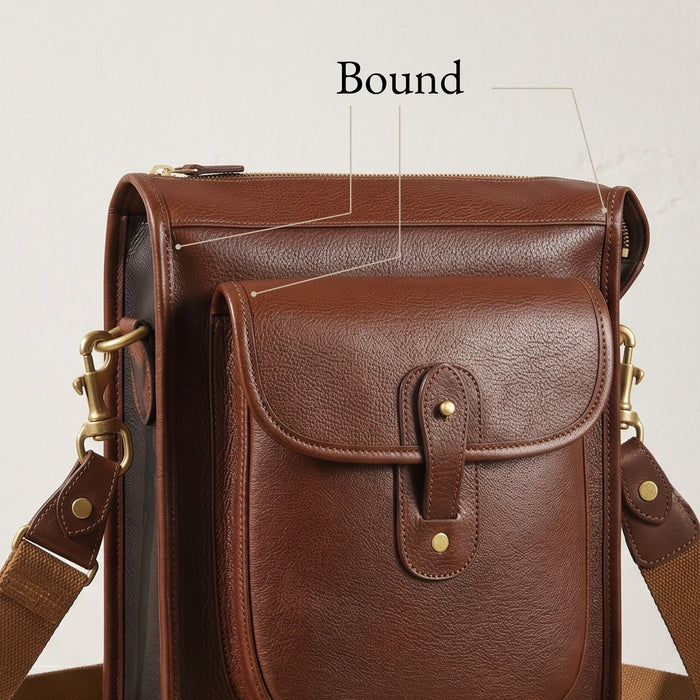
Bound edge
A thin separate strip of leather is wrapped over the edge and stitched down, like a binding.
-
Basic Craft
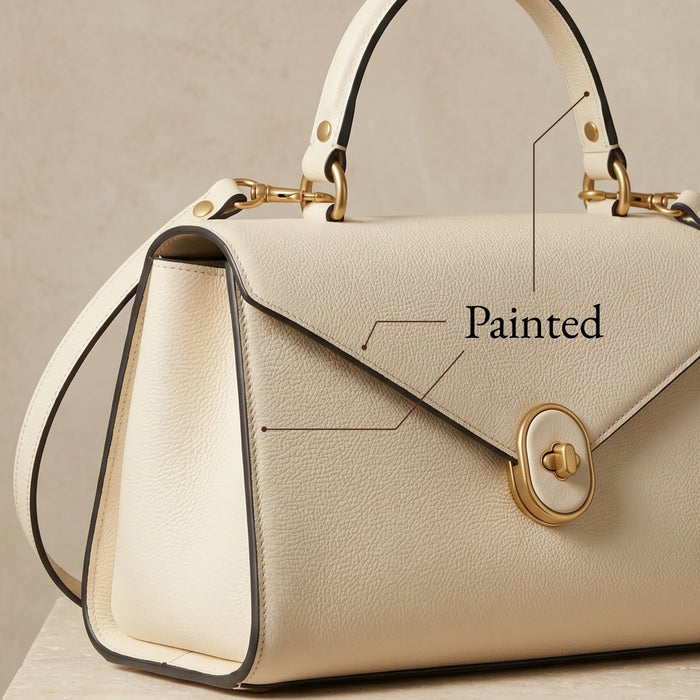
Painted edge
The cut edge is coated in a layer of colour, a thin film you could chip.
-
Low Craft
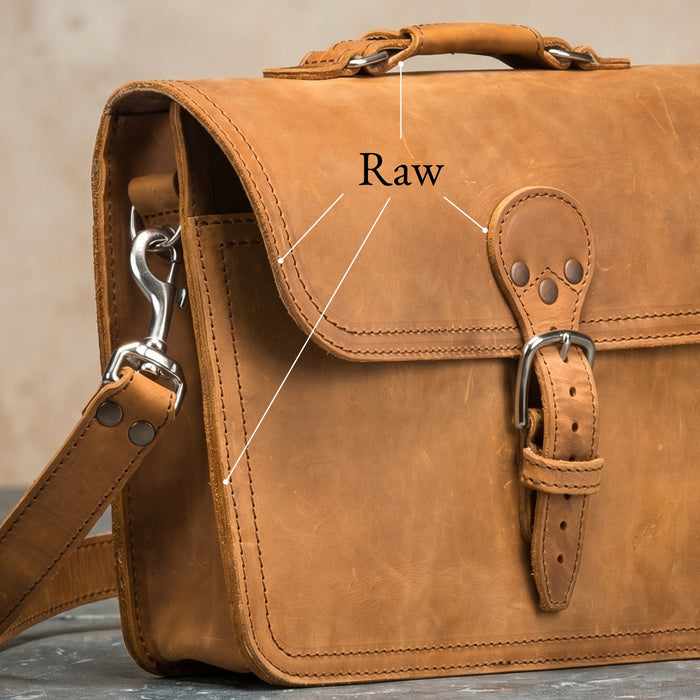
Raw edge
The cut edge is left bare, rough, or fuzzy.
How we designed the Opus briefcase to be a Grand Complication in Leather
the Opus Briefcase Presented by Amien

The Seam
Where two main panels join.
Find where two main panels meet, and look closely at the join.
-
Master Craft
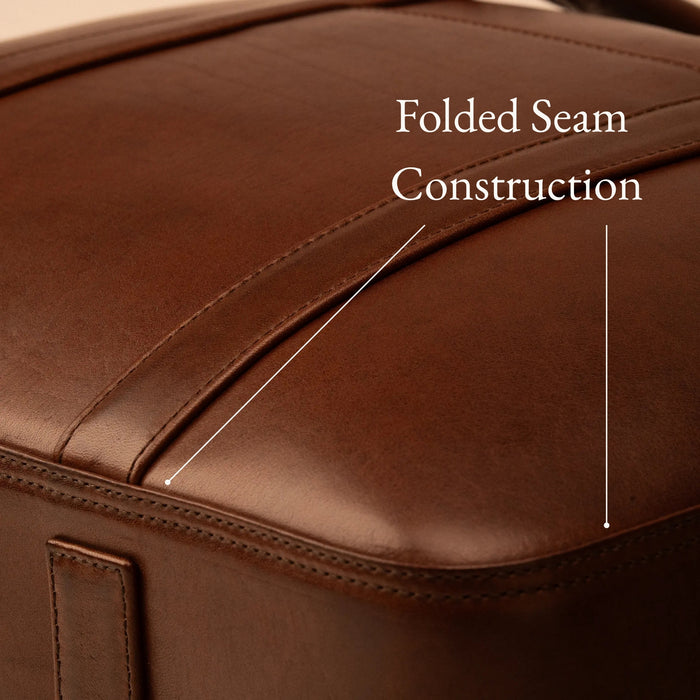
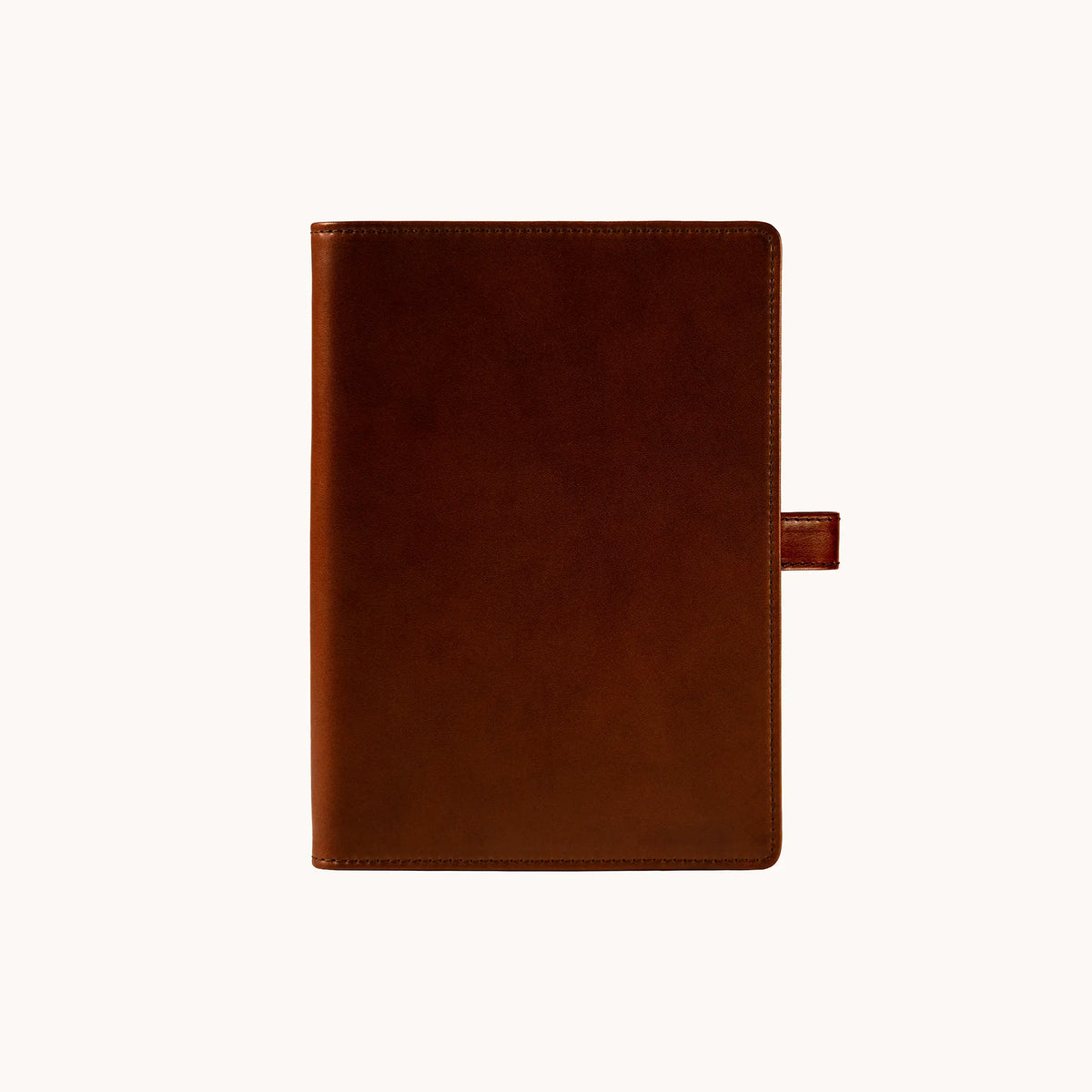
Folded-edge seam
One panel continues underneath while the other sits over it with a clean folded edge, stitched down in a precise line.
Built on a wooden form. -
Sound Craft
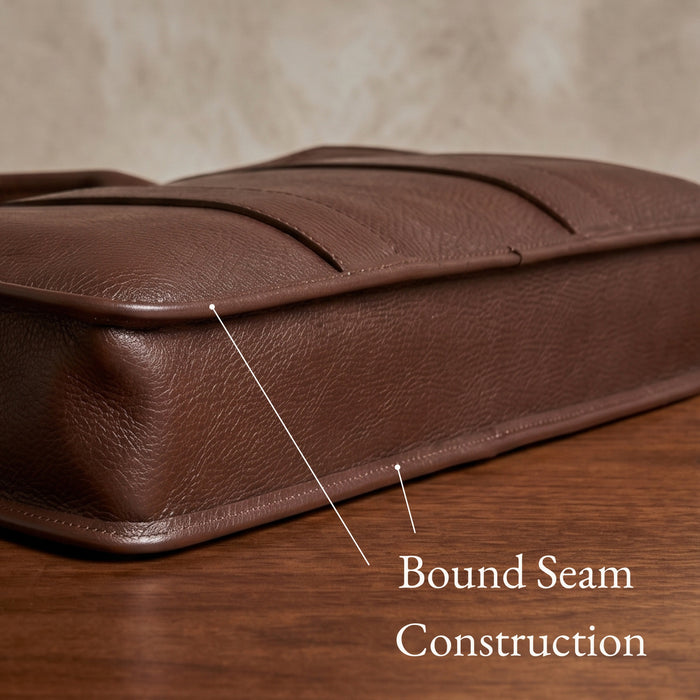
Bound seam
A strip of leather wraps and encloses the joined edges along the seam.
-
Basic Craft
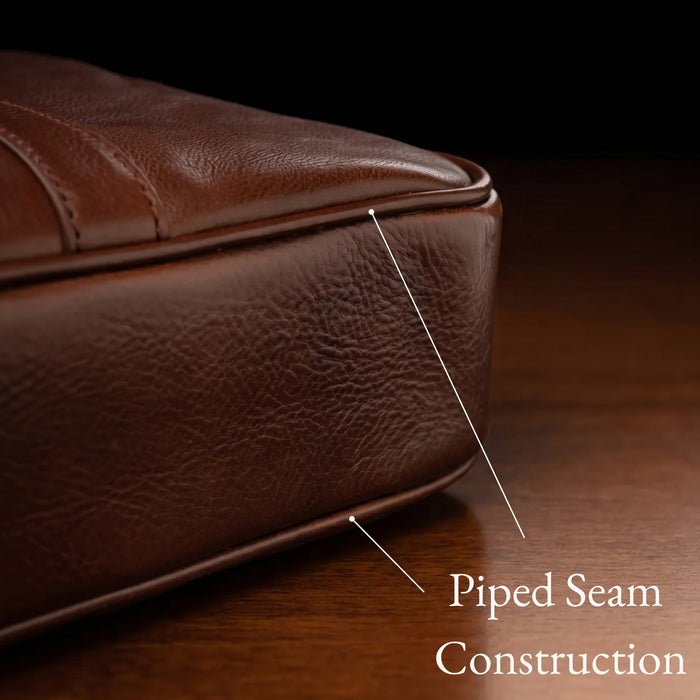
Piped seam
A raised, rounded line, like a thin rope, runs along the seam.
-
Low Craft
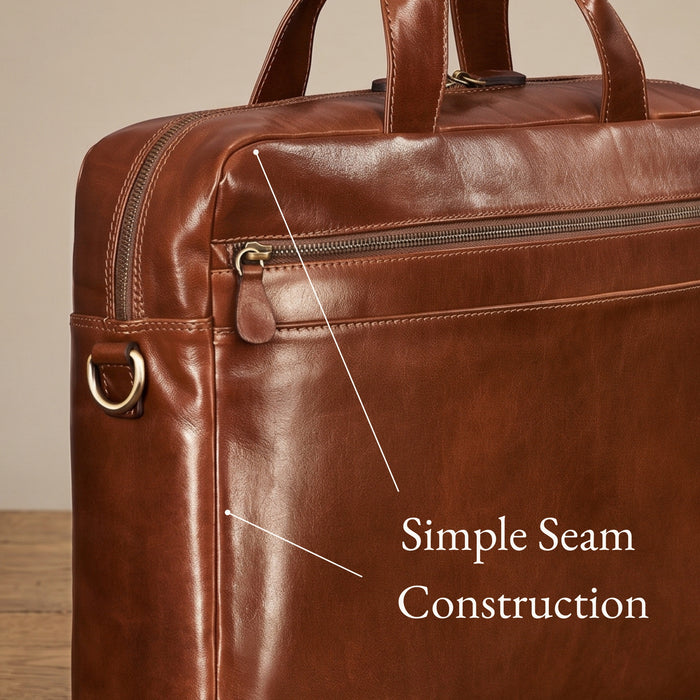
Simple turned seam
Nothing shows on the outside, the bag is soft, and turning it inside-out reveals a raw, unfinished seam.
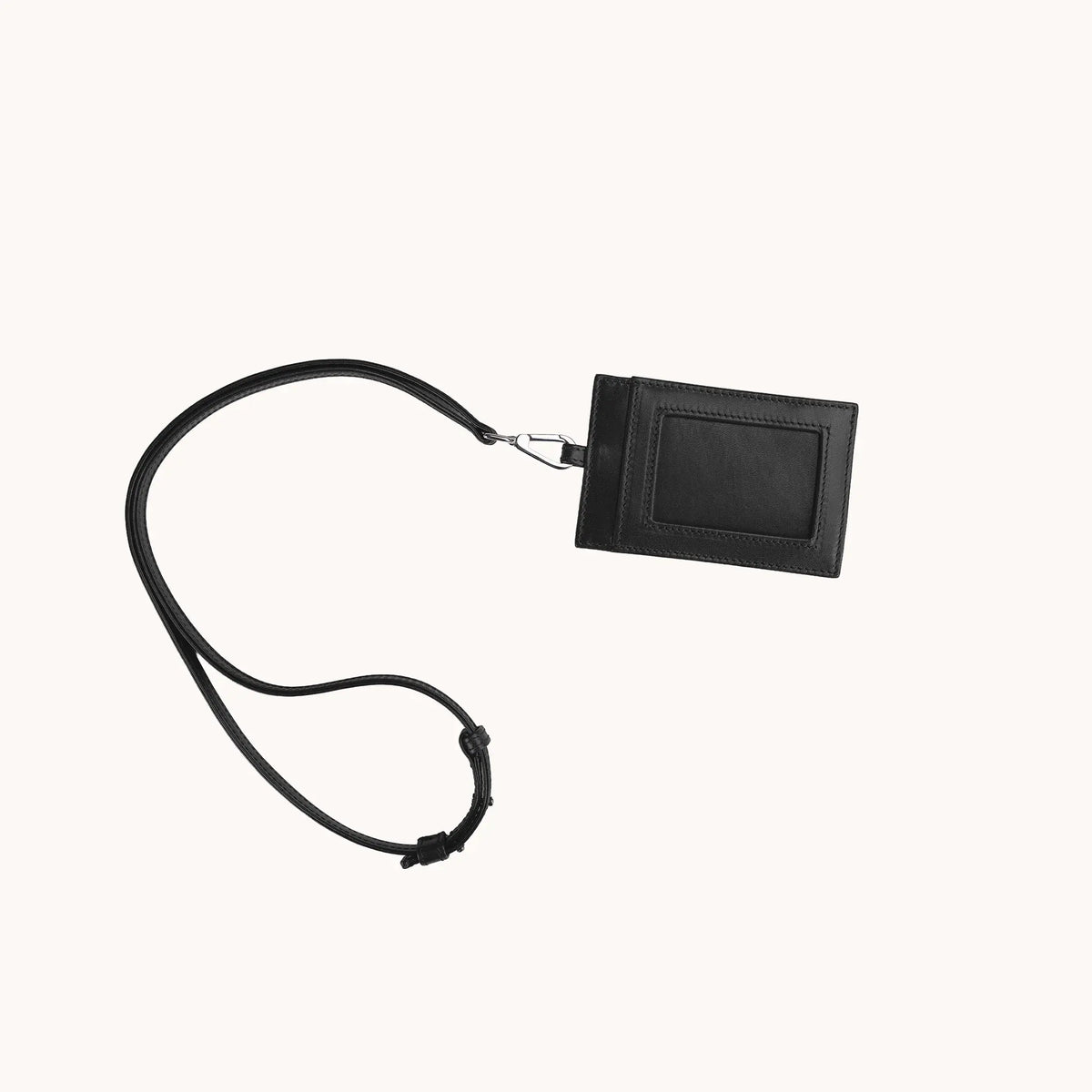
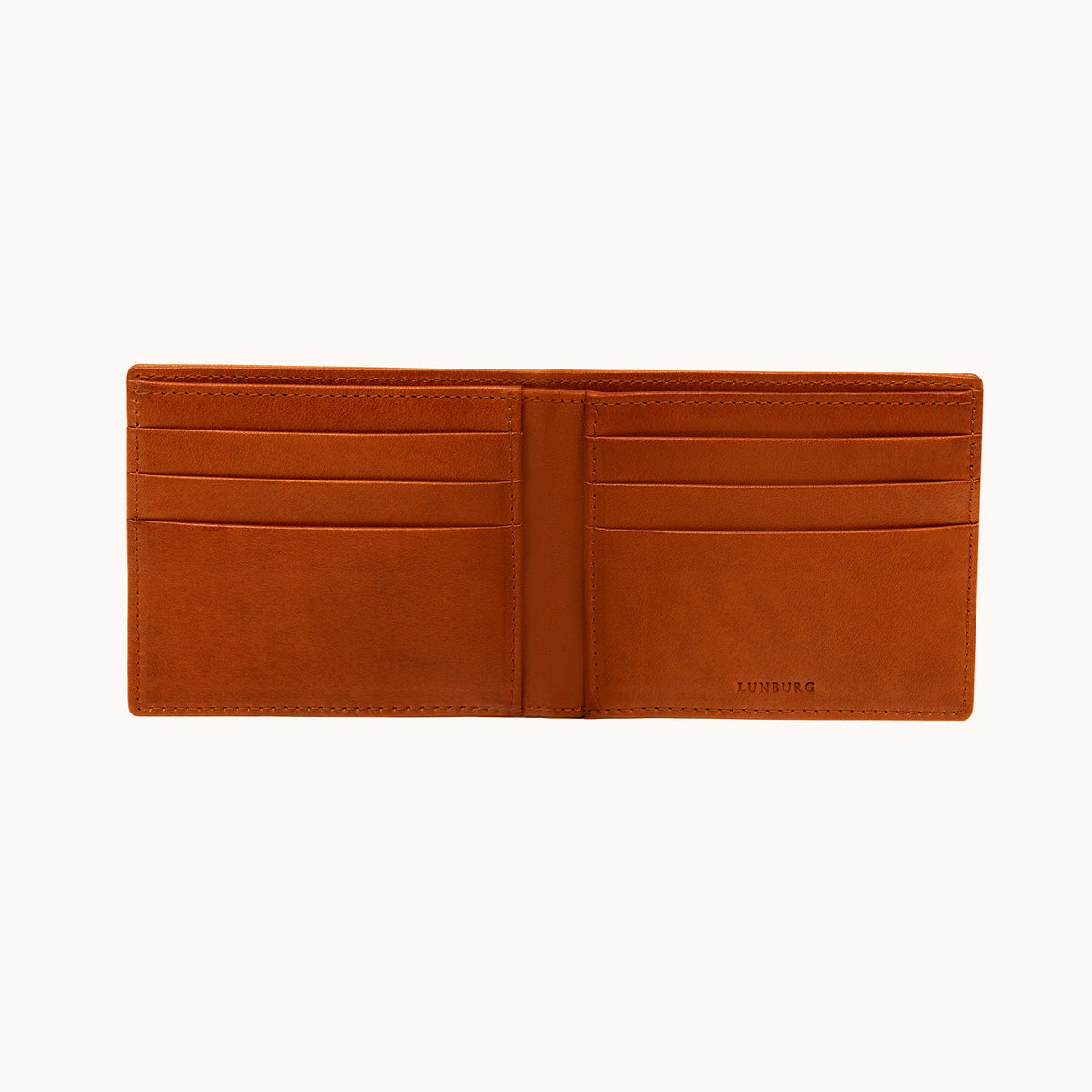
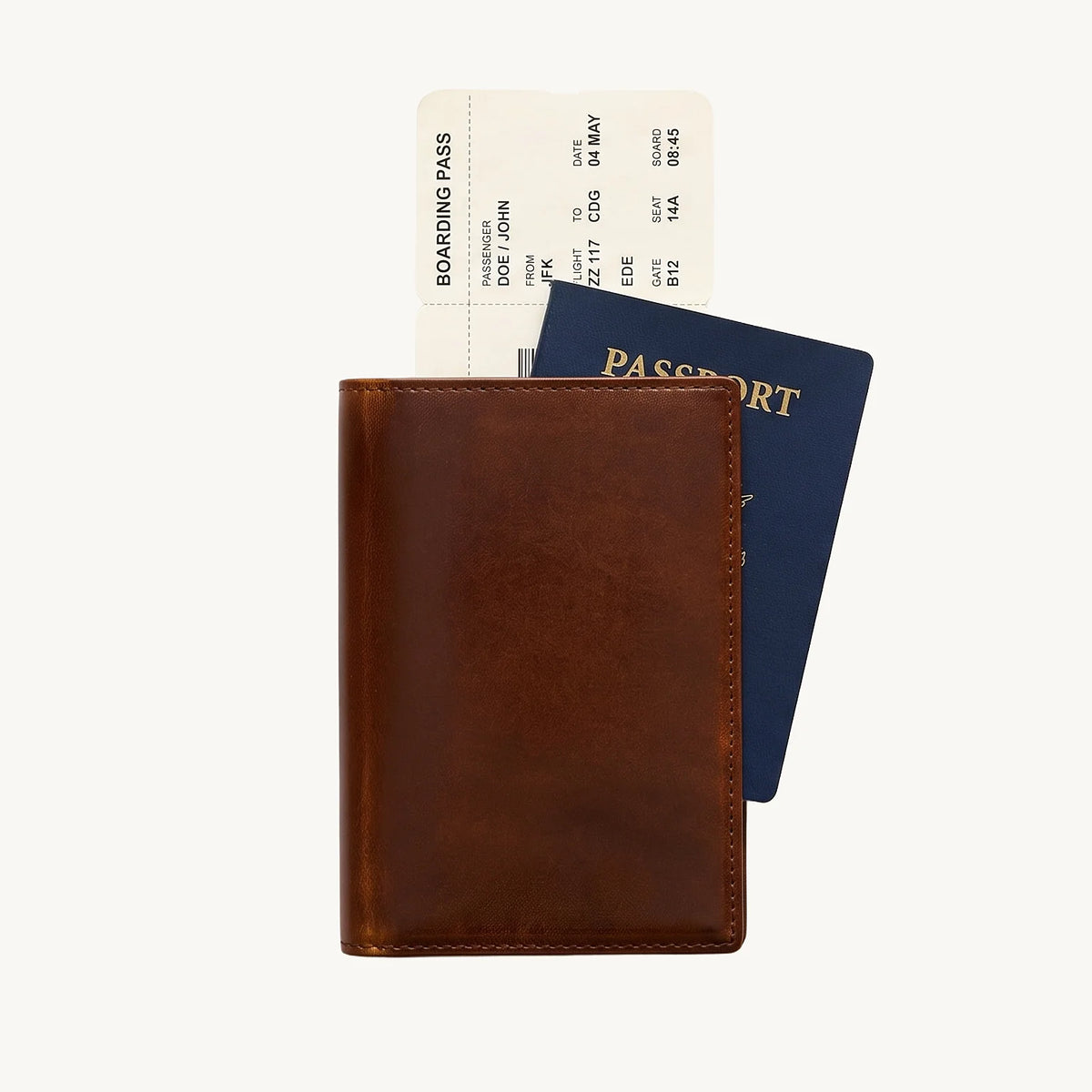
Explore our Folded Edge Creations
The Lining
Open the bag and look at a pocket.
A high-craft interior is not just lined; it is built. Pockets, dividers, and compartments should be real leather structures, and their edges should be folded cleanly like the outside of the bag.
-
Master Craft
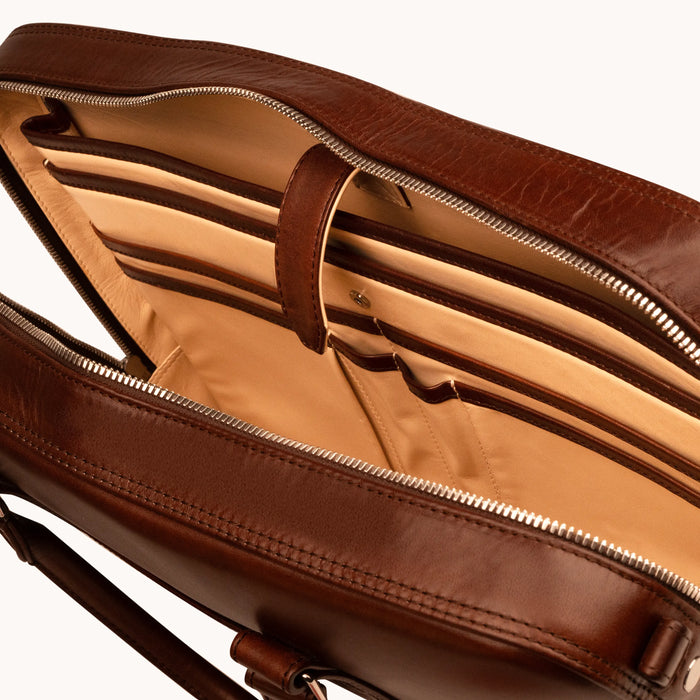
Functional folded-edge leather lining
Leather lining with real pockets and dividers, their edges folded or bound, smooth like the outside of the bag.
-
Sound Craft
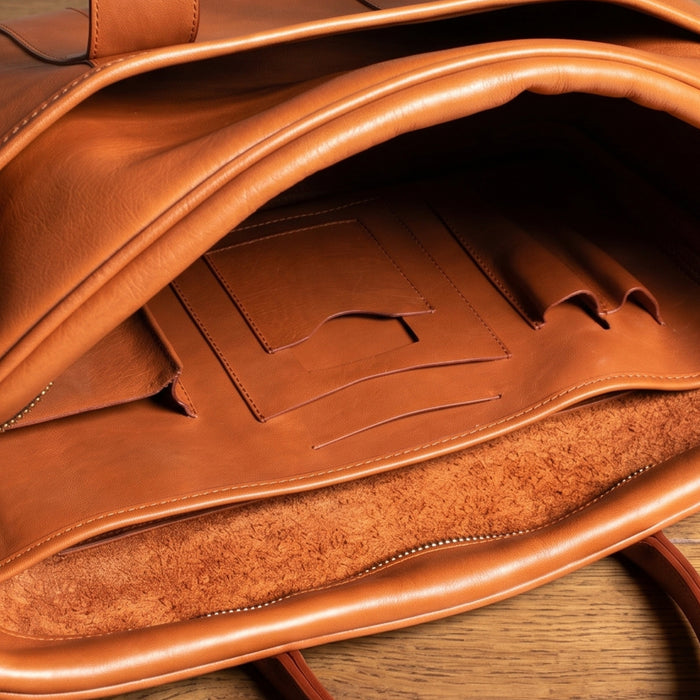
Finished leather lining
Leather lining with real, neatly made pockets and dividers, but a painted or cut edge shows on the pocket lips.
-
Basic Craft
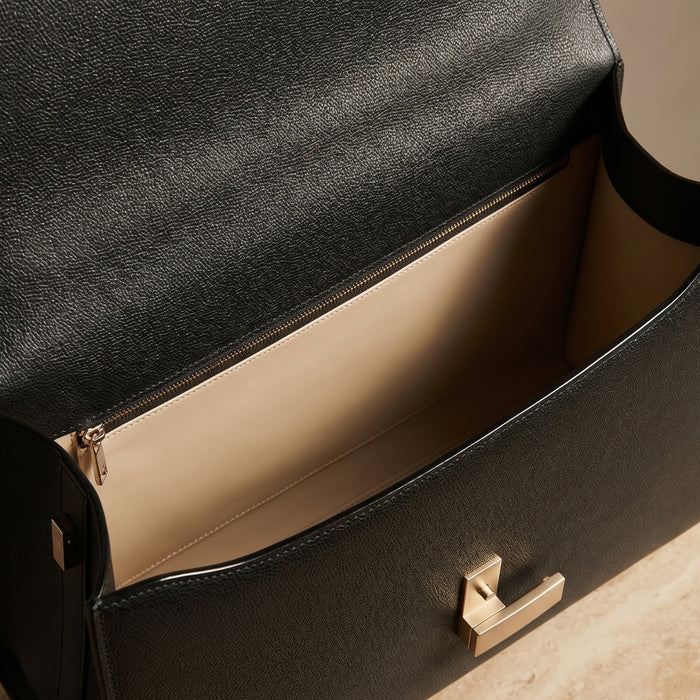
Plain leather lining
Leather lining, but plain: few or no pockets.
-
Low Craft
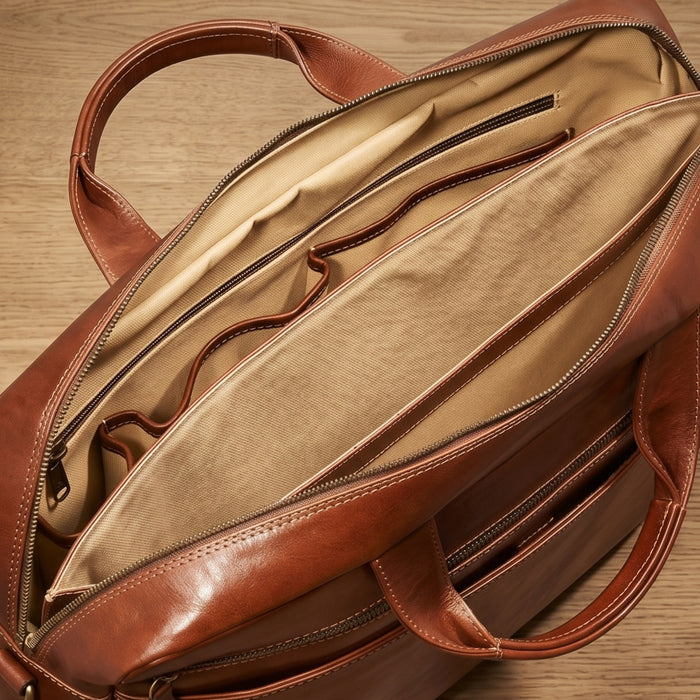
Textile lining
A fabric lining.
The Structure
And the warranty.
The structure is the part you cannot see: the hidden reinforcement that holds the bag's form and carries its load.
Read it two ways:
1- Empty the bag and look at whether it keeps its intended form cleanly.
2- Then check the warranty: a strong, lasting one is the maker's confidence in the structure you cannot inspect.
-
Master Craft
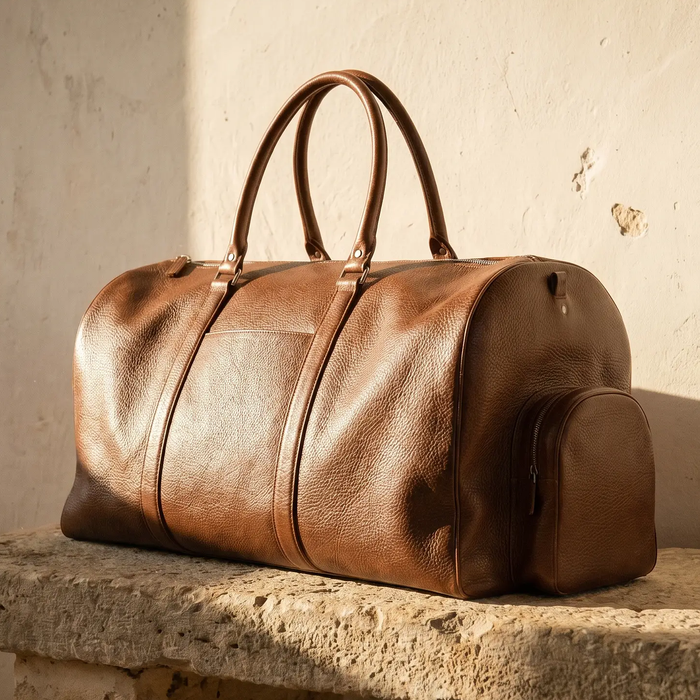
Holds its form, strong warranty
It holds its intended form cleanly, panels flat and even with no warping or distortion, and the maker backs it with a strong warranty.
-
Weak
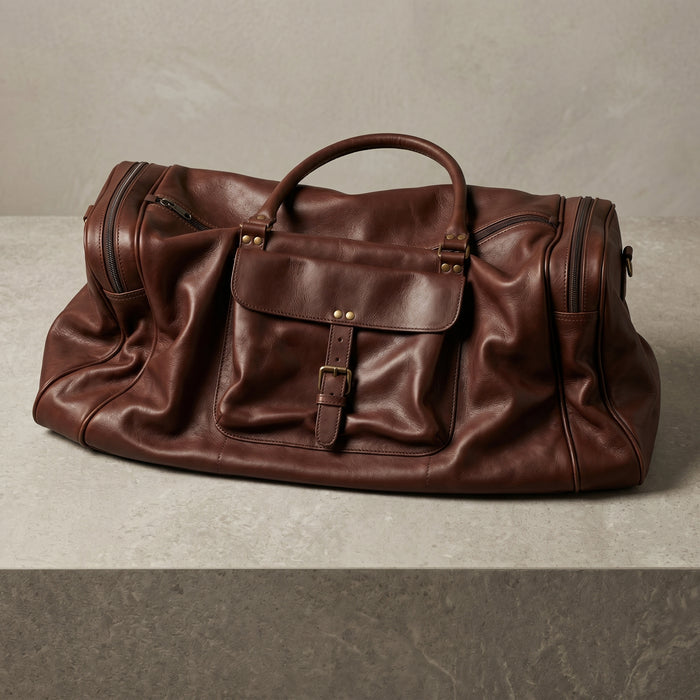
Loses its shape, no warranty
It warps, ripples, sags, or loses its shape, and there is no real warranty.
The common misconceptions
Two details are often mistaken for proof of high craft: the saddle stitch and the smooth painted edge. Both are legitimate techniques.
Both can be well executed. But neither is the summit of leather craftsmanship, and neither stands in for mastery.

The saddle stitch
A true saddle stitch is hand-sewn. No machine genuinely reproduces it. But it is a foundational technique, not proof of mastery. It shows that handwork is present. It does not show that the maker can fold an edge, build a difficult seam, or construct a leather lining.
The painted edge
A painted edge can be clean and appropriate. But it is still a coating over a raw cut. It can be made smooth, photographed beautifully, and repeated at scale. It proves finishing, not construction.
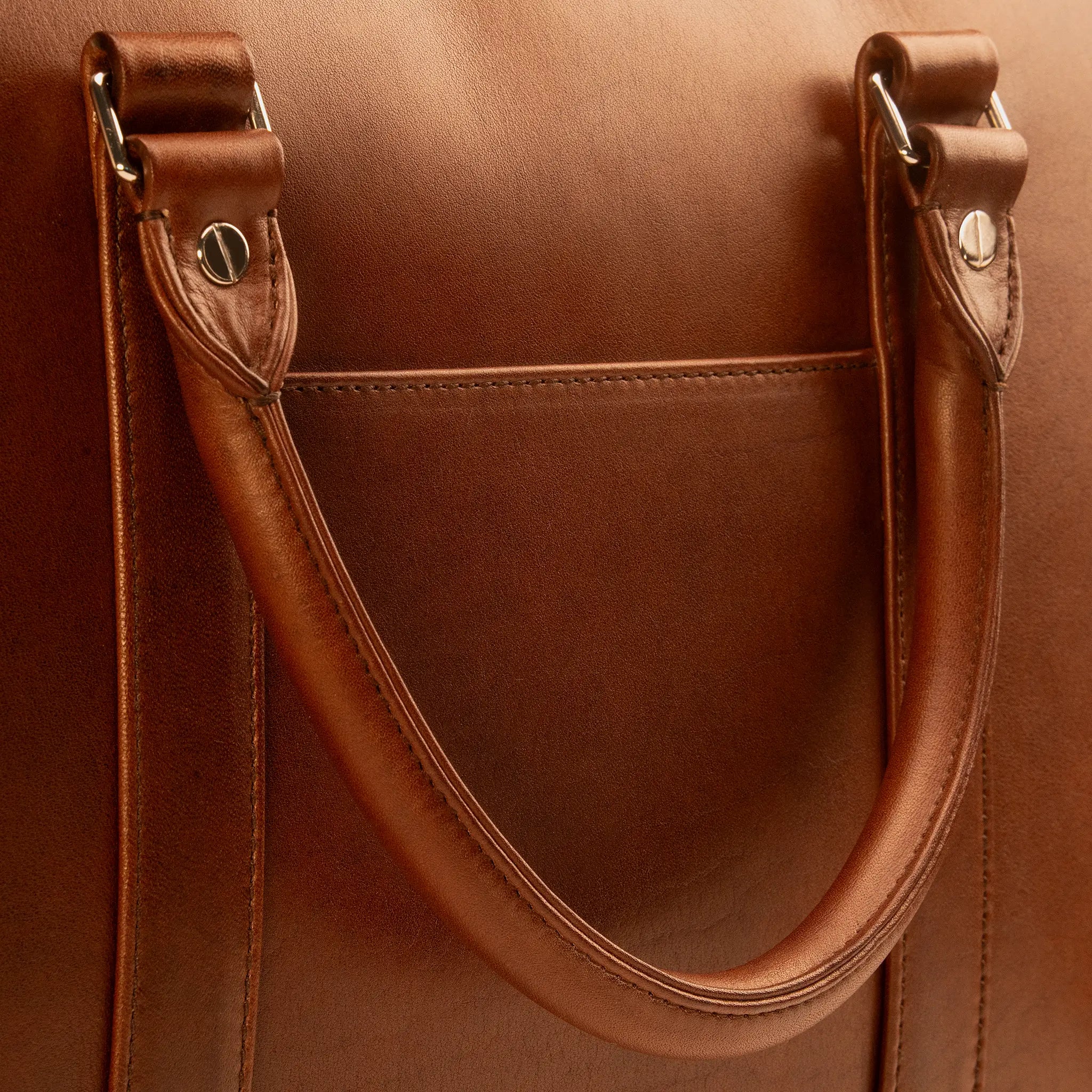
Folded edge

Painted Edge
The harder test is the folded edge
A folded edge is not applied over the leather. It is made from the leather. The edge must be skived, turned, aligned, and finished without room to hide a mistake.
That is the difference this guide is measuring: not whether a bag was touched by hand, but whether it was made by a hand trained to mastery.
Explore our Folded Edge Creations
Frequently Asked Questions
The "full grain versus genuine leather" hierarchy is a marketing simplification that misrepresents how leather quality actually works. Most brands, from entry-level to high-end, use full-grain leather. Inexpensive full-grain leather exists in abundance.
The factors that genuinely determine whether a leather will age beautifully over decades are far more specific:
Tanning method: forty days of vegetable tanning produces a fundamentally different material than chrome tanning completed in hours.
Surface finish: aniline leather tolerates no imperfection on the hide, while pigmented finishes conceal scars beneath an opaque coating.
Hide provenance and breed: Northern European hides offer the cleanest surfaces and densest fibre structures in the world.
The cut: the double bend, the most structurally dense and uniform section of the hide, commands the highest cost and yields the finest panels.
Tanning chemistry: leather infused with natural oils and waxes during tanning develops self-healing properties and living patina. Dry-tanned leather does not.
Tannery standards: a Gold-rated LWG certified tannery ensures verified sustainability and consistency of process.
And the question that encompasses all others: does the leather develop patina, or does it degrade? These are the dimensions that matter. We chose Perpetual Leather because it delivers the highest standard in every one of them.
The positioning of saddle stitch as the ultimate expression of leather craftsmanship is a convention we do not share.
Saddle stitch is a competent and beautiful joining technique. We employ it where the construction demands it, such as areas a machine cannot reach. However, a precisely calibrated machine stitch delivers equivalent structural performance. Our artisans achieve proficiency in saddle stitch within six months. By contrast, the Rempliage construction that defines our work requires a minimum of thirty years of formation.
The distinction matters because the longevity of any leather good is not determined by how its panels are stitched together. It is determined by what happens at its edges and junctions. These are where failure begins. Paint cracks. Piped seams separate, exposing the cord beneath. These are the points that betray a piece after years of use.
Rempliage eliminates this vulnerability entirely. The edge is the leather itself. We believe this, not the stitch, is where craftsmanship reaches its highest expression.
Rempliage is the art of skiving leather to a precise gauge and folding it back upon itself, creating an unbroken curve of grain. Painted edges, used by most European houses, are synthetic coatings applied over raw cuts. They crack, peel, and expose the vulnerable interior within years. A Rempliage edge contains no paint to fail. It patinates alongside the leather itself, growing more refined with use rather than degrading. The difference is permanence.
A Rempliage edge has no separate material that can fail. It is the same leather as the rest of the piece, folded back upon itself. There is no paint to crack, no burnished compound to peel, no secondary material to degrade independently. The edge ages exactly as the surface ages: it develops patina, softens, and deepens in character. After five, ten, or twenty years, the edge and the surface are indistinguishable in their evolution. In the rare event of fold separation, our Fifty-Year Warranty covers reconstruction.
There is no difference. Turned edge is the English term for the same technique known as Rempliage. The principle is identical: the leather edge is skived to a precise gauge and folded back upon itself rather than sealed with paint. The result is an edge that patinates with the surface rather than degrading independently. The distinction lies not in the technique itself but in the level of precision and mastery applied to its execution.
Chrome tanning cross-links collagen with chromium salts in hours, then seals the surface with pigmented finishes that prevent further interaction with the environment. The leather cannot breathe, cannot absorb conditioning oils, and cannot renew itself. Over years, the sealed surface cracks, pigment coatings degrade, and the fibre structure loses cohesion as its original lubrication gradually depletes without any mechanism for replenishment. Vegetable tanning over forty days with chestnut and mimosa extracts produces a fundamentally different material. The slow saturation allows tannins and natural oils to penetrate deeply and evenly throughout the fibre matrix. The surface remains unsealed and porous, which means the leather can be reconditioned throughout its lifetime, replenishing the oils that allow fibres to move fluidly against one another under stress. This ongoing capacity for renewal is what extends surface life dramatically. One material is sealed at completion and declines from that point. The other remains open to care and matures through it.
A pigmented finish separates you from the leather. An opaque coating provides uniformity but cracks irreversibly when scratched. An aniline finish dissolves dye directly into the fibre, producing a richness and warmth that no surface coating can achieve. Perpetual Leather goes further. A proprietary infusion of natural oils and waxes, distinctive to this material, gives the surface a self-healing quality. Minor scuffs are absorbed with light thumb pressure as the infused oils and waxes redistribute across the grain. The mark diminishes. The surface recovers.
Pigmented leather forgives. Its opaque coating conceals scars, insect bites, and grain irregularities beneath a uniform surface. Perpetual Leather conceals nothing. Every marking on the hide is visible. Our design philosophy compounds this challenge further. To maximise durability, we cut panels as large as possible, reducing the number of seams and eliminating potential failure points. Finding hides with surfaces clean enough to yield large, uninterrupted panels at aniline transparency requires exceptional selection standards. The rejection rate this demands is significant, and it is a primary driver of the cost of our work.
This was a founding decision. We believe an object's quality should be its own signature. The harmony of the design, the character of the leather, and the precision of the craft are the only marks of provenance required. An exterior logo would announce the brand. We prefer the work to speak for itself. Our name appears discreetly on the 316L stainless steel hardware and inside the briefcase, reserved for the custodian rather than the audience.
We employ hardware engineered for critical industries, not fashion. Our hardware includes:
Marine-grade 316L stainless steel The same alloy specified for naval and surgical applications, chosen for its resistance to corrosion and its enduring luster.
Defense-standard zippers Engineered for reliability under stress.
Acoustically engineered components Designed for absolute silence in movement.