
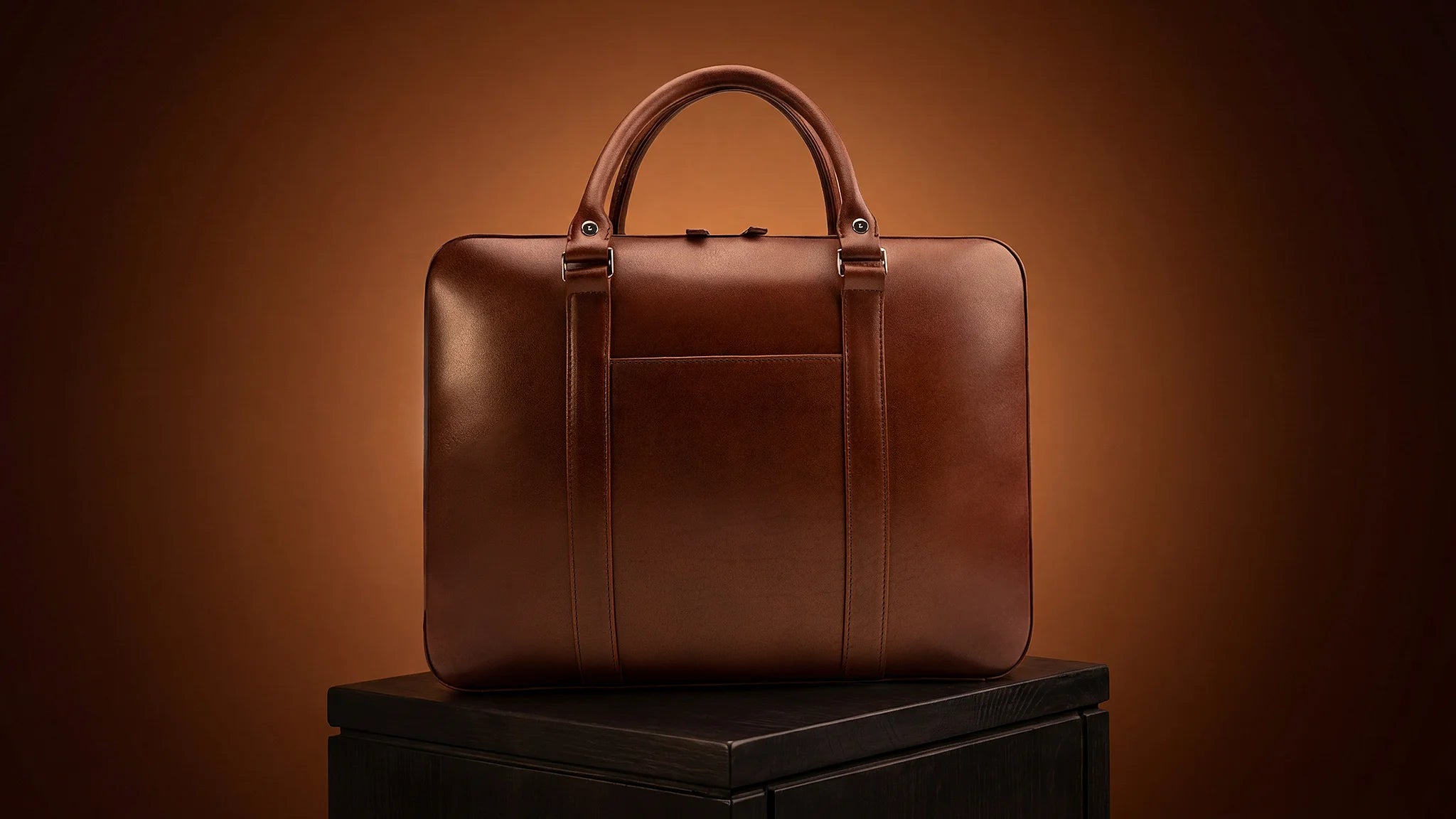
A Master's Guide: How to Choose The Best Leather Briefcase
Most guides to choosing a leather briefcase begin with two familiar promises: full-grain leather and hand stitching. Both sound serious. Neither proves the briefcase was made well.
Most leather available in the market is already full-grain. Even inexpensive, low quality hides can keep their grain, then be made orderly with heavy pigment and embossing. Full-grain is a floor, not a summit.
A saddle stitch proves handwork, not mastery. It is a basic leatherworking skill, and by itself it says little about the master's level.
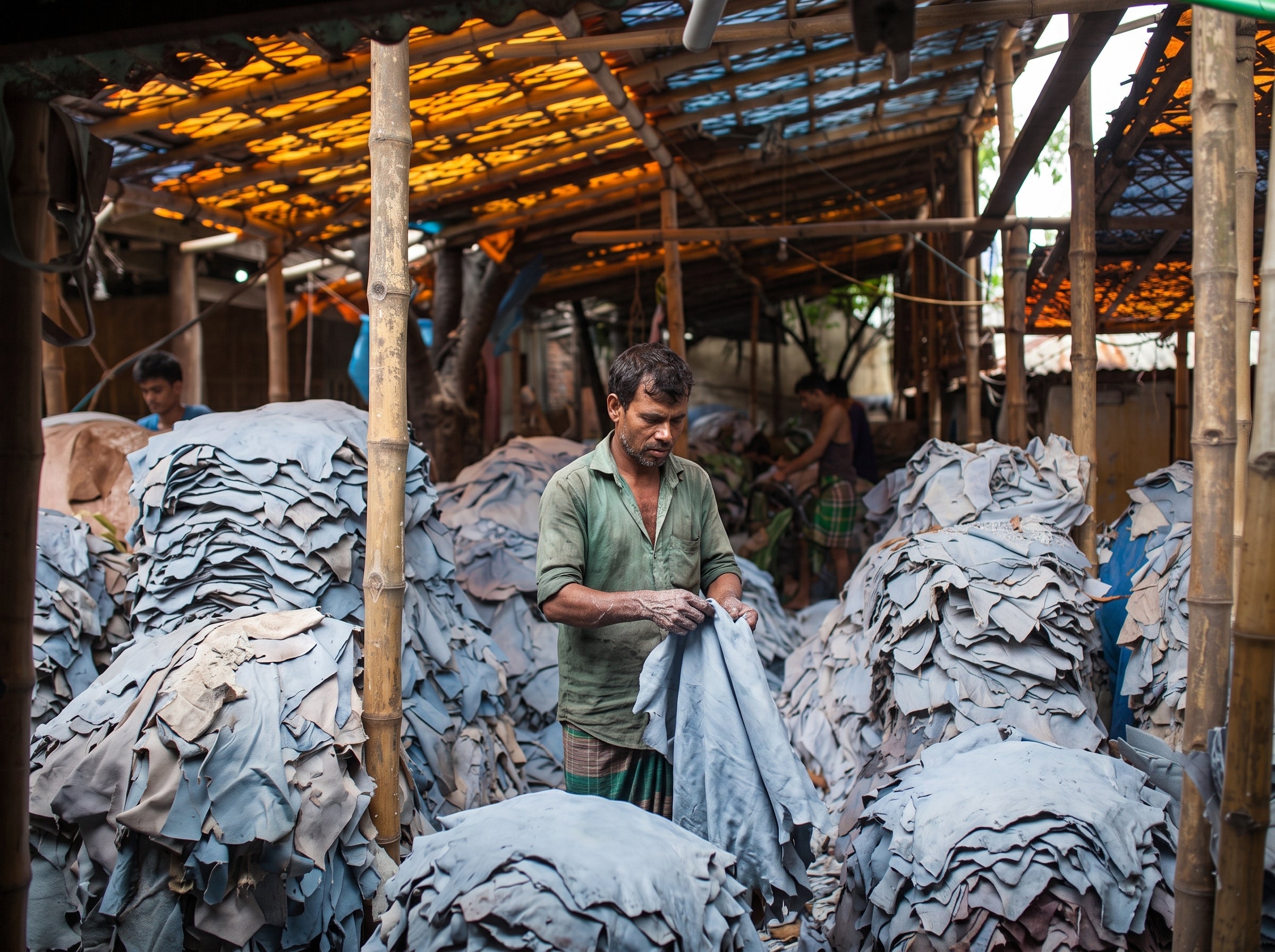
The better test is quieter. A briefcase reveals itself in the places that are hardest to disguise: the edge, the seam, the lining, the hidden structure, the leather surface, the hardware, and the way the whole object serves the person carrying it.
Start with craft, because craft is where shortcuts show first. Look at the handle, the seams, the pockets, and the inside construction. Then look at the material, the durability choices, and the functionality. A serious briefcase is not proven by one signal. It is proven by the agreement of many decisions.
So a master reads a briefcase through four questions:
- Craft: how the edge, seam, lining, and hidden structure are made.
- Material: how well the leather was tanned and finished, beyond the full-grain label.
- Durability: how the briefcase is built to last, and how seriously the warranty stands behind it.
- Functionality: how the briefcase is designed to serve the person carrying it.
Craft: edge, seam, lining, structure
Edge
The edge is one of the clearest measures of craft in leatherwork. It shows whether the briefcase was merely cut and finished, or whether the master had the skill, time, and discipline to resolve the leather properly.
The range is enormous. A raw or painted edge can belong to a briefcase made in a few hours, with work that almost anyone can be trained to repeat. On a high-craft briefcase with folded-edge construction, or rempliage, the edge alone can demand more than sixty hours of handwork. Learning to do that work competently takes at least ten years. Mastery takes twenty-five years.
There are several ways to finish an edge, and they reveal very different levels of craft. We will move from the lowest-skill finish to the highest: raw, painted, burnished, bound, and finally folded.
-
Low Craft
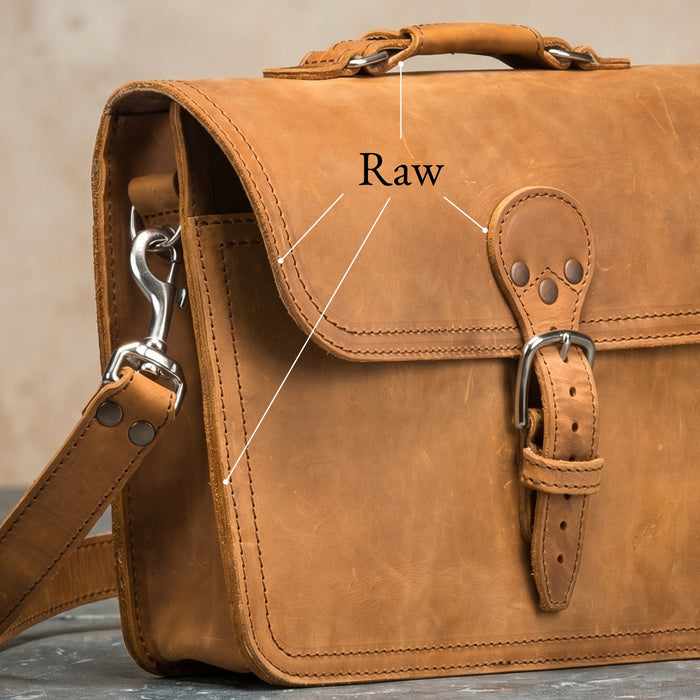
Raw edge.
The cut is left visible, often flat, rough, or slightly fuzzy along the side of the leather. Nothing has been added and nothing has been turned back to protect it. This is the most basic level of craft: the leather is cut, the panels are stacked, and the briefcase can be assembled on a flat-bed sewing machine with very little skill, precision, or time. In this kind of production, the whole piece can move through assembly in minutes. On a briefcase, it leaves the most vulnerable part of the leather unresolved.
-
Basic Craft
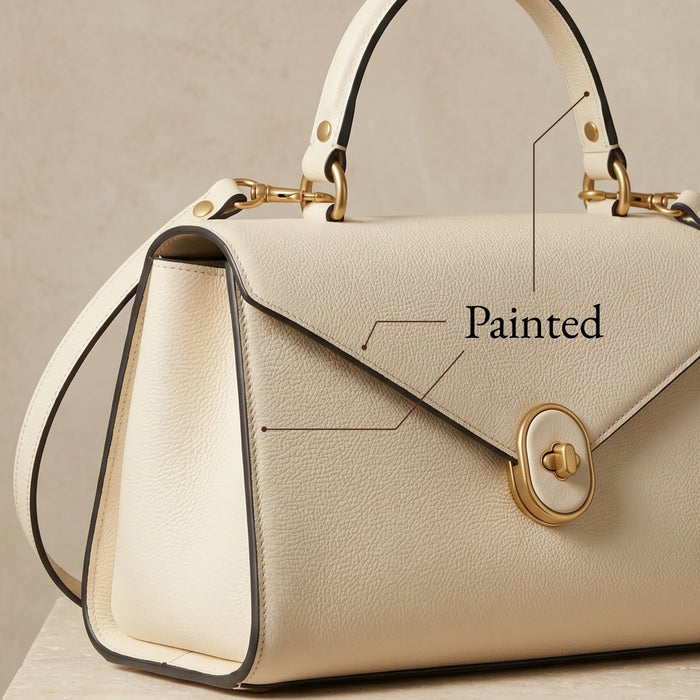
Painted edge.
The construction is the same basic construction as a raw edge: the leather is cut, the panels are stacked, and the edge is left as a cut surface. The difference is that the cut is then buffed and covered with edge paint. It can look clean when new, but the craft level underneath has not changed. The paint dresses the edge; it does not resolve it. After a few months, the high-stress areas can start to peel, crack, or break away.
-
Sound Craft
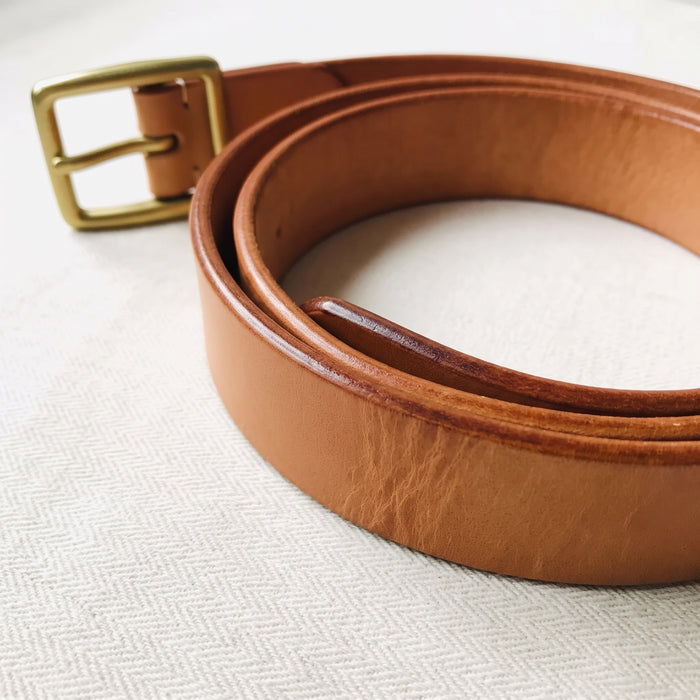
Burnished edge.
This deserves an honorary mention. A burnished edge is compressed and polished rather than painted. Done well, it can be beautiful, but it asks for thick, firm leather with enough hardness to take that polish. That makes it too niche to be the standard for a refined briefcase.
-
Sound Craft
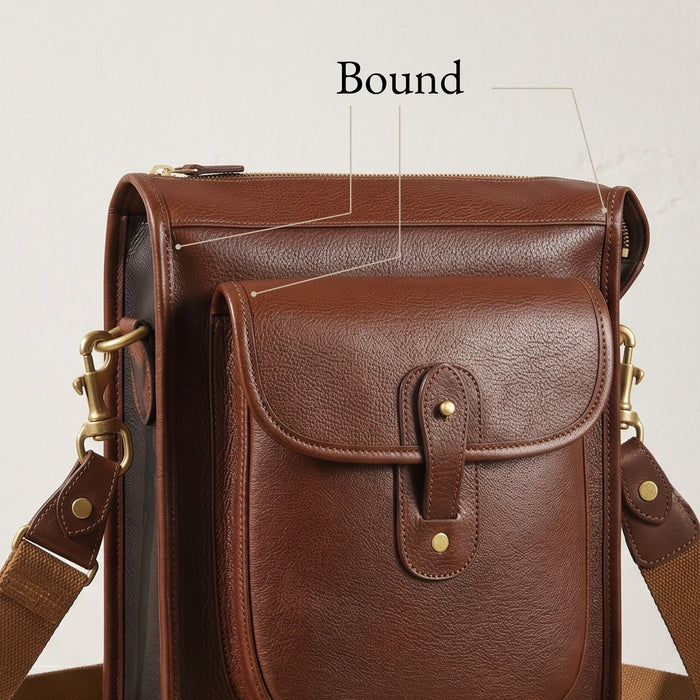
Bound edge.
A separate strip of leather wraps around the cut and is stitched down. It takes real skill to do cleanly, and it is more reliable than paint because the raw cut is physically enclosed rather than merely coated.
-
Master Craft
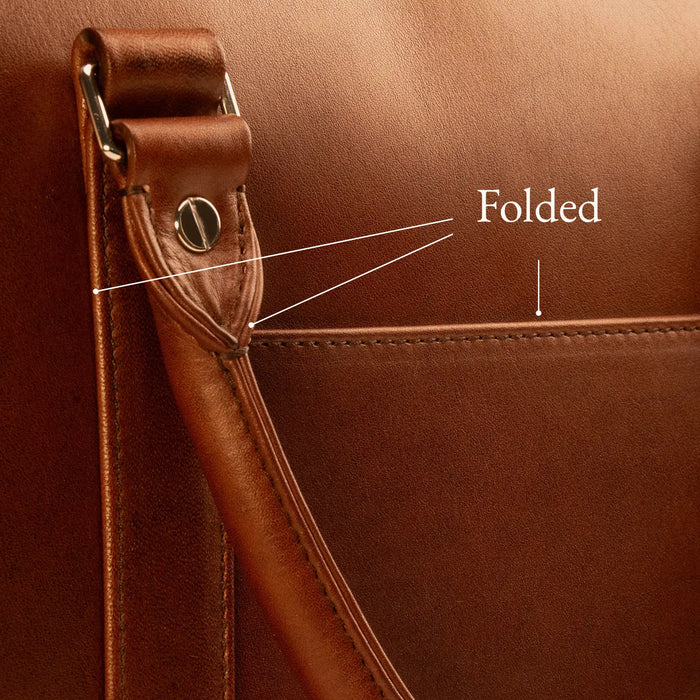
Folded edge.
This is the summit. The leather is skived, folded back on itself, and made to continue around the edge. There is no cut to cover, no paint to crack, and no separate strip to add. The grain itself carries around the curve.
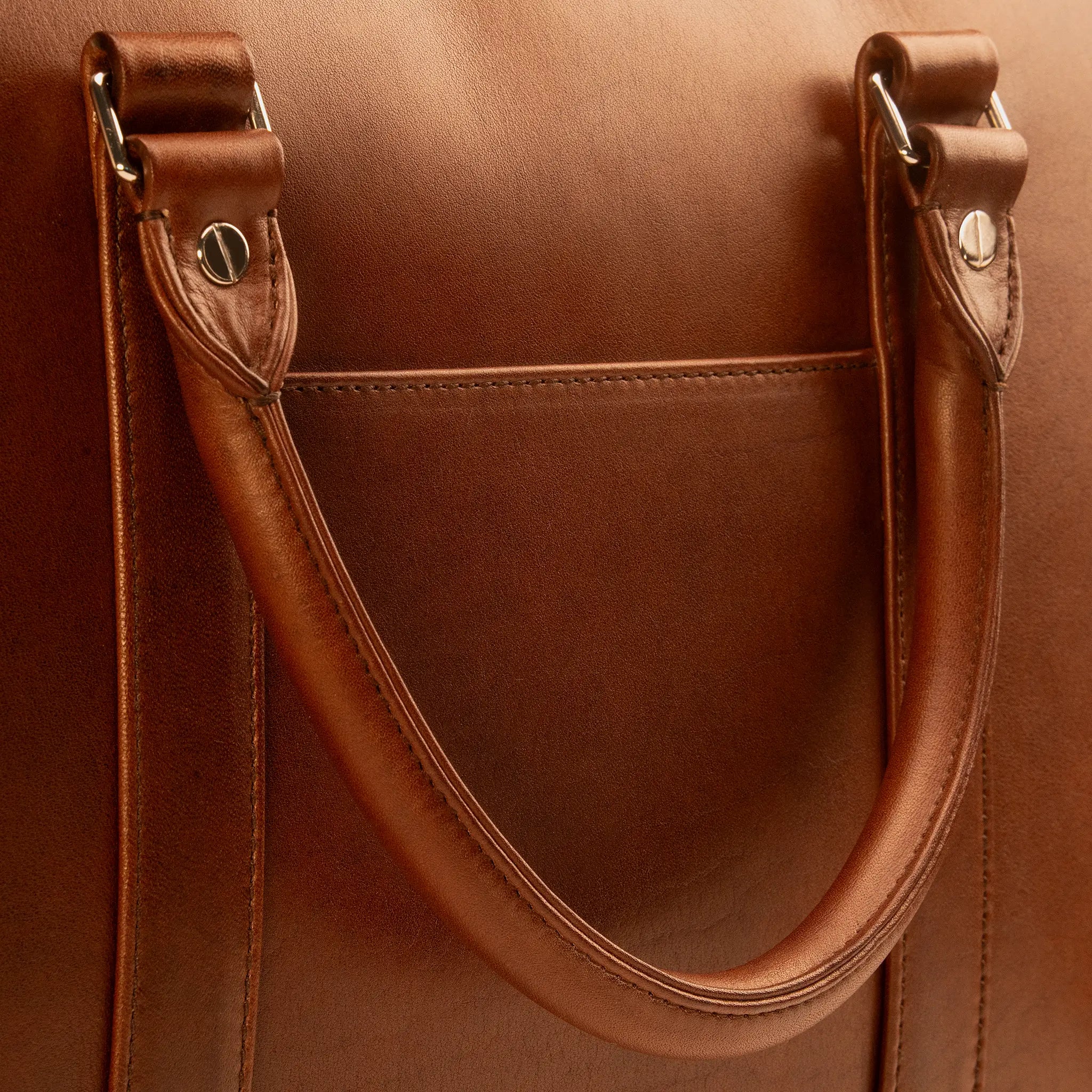
Folded Edge
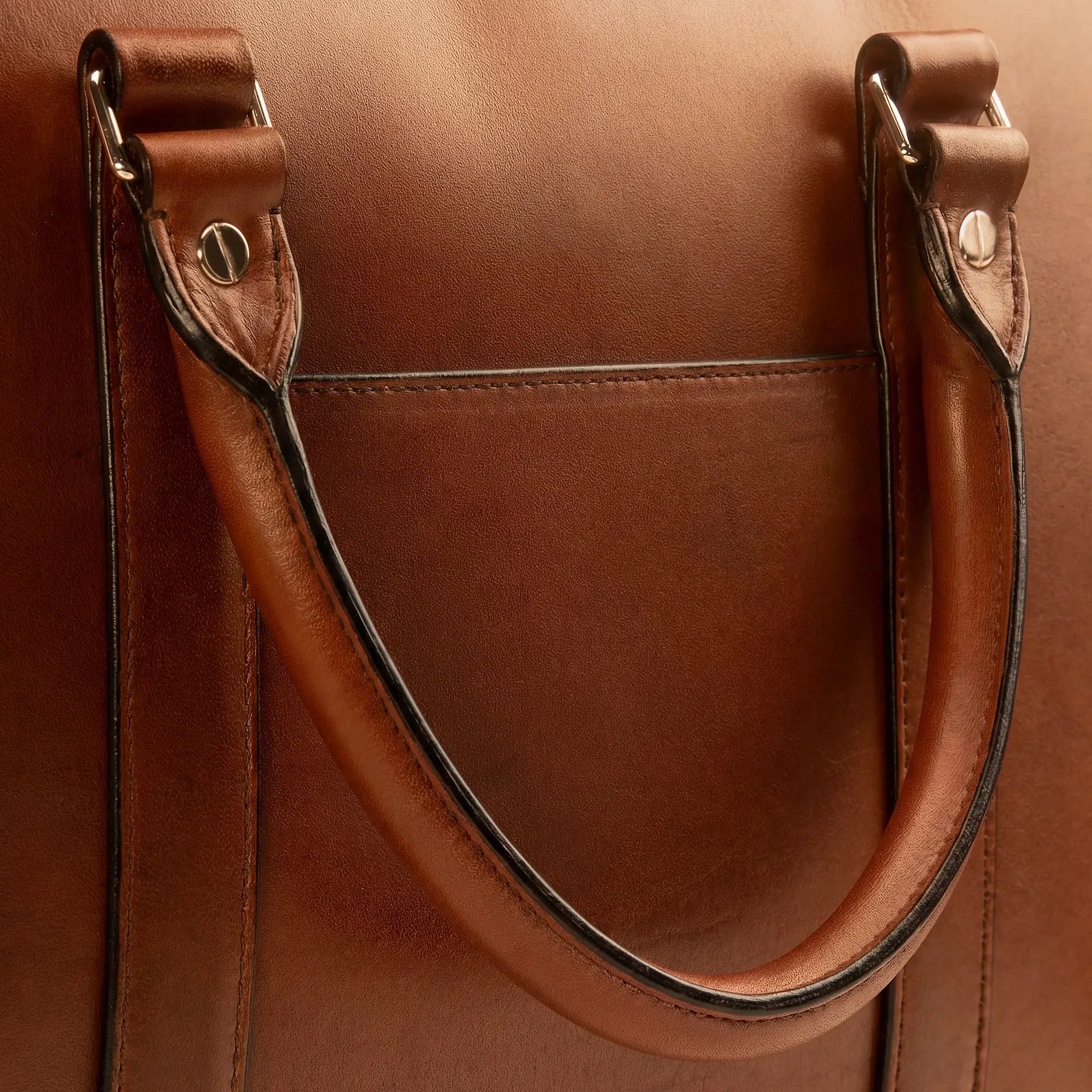
Painted Edge
Look at the handle, the sides, the pockets, and every place where the leather ends. A raw or painted edge signals low craft. A bound edge signals decent craft. A folded edge signals master craft.
Explore our Folded Edge Creations
Seam
-
Low Craft
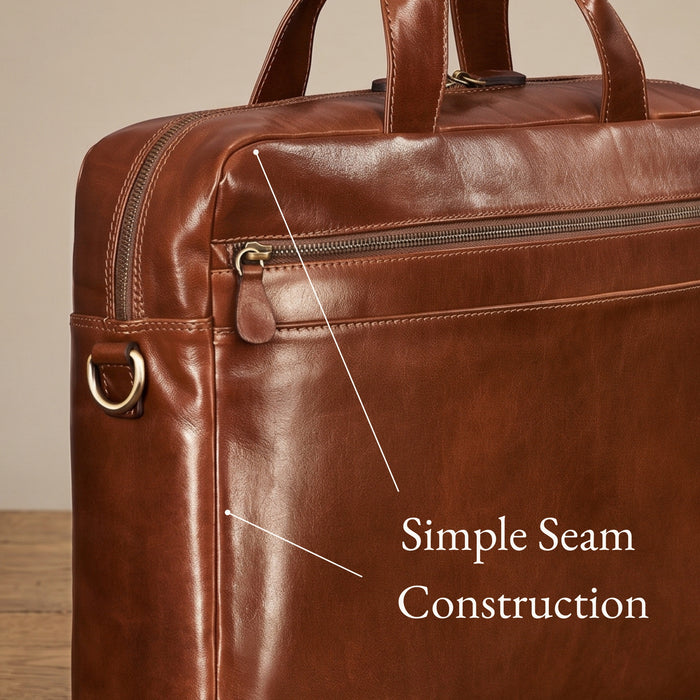
Simple seam.
Nothing shows on the outside, the bag is soft, and turning it inside-out reveals a raw, unfinished seam.
-
Basic Craft
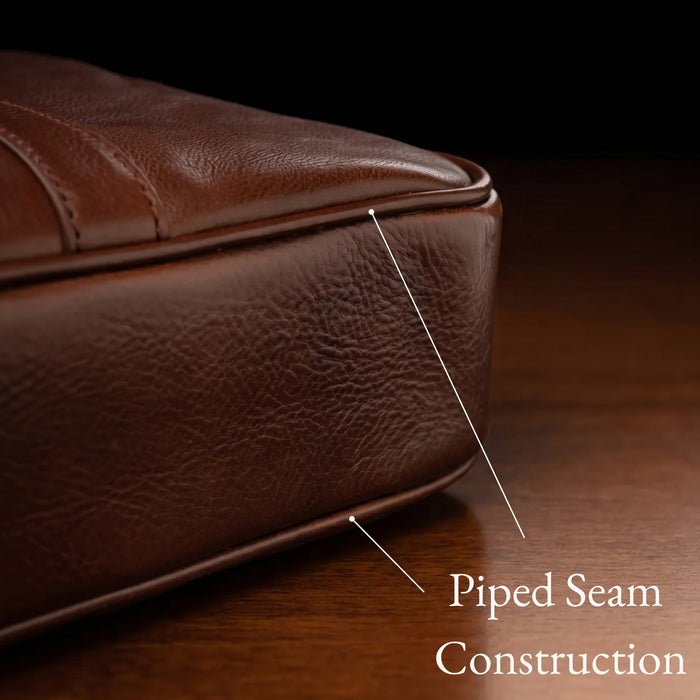
Piped seam.
A raised, rounded line, like a thin rope, runs along the seam.
-
Sound Craft
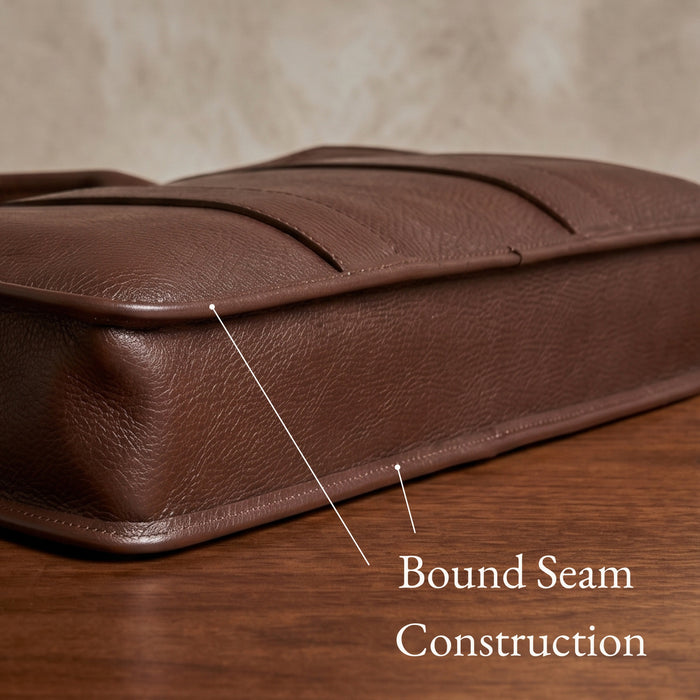
Bound seam.
This is better, because a separate strip protects the join and gives the construction more reliability.
-
Master Craft
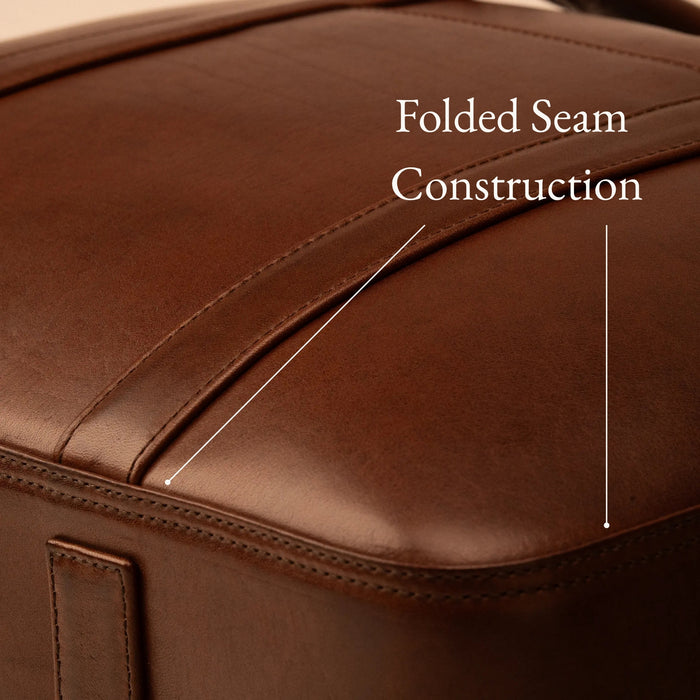
Folded-edge seam.
This is the master level. Each panel has to be skived, folded, aligned, and built around a wooden mould. It cannot be improvised flat on a sewing machine; the form has to be constructed before the seam can be closed.
There is one more thing to read: the number of panels. A high-craft briefcase uses the fewest panels the design can honestly allow, because every extra panel adds another seam, another stress point, and another place where the piece can fail. Many small panels usually mean the manufacturer is protecting cost and hide yield, not the long-term reliability of the briefcase.
So read the seam in two ways. First, look at how the panels meet: a simple or piped seam is low craft, bound is decent craft, folded is master craft. Then look at how many times the panels had to meet at all. Fewer, larger panels usually signal a more serious construction.
Lining
The lining is the inside construction of the briefcase: the pockets, dividers, inner panels, and the edges that hold them together. It is very telling because it is the part many manufacturers assume the buyer will not inspect.
When it is done properly, the lining can require more work than the exterior. The outside may be a few large panels; the inside has many smaller parts, layers, pockets, junctions, and edges that all have to come together cleanly.
Read the lining from low craft to master craft.
-
Low Craft
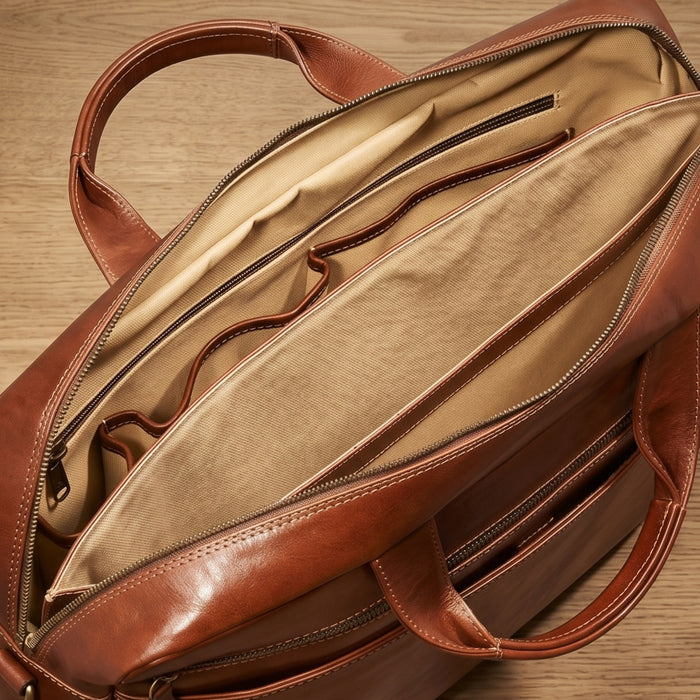
Textile lining.
This is the lowest level. Fabric is cheaper, faster, and easier to install than leather. It may hide the construction, but it does not build the interior.
-
Basic Craft
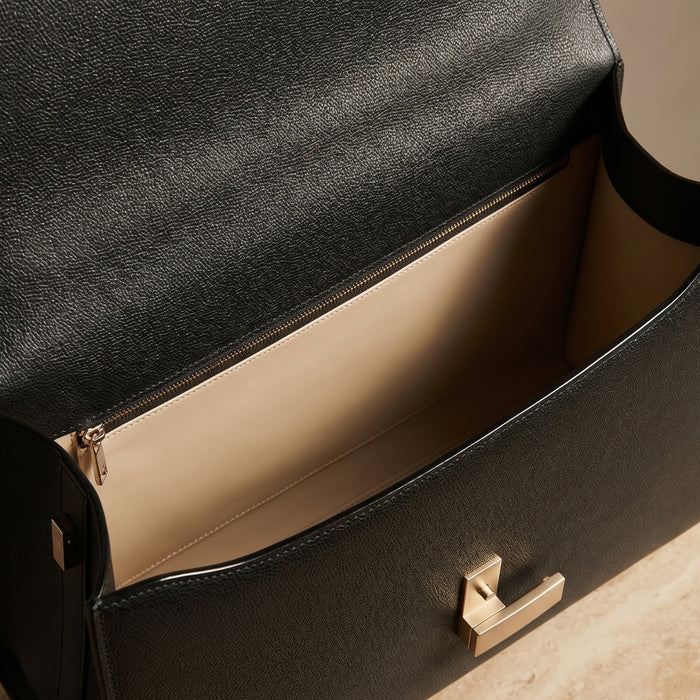
Basic leather lining.
This is better as a material, but still low as craft if it has little or no functional pocket construction. The inside is covered in leather, but not truly built.
-
Sound Craft
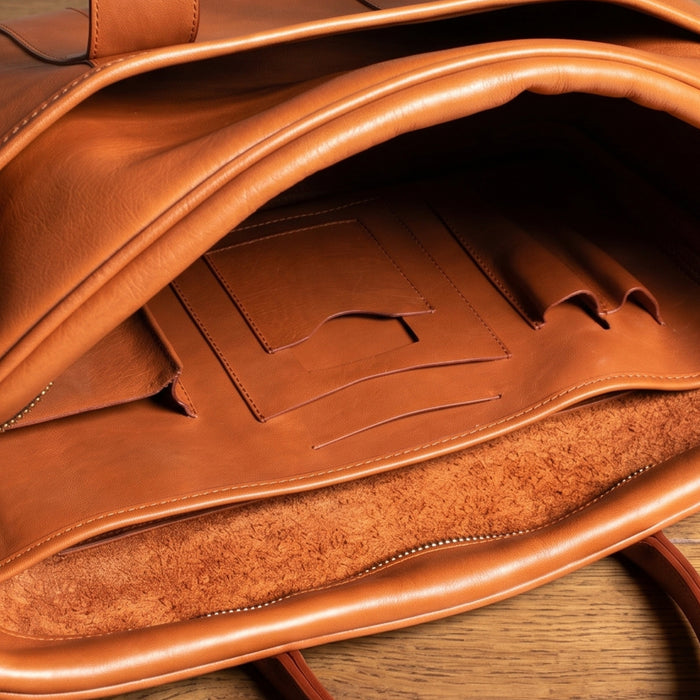
Functional leather lining with raw or painted edges.
This is useful, because the interior has real pockets and divisions. But if those pockets are finished with raw or painted edges, the construction is still basic.
-
Master Craft
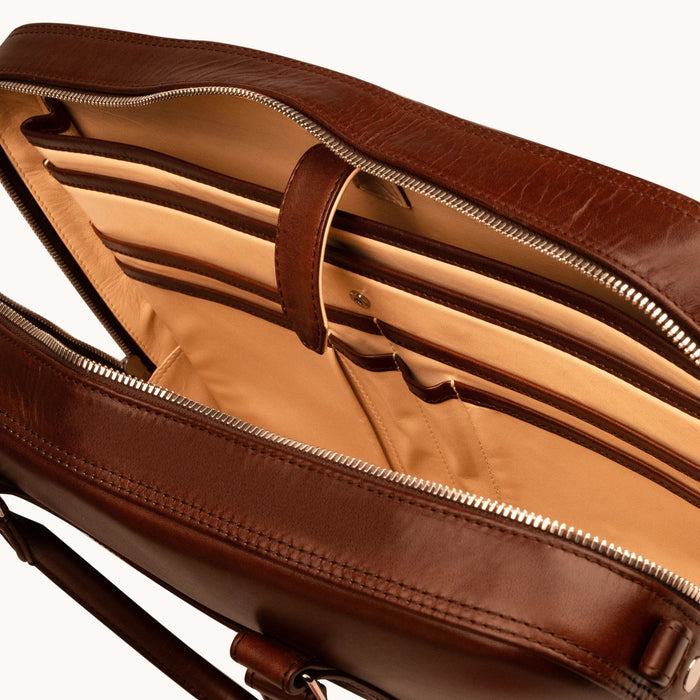
Master-level leather lining.
This is a functional leather interior built with high-craft techniques. The pockets and dividers are not only useful; their edges are bound or folded, so the inside is made with the same seriousness as the outside.
Explore our Folded Edge Creations
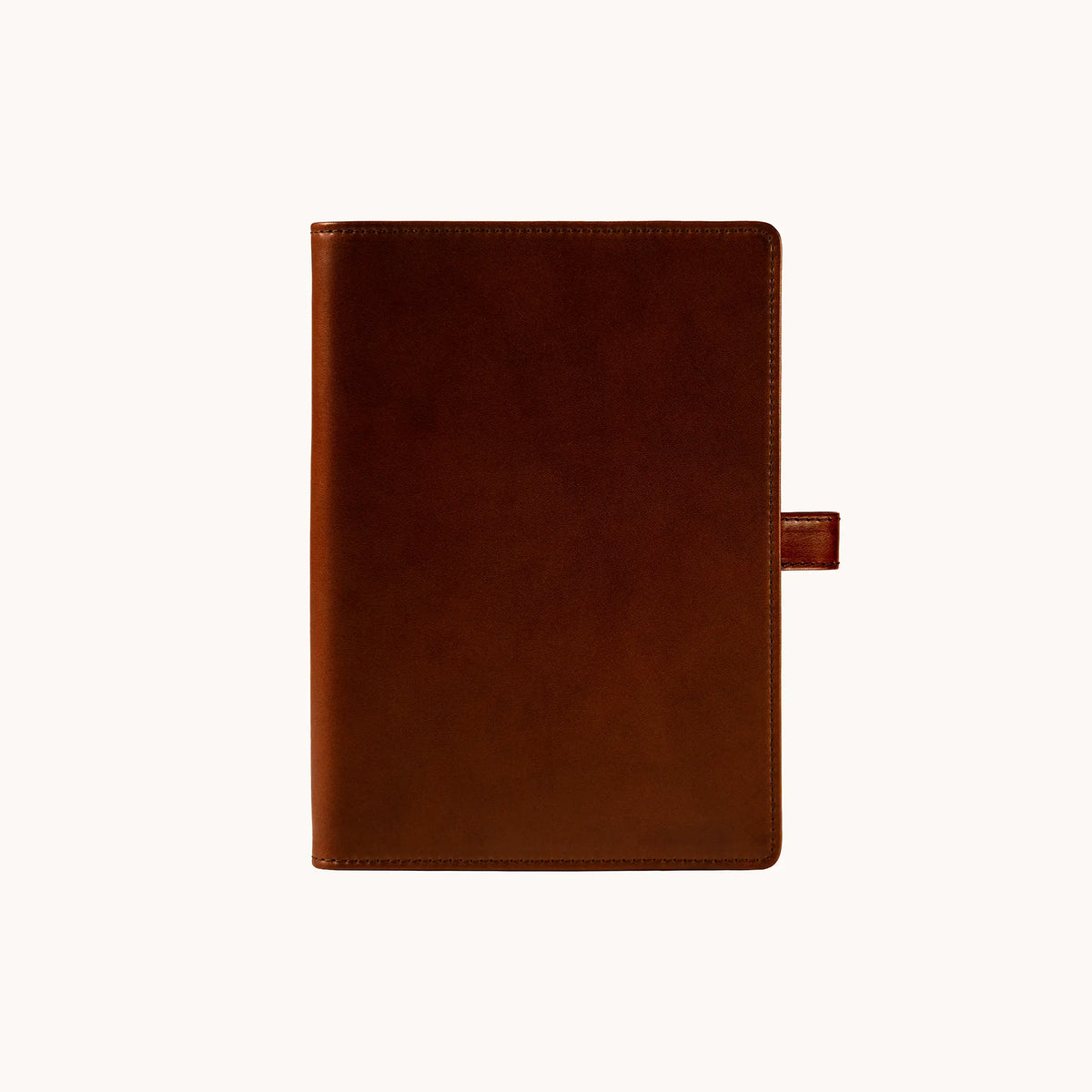
Structure
Structure is the hidden engineering under the visible leather: the reinforcements, supports, layers, and forms that decide how the briefcase stands, carries weight, opens, closes, and ages.
It matters because leather is an organic material. By itself, it can relax, stretch, crease, and lose shape over time, especially at the handle, corners, flap, base, and other pressure points. A serious briefcase is not held by leather alone.
The master has to choose the right internal materials for each part of the case: enough support to preserve the silhouette, enough flexibility to let the leather move naturally, and enough reinforcement at the stress points to prevent deformation. Too little structure and the briefcase collapses. Too much, or the wrong kind, and the leather becomes stiff and lifeless.
This is a separate field of craft. You may not see the reinforcement directly, but you can read its effect. Empty the briefcase and place it on a table. It should stand as it was drawn to stand. The panels should lie flat and even. The body should not twist, sag, or depend on stiffness alone to keep its form.
Material: beyond the full-grain label
Leather
The leather matters after the craft has spoken. But the usual hierarchy is the wrong place to begin.
Most blogs and influencers frame leather as full-grain versus top-grain versus genuine leather. That sounds useful, but it is too crude to judge a serious briefcase. Full-grain is not a verdict. Most briefcase leather is already sold as full-grain, and inexpensive full-grain is abundant. A cheap hide can keep its grain and still be dressed under pigment and embossing until it looks clean when new.
A master begins with two questions. First: is the leather dyed or hidden under pigment? If the surface is pigmented, the leather itself is concealed. At that point, the full-grain label matters far less, because you are no longer looking at the hide. You are looking at a coating.
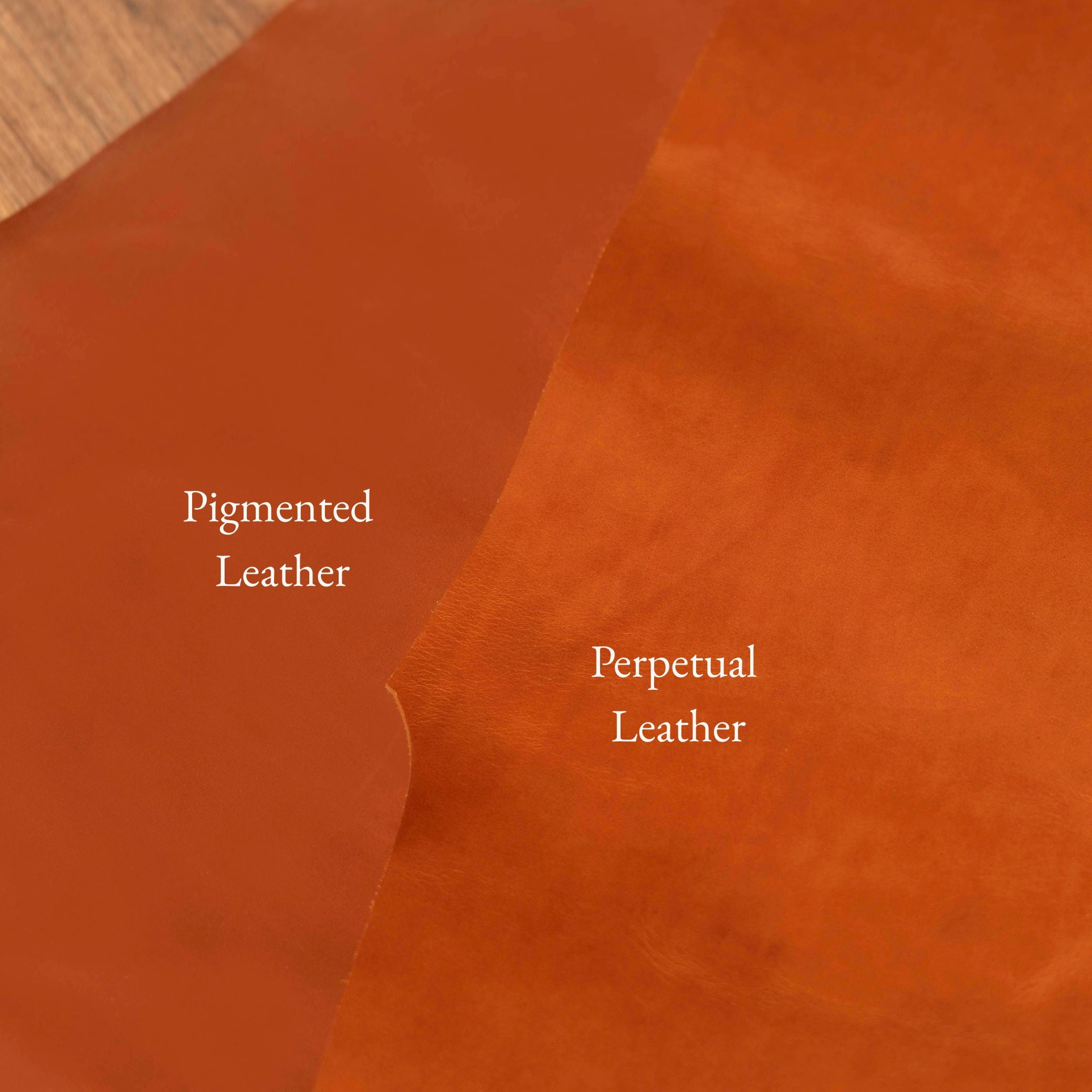
Second: how was it tanned? Is it slow vegetable-tanned leather from a tannery with real experience, especially the Tuscan tanneries known for this work, or chrome-tanned leather produced in a day? You cannot verify this fully with the eye. You have to ask the manufacturer, and the answer should be precise.
Then comes provenance. Where did the hide originate? Which animal variety was it taken from? How was it handled before tanning? These choices affect the durability, density, ageing, and behaviour of the leather. They cannot be confirmed by eye. They are confirmed by the tannery behind the hide. A serious tannery controls this chain carefully and carries credible certification, such as a Leather Working Group Gold rating. A lower-quality tannery treats these details as cost variables, and the leather suffers for it.
Only after that comes the cut. Which part of the hide was used? The shoulder, belly, bend, and double bend do not behave the same way. The double bend core, the dense section along the spine, is the highest part for a structured briefcase. This is why Perpetual Leather is cut from the double bend, as explained in the seven dimensions of Perpetual Leather.

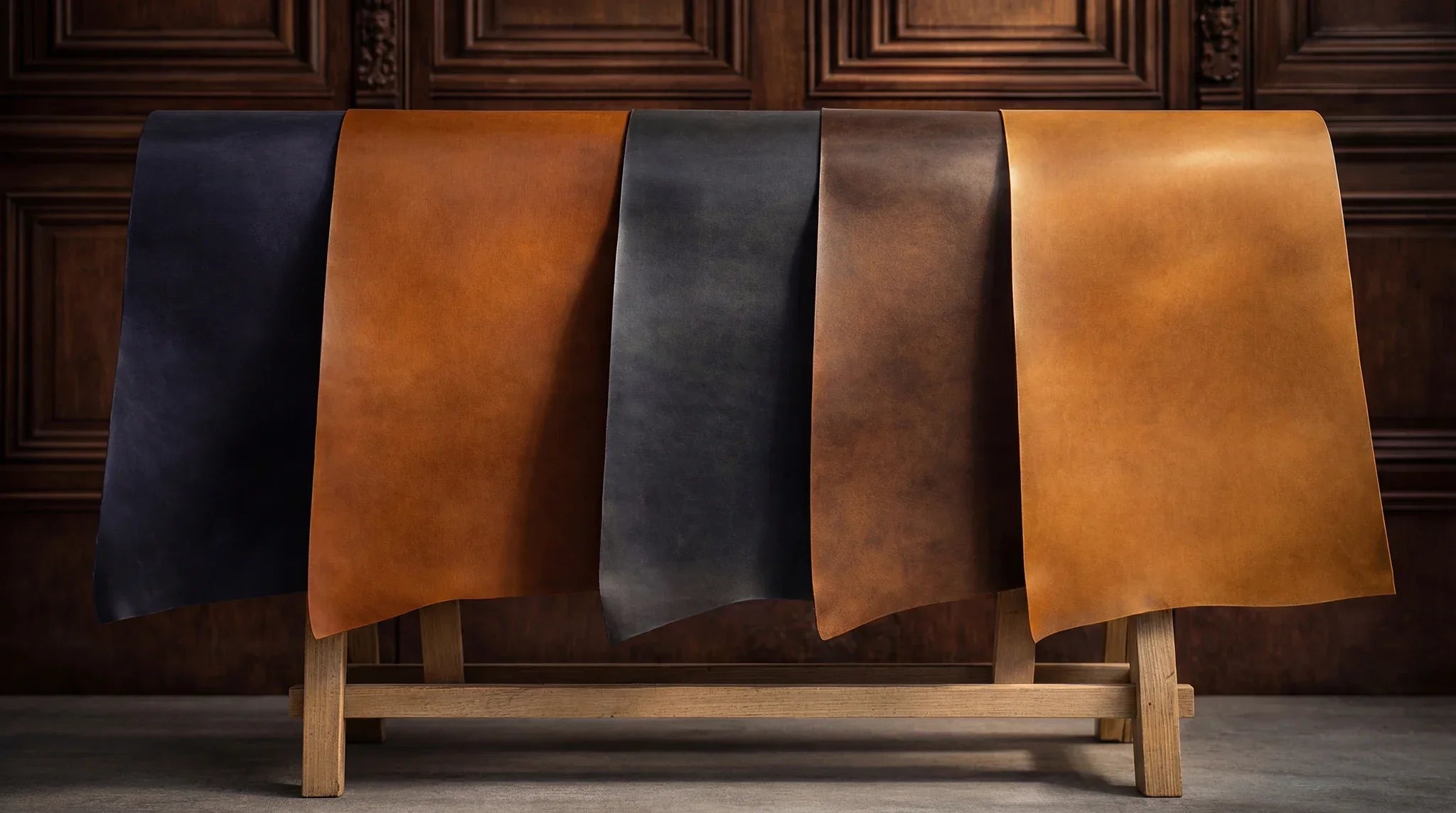
Our answer is the leather we call Perpetual Leather. It is full-grain vachetta from the double bend, the dense section along the spine, selected at two millimetres. The hides come from Northern Europe, where the cooler climate gives the fibre a tighter structure.
It is tanned by Tempesti in Tuscany, an artisanal tannery founded in 1946 and one of the most established specialists in vegetable-tanned leather. The tannage takes roughly forty days in wooden drums with chestnut and mimosa. Most of the world's leather is tanned industrially in hours. That difference is not romantic. It changes how the leather receives oil, wax, light, and care.
The finish matters just as much. Perpetual Leather is aniline, which means the colour is dissolved into the grain rather than sealed under an opaque coat. The surface you touch is the leather itself, not a film laid over it.
That openness is why the leather can recover. A minor scuff is not a broken coating. It is displaced fibre and disturbed surface wax. A slow rub can ease the wax back and settle the mark.
It is also why the leather improves. The colour deepens with light and use. The surface takes on a soft sheen. In ten years, the piece reads as more itself than it did new. A leather sealed under pigment begins at its best and retreats from there.
There is a fuller account in the seven dimensions of perpetual leather, and a practical care guide in guide to caring for Perpetual Leather. For choosing, ask one question: was this leather made to age?
Hardware and zippers
Hardware is the metal architecture of the briefcase: the clasp, rings, zip pulls, fittings, and every part the hand touches repeatedly. It should be judged by its base metal first, then by its finish.
There are three main levels.
- Zamac. This is the lowest level, and it is widely used because it is cheap and easy to cast. It can look convincing when new, but it does not have the density, corrosion resistance, or long-term dignity of better metals.
- Brass. This is the traditional luxury step up. It has weight, takes plating well, and can be made beautifully.
- 316L stainless steel. This is the highest choice for a briefcase made for permanence. It is the grade used in demanding marine, surgical, and fine-watchmaking contexts because it resists corrosion and keeps its surface over time.
The second question is plating. If the colour of the hardware is not the native colour of the metal, then the surface has been plated. However good the hardware is underneath, plating is still a layer. After years of contact, especially at the clasp, zip pull, and corners, that layer can wear and the underlying colour can begin to show. This is why Lunburg uses unplated 316L stainless steel: the visible surface is the metal itself, not a finish waiting to disappear.

The same logic applies to zippers. At the top end, the serious names are YKK Excella and Riri. Lunburg uses YKK Excella because it has the stronger reputation for long-term durability, while still giving the precision expected from a luxury zipper.
Padding
Padding is the hidden layer that decides how well a briefcase protects what it carries. In a briefcase, that usually means a laptop, phone, headphones, chargers, and other electronics.
The basic solution is ordinary foam, often EVA. It softens contact, but it remains simple cushioning. The higher standard is impact-protection technology: visco-elastic materials such as PORON XRD and D3O, designed to absorb and disperse force rather than merely sit between the object and the leather. This is why we call it a Defense-Grade Visco-Elastic Matrix: the same class of protective technology is used in defense equipment and aerospace programs, including NASA contexts.
Lunburg uses PORON XRD because it gives that level of protection without adding unnecessary bulk. The briefcase keeps its form, while the electronics inside are guarded by material chosen for impact absorption, not ordinary bag padding.
Durability: built to last, backed by warranty
Durability is not one feature. It is the result of every decision already described: the leather, the tannage, the finish, the edge, the seam, the lining, the hidden structure, the hardware, the zipper, and the padding. Each choice either helps the briefcase hold its form over time, or gives it a place to fail.
This is why durability begins before the briefcase is assembled. It begins with material selection, then continues through construction: how the edge is resolved, how the panels meet, how the stress points are reinforced, and how the interior is built. A briefcase lasts when all of those decisions are made together.
The warranty tells you how much confidence the master or brand has in those decisions. A weak warranty is not only a service policy; it is often a confession of uncertainty. A strong warranty says the maker is willing to answer for the construction over time.
That is why Lunburg backs the Opus with a fifty-year warranty, including reconstruction of a folded edge in the rare event that one should part. It is not a promise added after the object is made. It is the consequence of how the object was made in the first place.
Functionality: designed to serve the person carrying it
Functionality is the fit between the briefcase and the life it enters. It is not the number of pockets, and it is not how much the case can swallow. It is whether the shape, depth, divisions, and access serve the person carrying it.
A poor briefcase treats every user the same. It gives one generic volume, a few generic pockets, and leaves the owner to adapt around it. It may hold objects, but it does not understand the day.
A great briefcase is more precise. It asks what has to be carried, how often it is reached, how formal the setting is, and how much volume the person can carry without the object losing its composure. A lawyer, doctor, venture capitalist, engineer, and vice president may all need a briefcase, but they do not need the same briefcase.
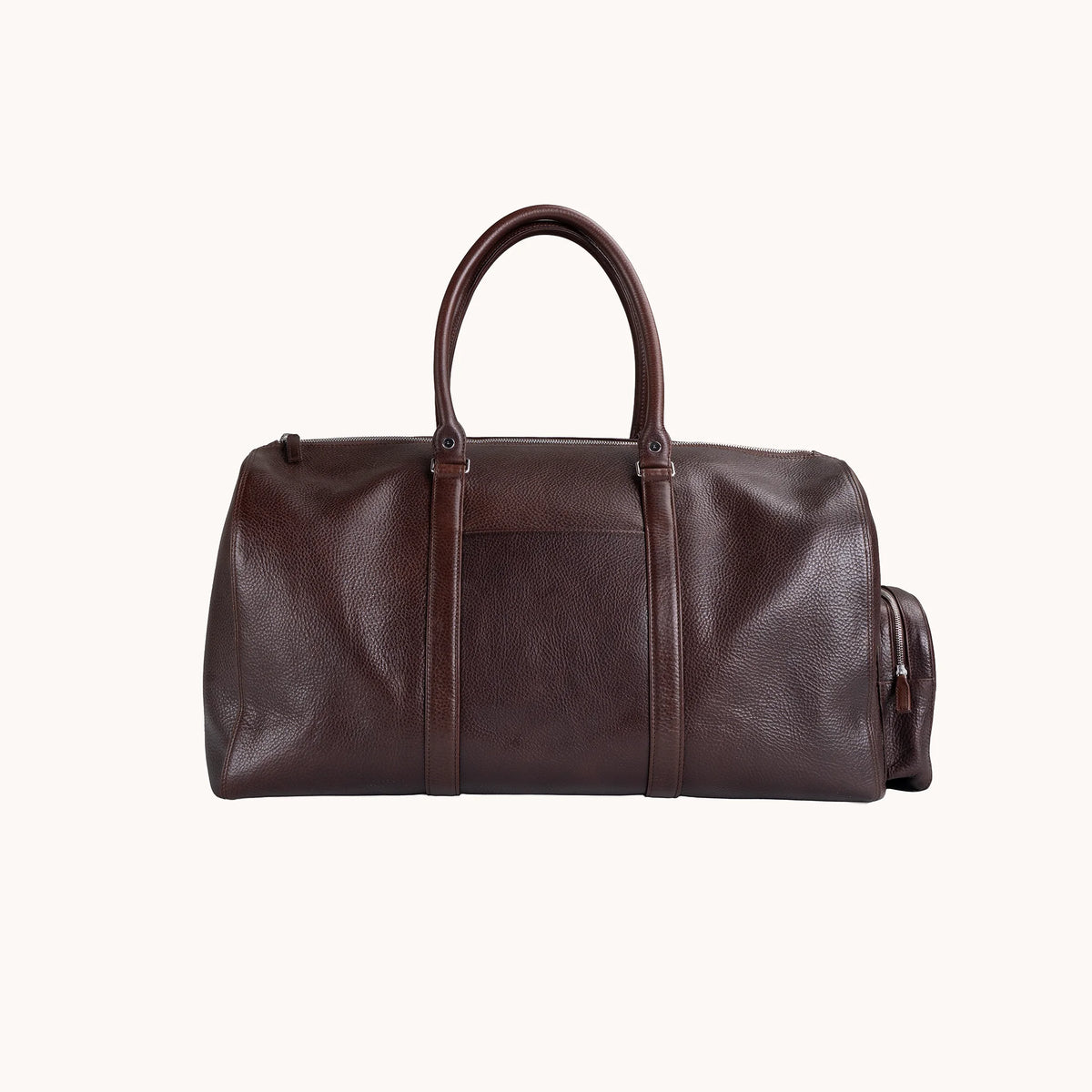
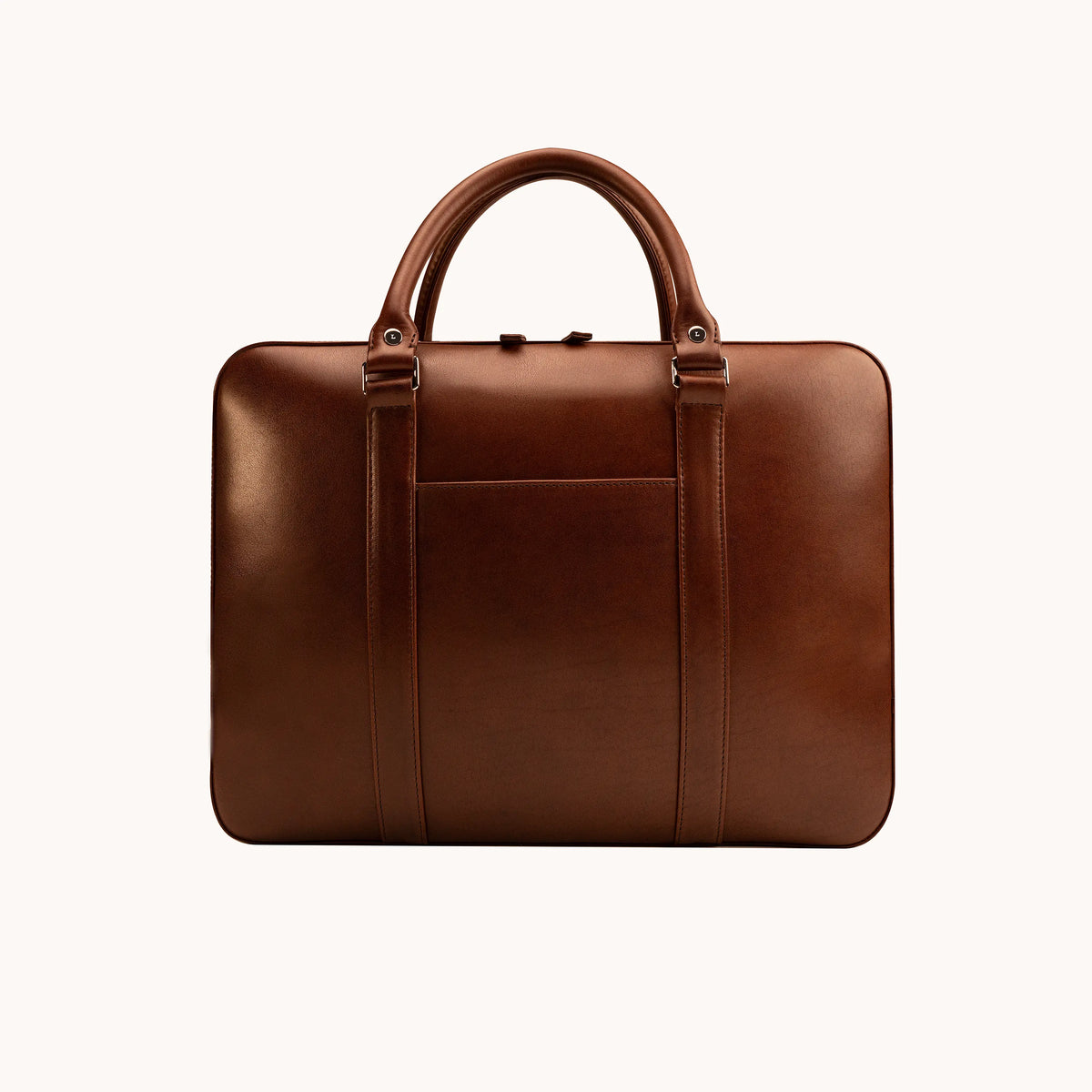
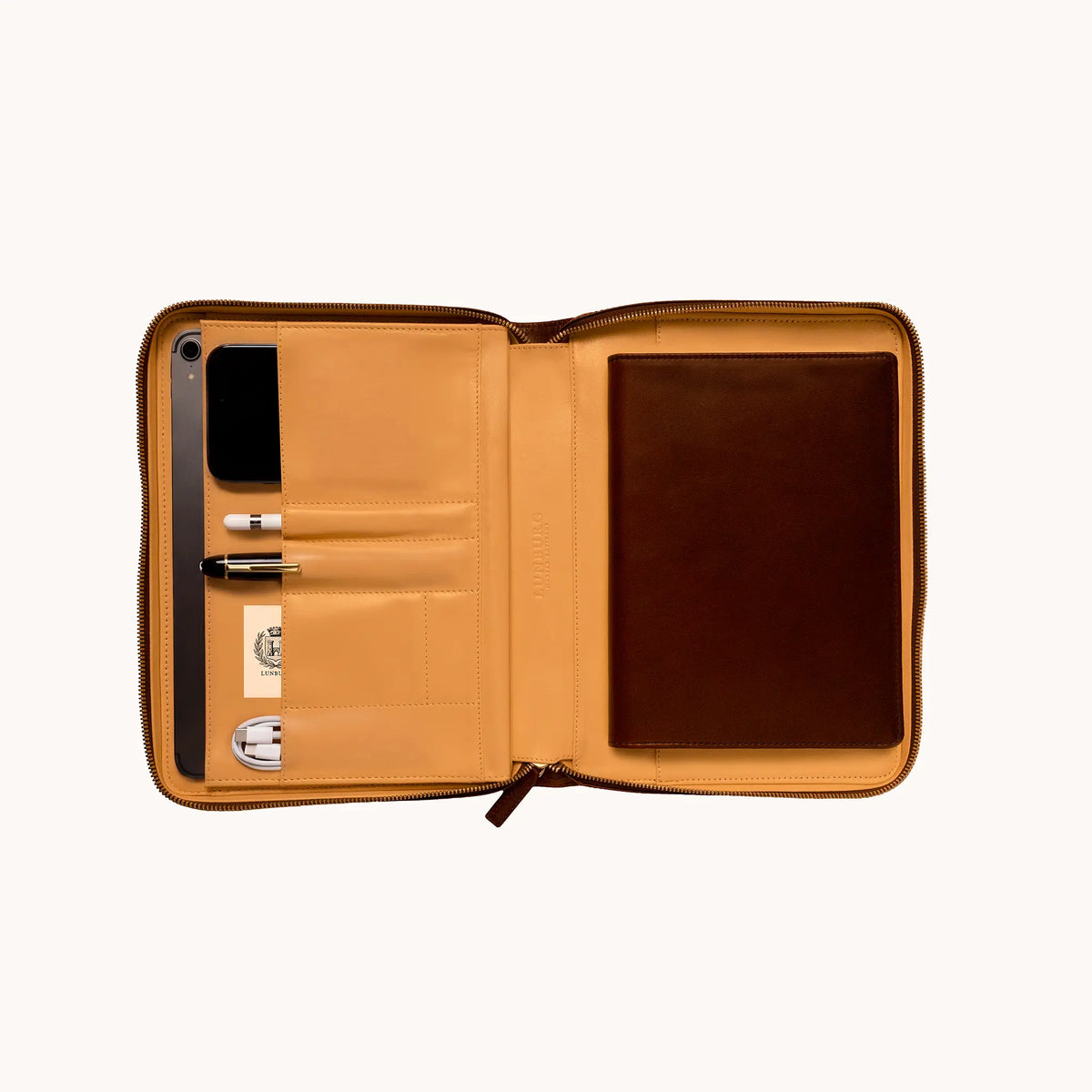
This is why the Opus is made in three variants: Integral, Essential, and Classic. Each keeps the same craft, leather, and construction standard, but serves a different way of carrying.
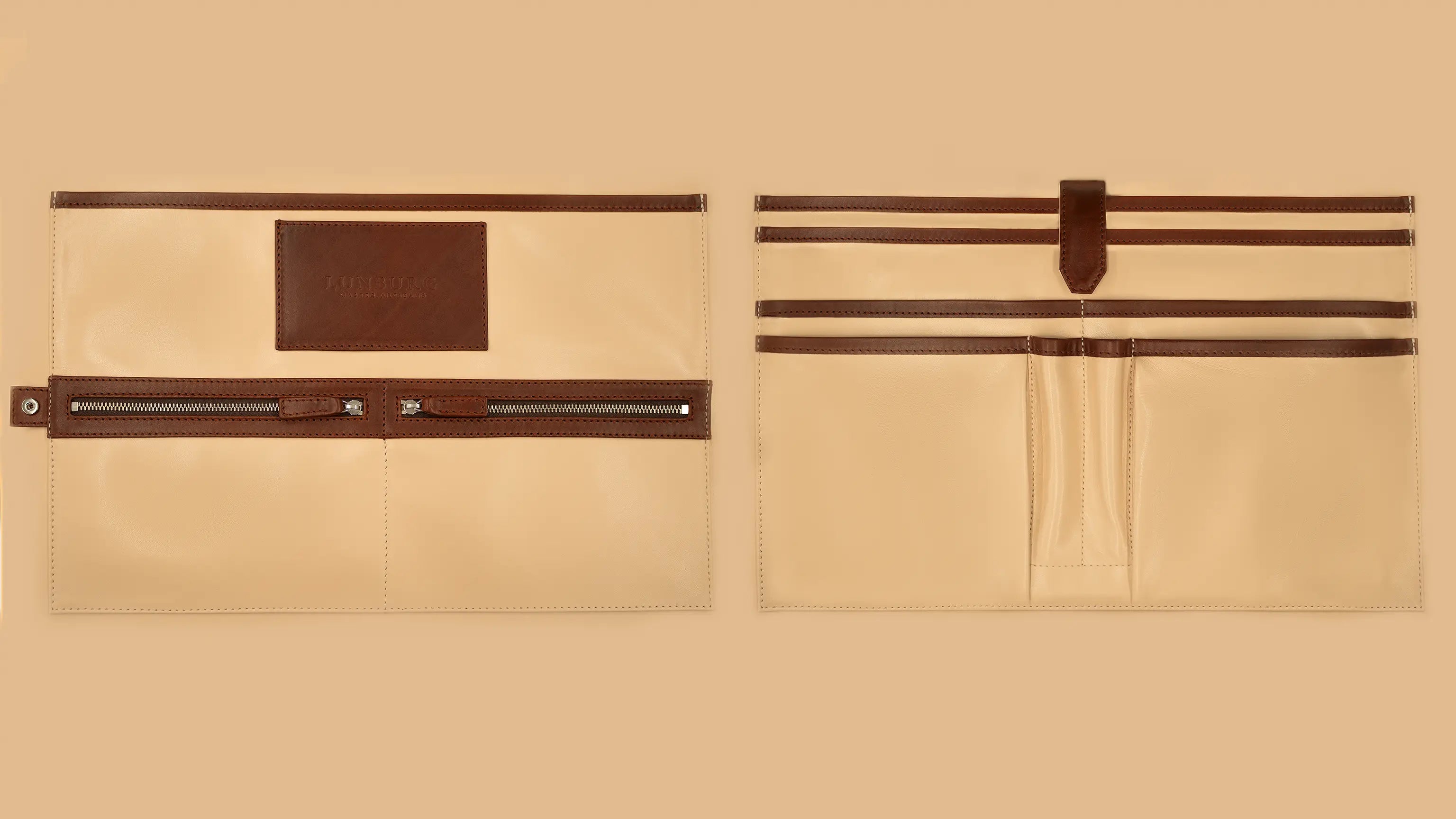
For digital-heavy workflows: dedicated padded compartments for laptop, tablet, documents, and accessories. It is the version for someone who wants one case to replace several organisers.
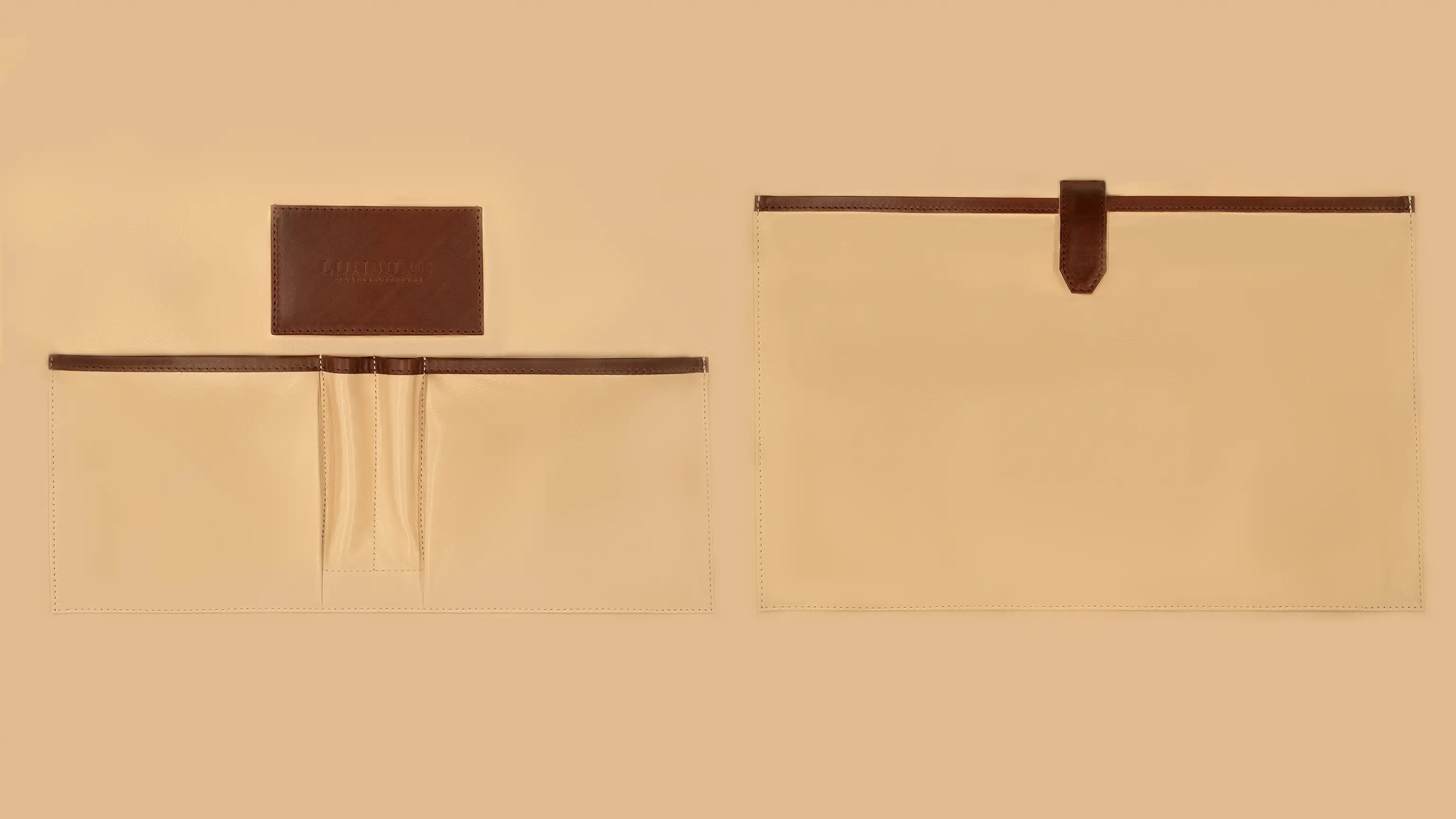
For laptop-primary professionals: protected device carry, minimal built-in pockets, and open space for the owner's own organisers.
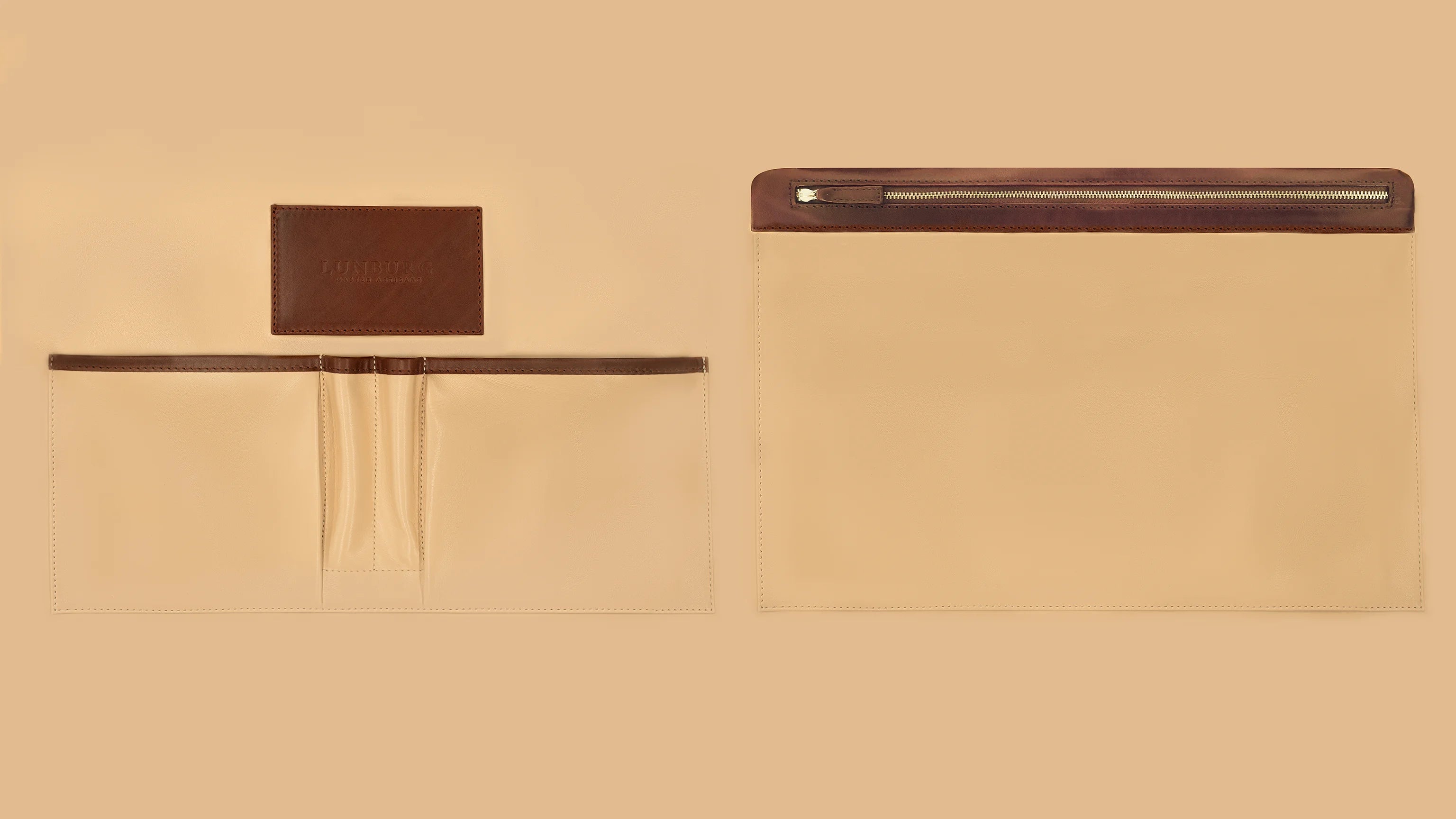
For paper-heavy work or professionals who prefer their own organising system: an open, padded volume for documents, portfolios, and personal organisers.
The depths complete the choice: seven, ten, and fifteen centimetres. Choose the variant first, then the depth. The right briefcase is the one whose design serves the person carrying it without asking the leather to become luggage. See these principles in the finished work in our leather briefcase collection.
Explore our Folded Edge Creations
Read more
The Seven Dimensions of Perpetual Leather
Patina is the visual and tactile maturation of leather: the deepening of color, the emergence of luster, the softening that transforms an object into something singular. Many leathers claim this qu...
Read more
How Fes Forged the Meaning of Luxury, And Why the World Forgot
For over 1,200 years, Fes served as the imperial capital of Morocco. Three forces converged there to elevate it to the world capital of luxury leathercraft, cultivating the qualities that define th...
Read more
The Master's Eye: How to judge any leather bag, beyond the logo, in under five minutes.
Learn the four checks that reveal how a leather bag was actually made: edges, seams, lining, and structure. A practical guide to judging craft beyond the logo.
Read more