
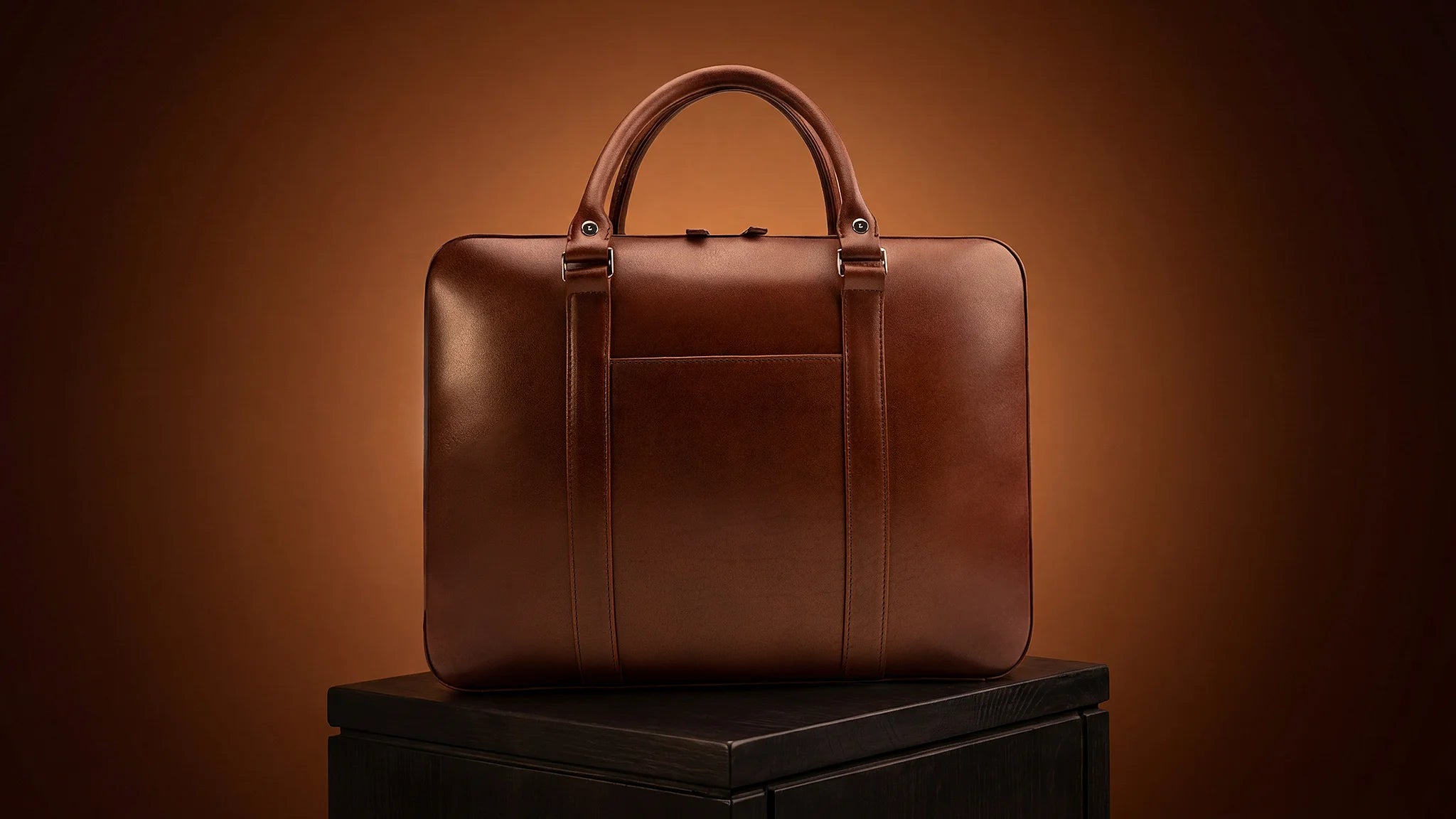
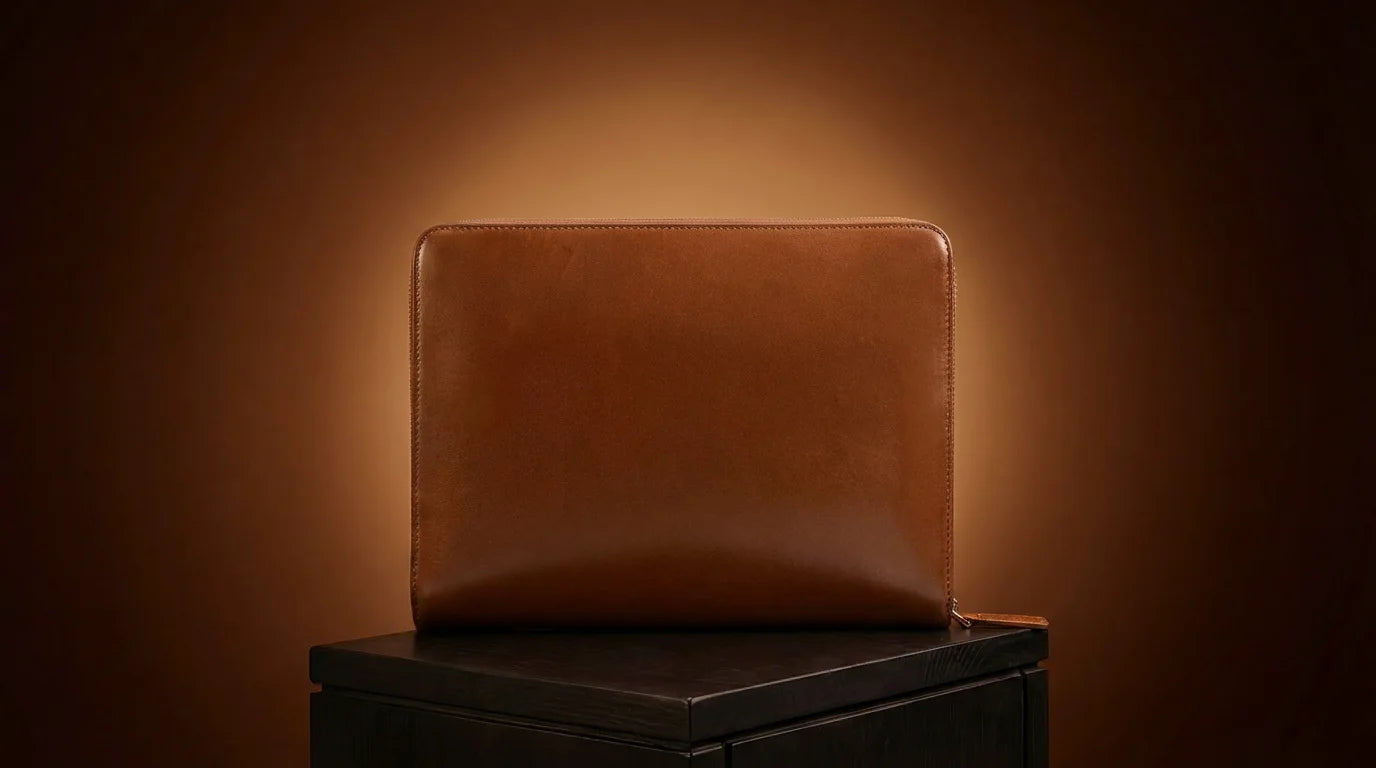
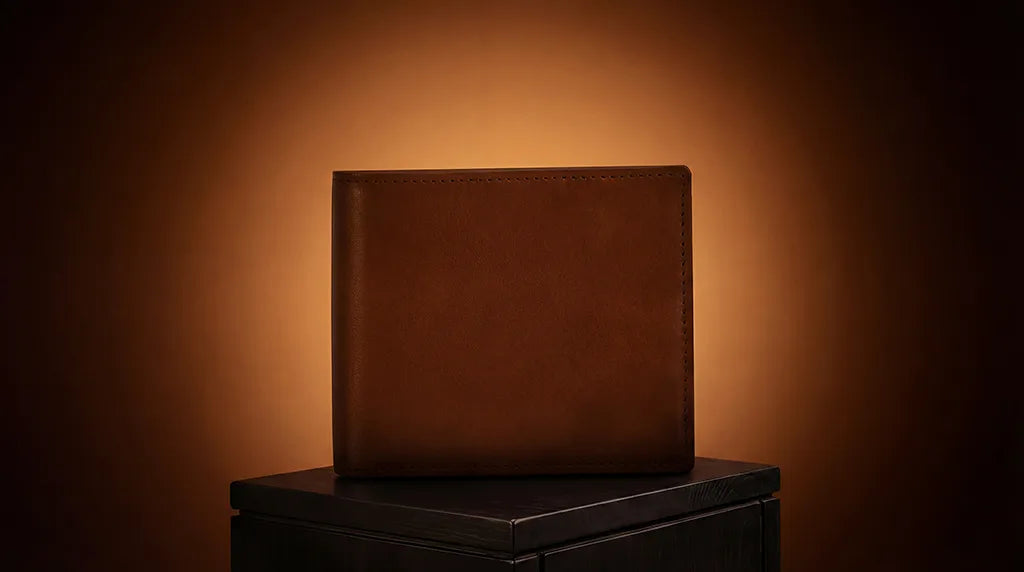

REMPLIAGE: The Endangered Art of the Folded Leather Edge
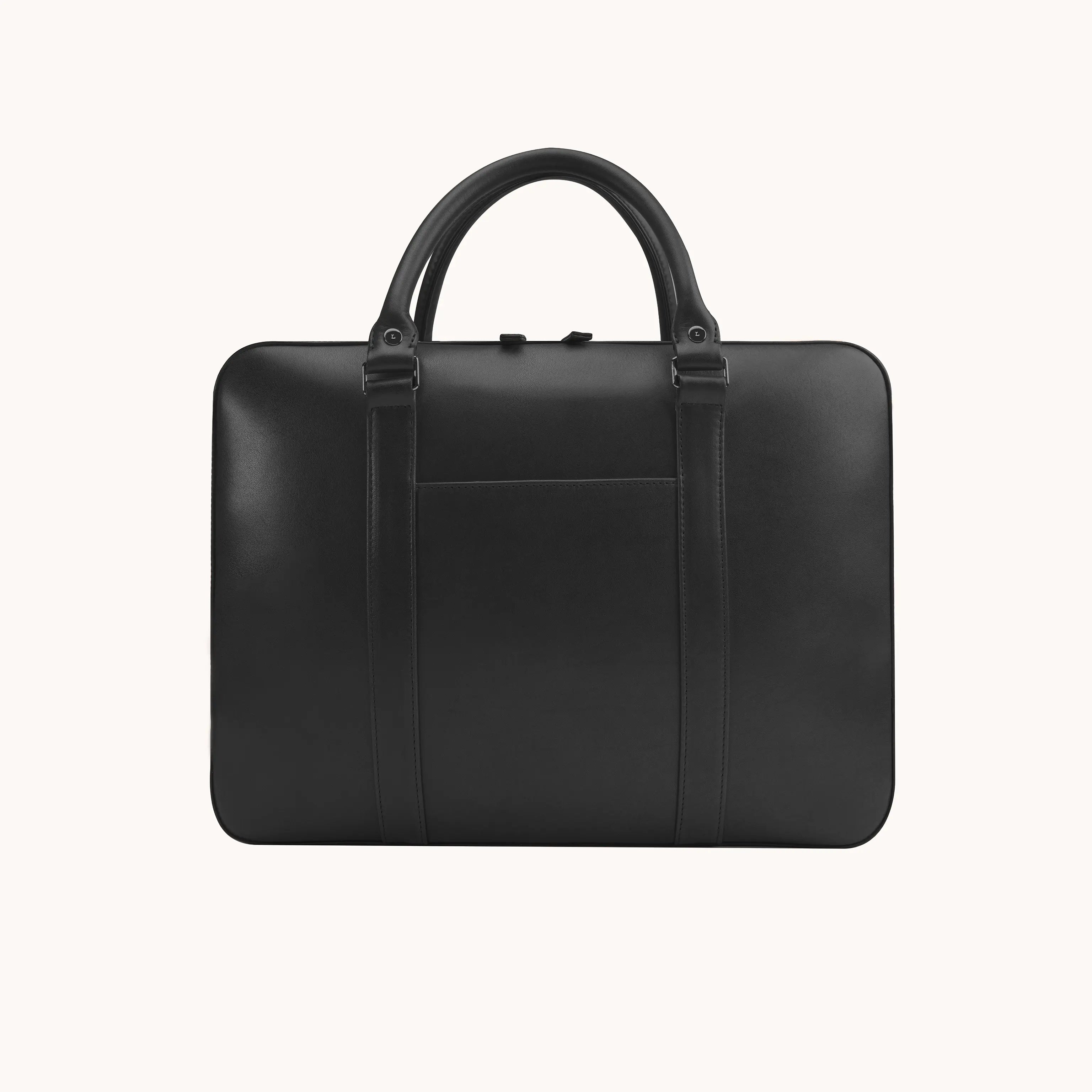
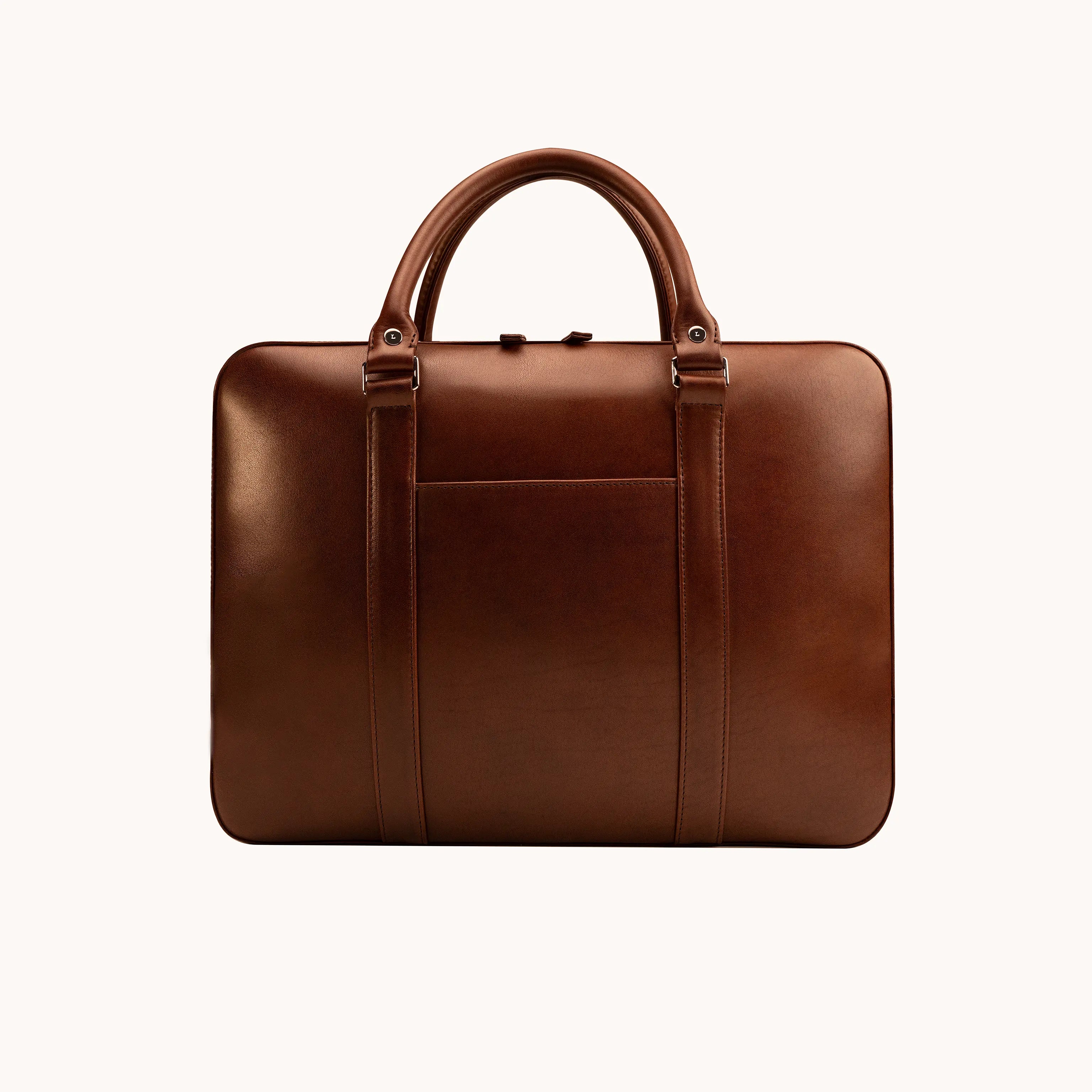
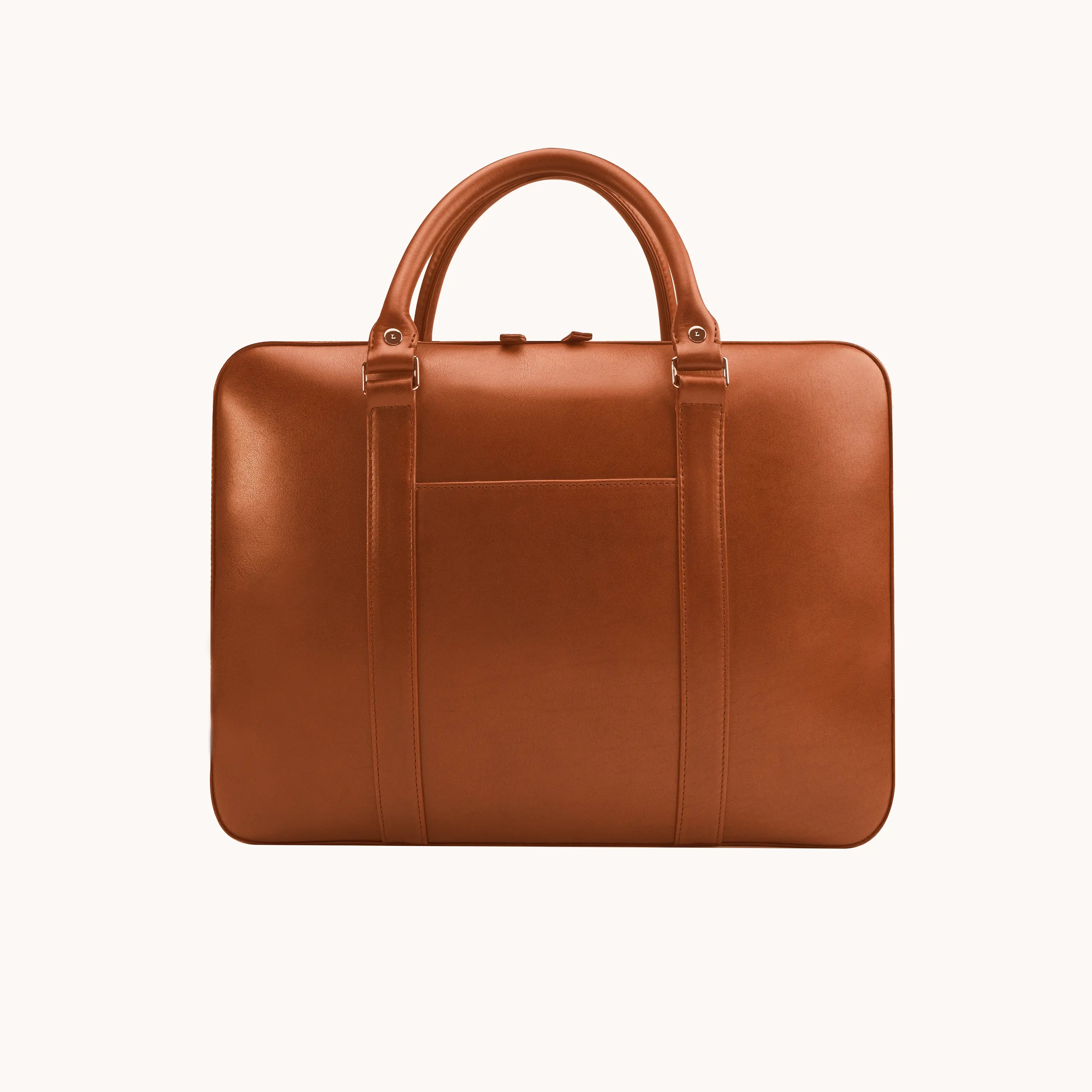
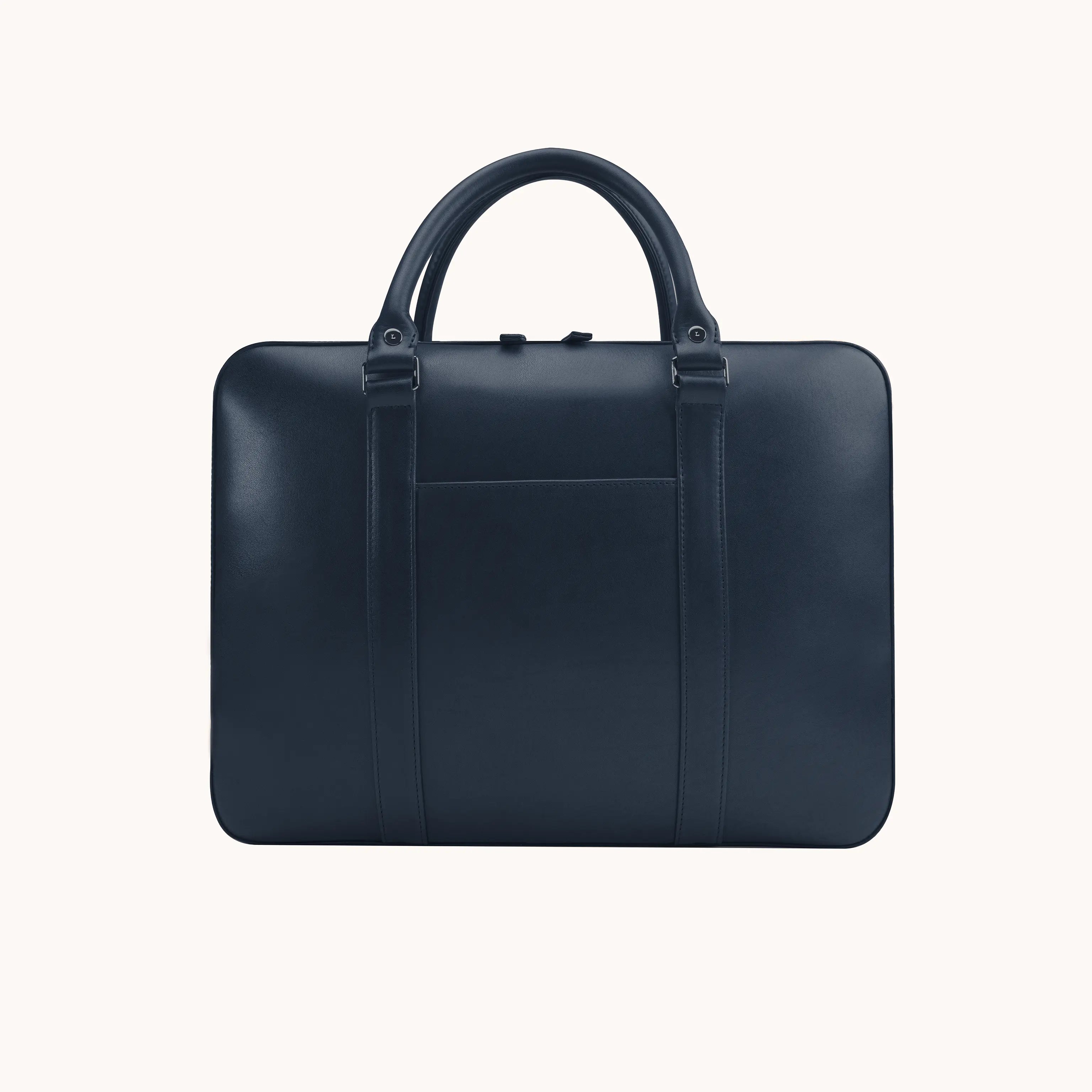
Rempliage is the art of folding leather back upon itself: a technique that refuses to acknowledge the edge as an ending. Instead, it treats the edge as a continuous curve where the grain flows seamlessly from exterior to interior.
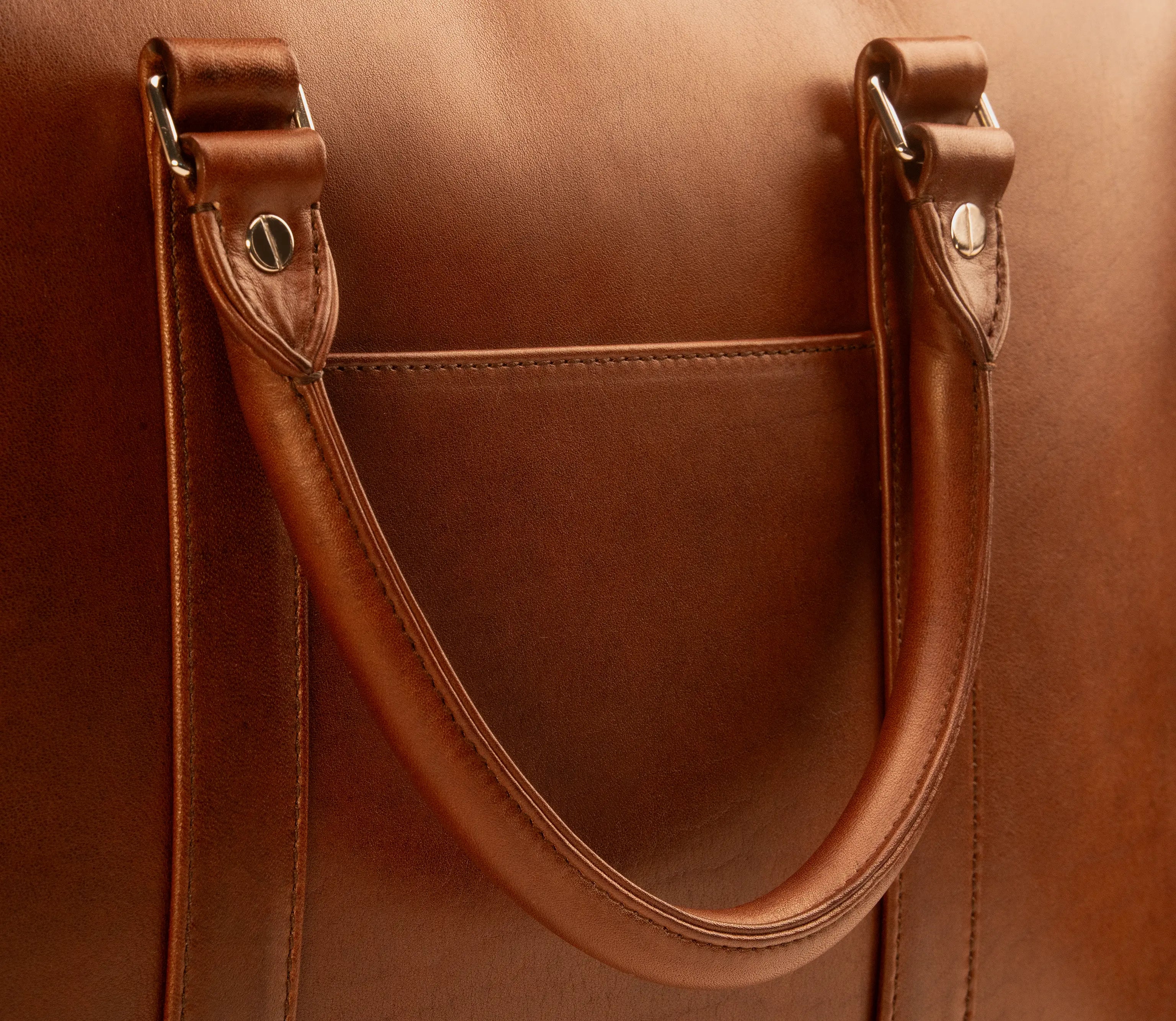
The result is a visual quietness rare in leathercraft. The edge dissolves into the form, creating a gentle radius that absorbs light rather than interrupting it. Run your finger along a rempliage edge and you feel no seam, no transition: only the unbroken warmth of grain. There is nothing to crack. Nothing to peel. Only leather, folded upon leather, engineered to endure.

It is also an endangered art. The objects produced using this technique represent, by conservative estimate, fewer than one in 10,000 leather goods made globally.
FES: THE FORGE OF THE FOLDED EDGE
The art of the folded edge was forged over a millennium in Fes before it was embraced in Europe. The imperial city's leather workshops served royal courts and scholarly institutions across three continents.
"Rempliage was the technique that made such permanence possible: a folded edge, engineered for generational durability."
It crossed the Mediterranean only in the 18th century, entering European saddlery where resilience under stress was paramount.

HOW THE FOLDED EDGE IS EXECUTED
Rempliage is not a single gesture. It is a sequence of operations, each dependent on the last, none reversible.

The Parage
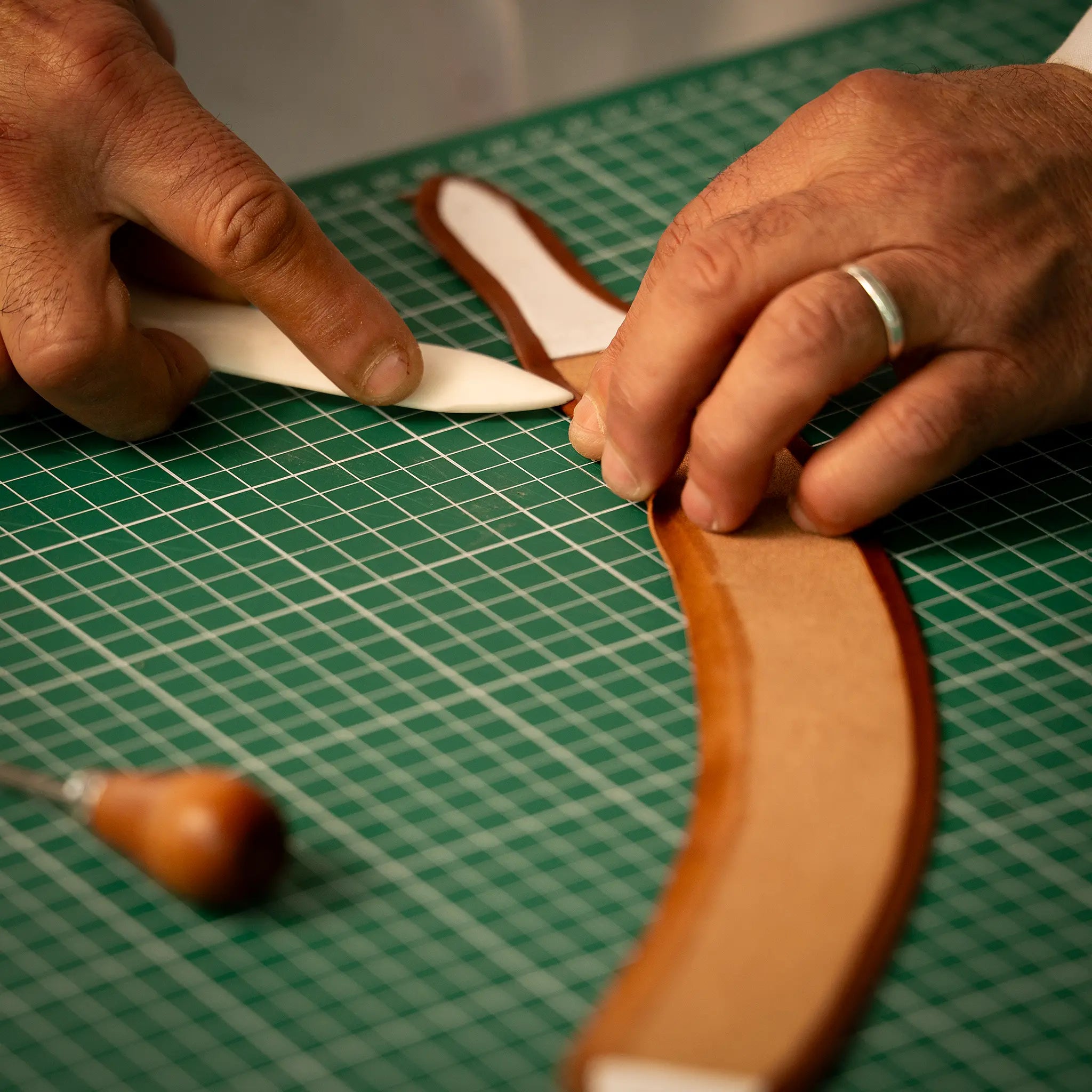
The foundation is the parage: the skive. The artisan thins the leather edge to a precise gauge, calculated to fractions of a millimeter. A single panel of leather can require up to four distinct skiving configurations, each defined by its own thickness, angle, and distance from the edge. Each configuration demands one to four passes of the blade, with every pass executed to a tolerance of 0.1 mm (0.004 in).
The Fold
The fold itself demands equal precision. Straight edges must be turned with consistent pressure along the entire length. The sharpest test is the corner, where excess material must be distributed into microscopic pleats, worked until they vanish into a soft, rounded form.

The Hammer
Then comes the hammer. The workshop falls silent except for this rhythm: strike after strike, setting what artisans call the "dead edge." The pressure and angle vary with the temper of the hide, its moisture, the humidity of the room. Strike too hard and the leather bruises. Too soft and the fold will not hold.
The Culmination
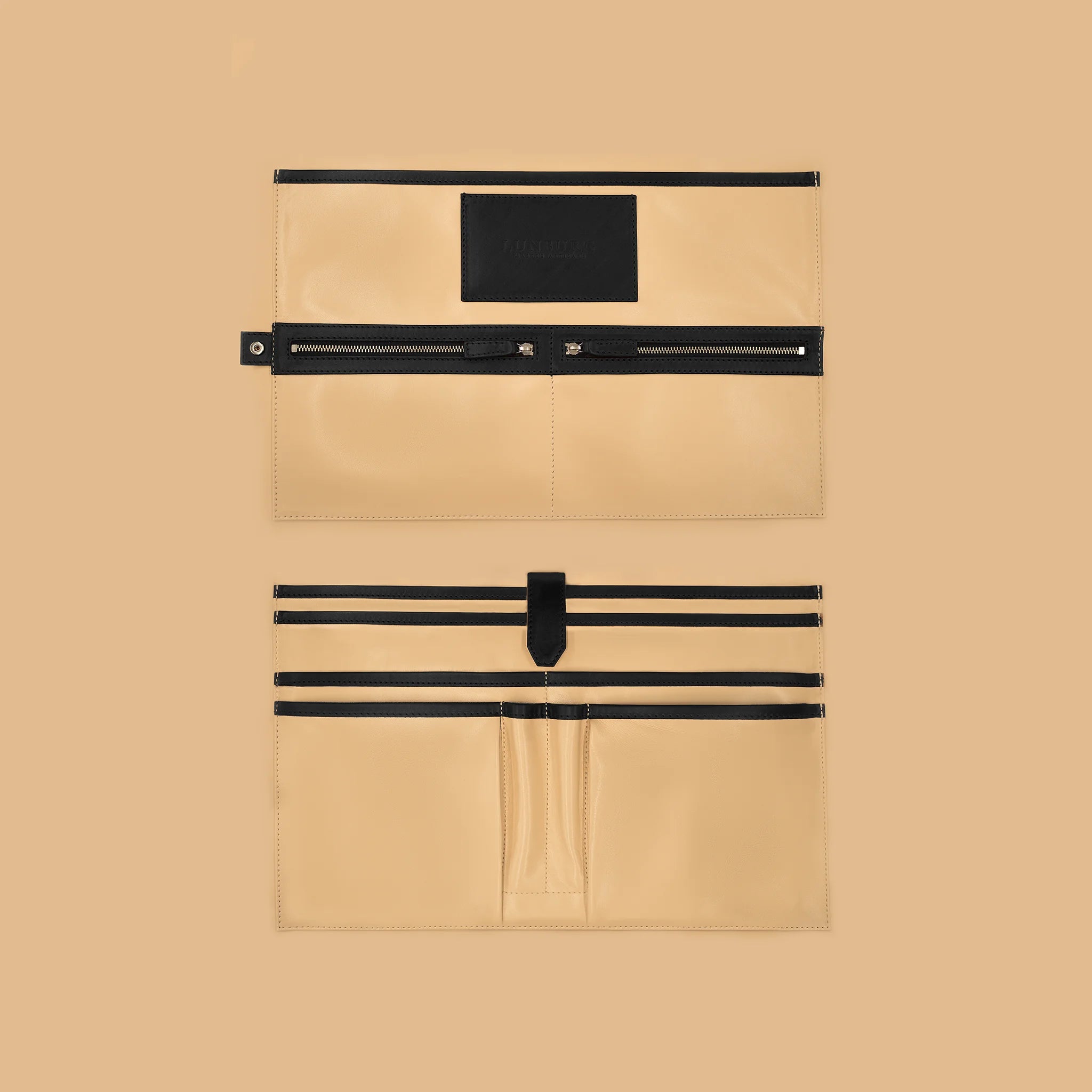
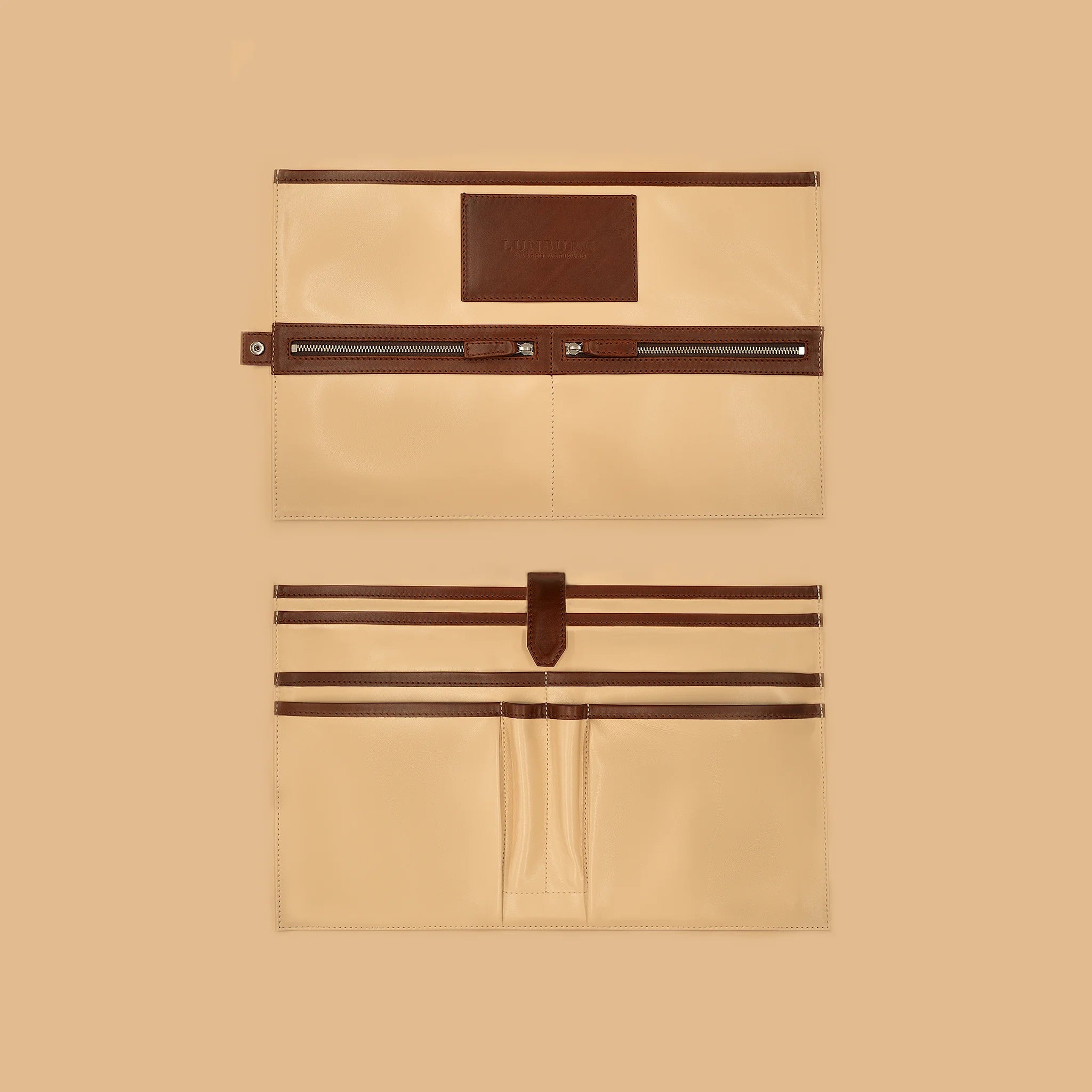
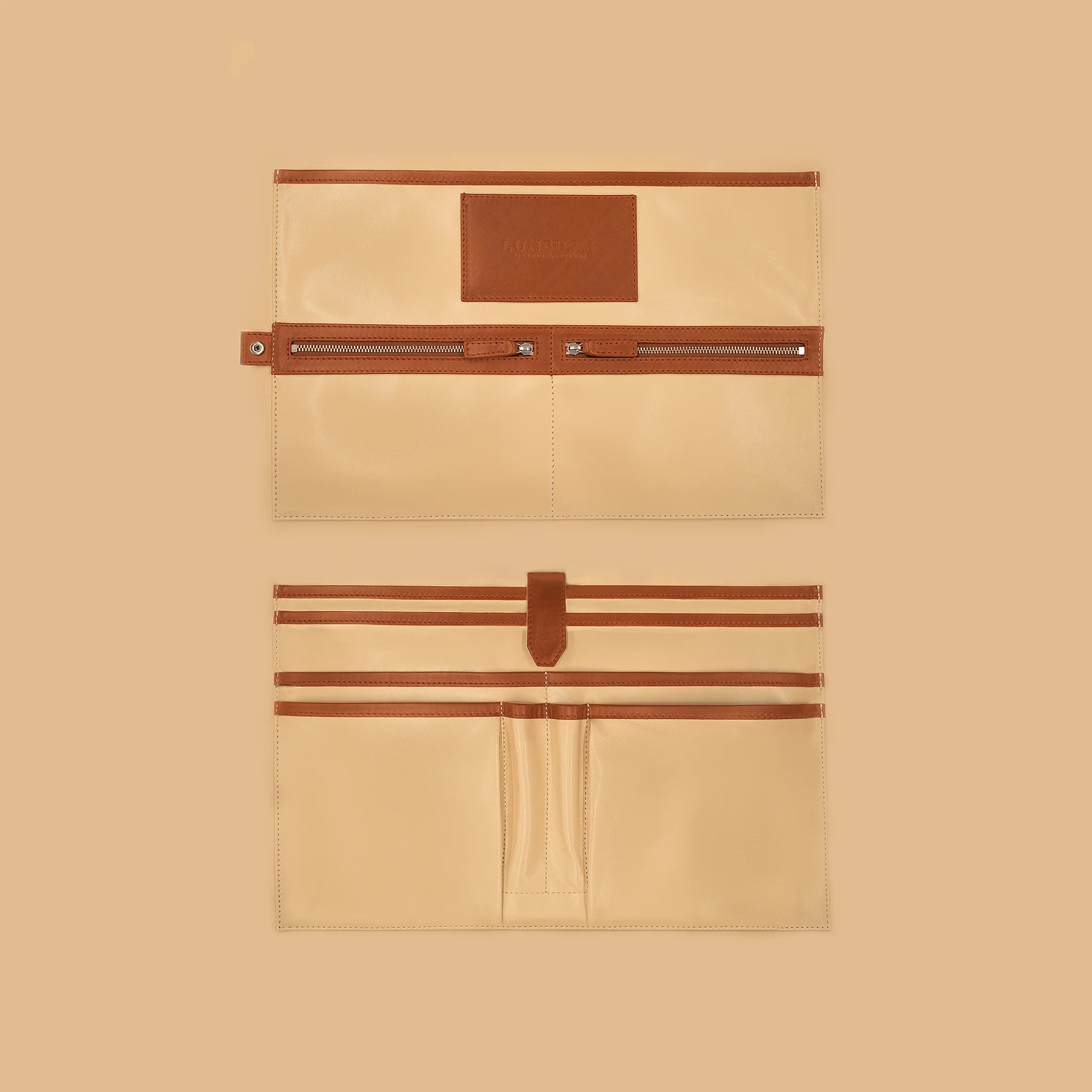
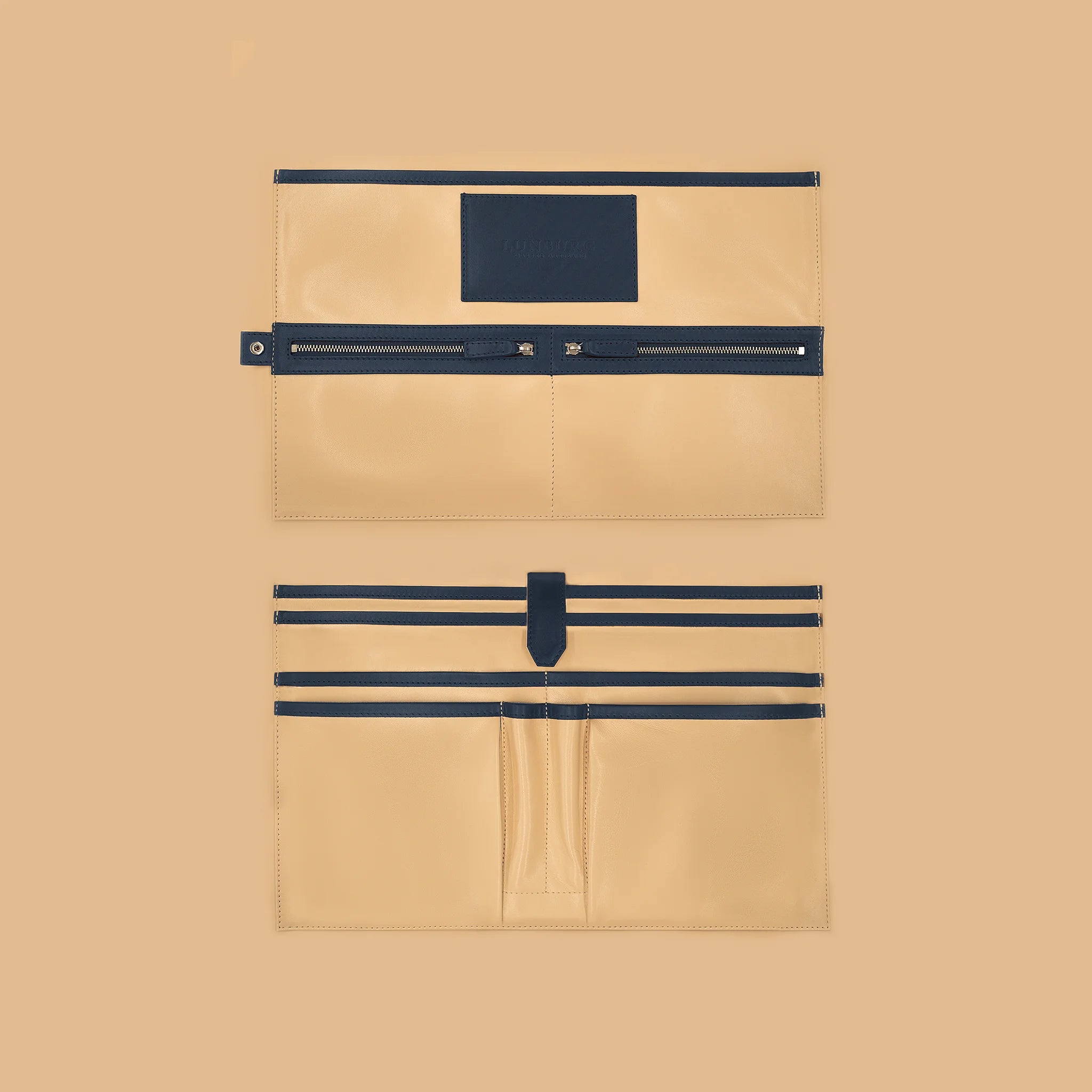
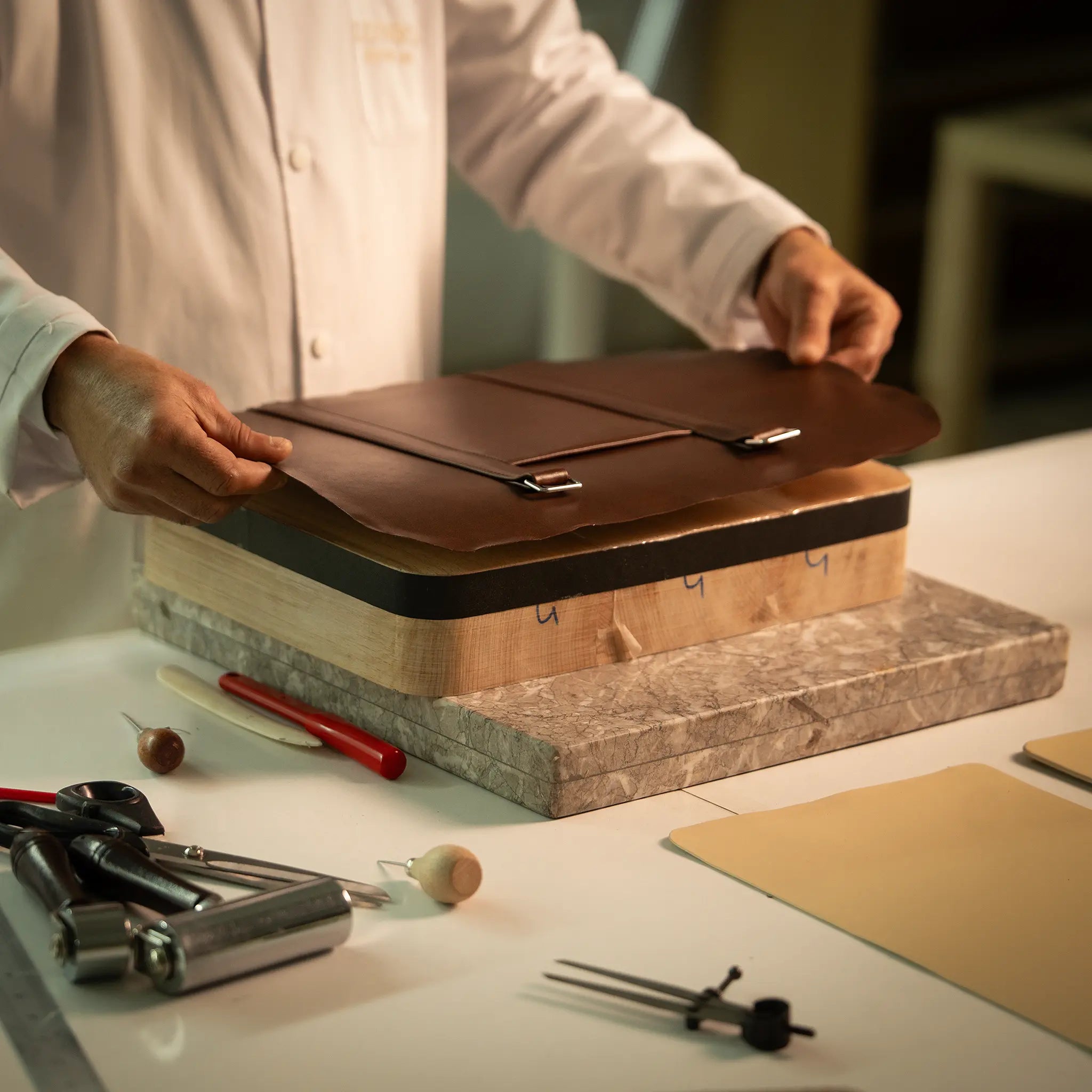
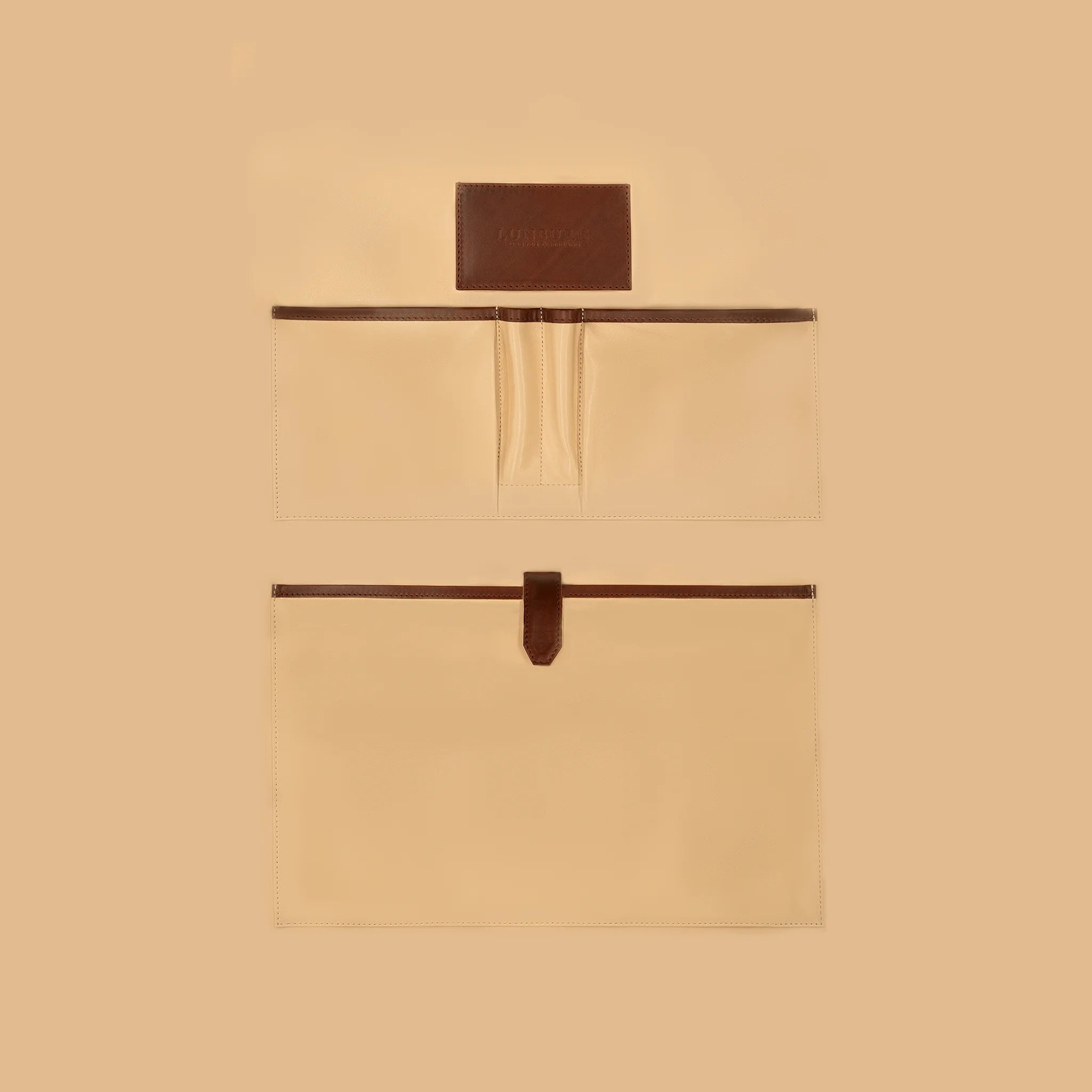
When rempliage is executed with a leather lining, the artisan confronts the technique's most unforgiving demand: four to six layers must converge and compress into an edge no thicker than the original surface. These layers are assembled on a wooden last, the forme en bois. Each panel is hammered until every angle is exact, every fold set. This is the culmination of hundreds of decisions, each calculated to 0.1 mm, each dependent on those before. When the final edge lies flat and seamless, it is because a master made no error across the entire sequence.



Edge Techniques Compared
To fully appreciate the distinction of rempliage, it is useful to understand how it compares to the other edge finishing techniques used in leathercraft today.

Rempliage - The Folded Edge

Painted Edge
The true measure of leathercraft is often found at its edge. Look there, and the work speaks for itself.
"Fewer than 800 artisans worldwide can execute rempliage to haute maroquinerie standard."
There is no algorithm for rempliage. Each hide demands adjustments that only the hand can sense in the moment of execution. Competency requires eighteen months. Mastery takes fifteen to twenty-five years. The knowledge does not exist in manuals. It lives only in the hands that have performed it ten thousand times.
Today, fewer than 800 artisans worldwide can execute rempliage to haute maroquinerie standard. We may be witnessing the last generation capable of this work.
This is why Lunburg exists. Forty percent of our profits return directly to the preservation and transmission of the craft.
When you commission a Lunburg piece, ownership becomes preservation. The knowledge endures.
Common Questions About Rempliage
When an error occurs, the panel is discarded. There is no correction, no reworking. This is what makes Rempliage extraordinarily demanding and why mastery requires fifteen to twenty-five years of formation. It is also a significant driver of production cost: every discarded panel must be replaced with a new cut matched to the grain and colour of the original hide. To reduce waste, we repurpose damaged panels into smaller components wherever possible. Nothing is wasted without reason.
A Rempliage edge has no separate material that can fail. It is the same leather as the rest of the piece, folded back upon itself. There is no paint to crack, no burnished compound to peel, no secondary material to degrade independently. The edge ages exactly as the surface ages: it develops patina, softens, and deepens in character. After five, ten, or twenty years, the edge and the surface are indistinguishable in their evolution. In the rare event of fold separation, our Fifty-Year Warranty covers reconstruction.
Our Master Artisans each bring more than thirty years of expertise, having operated exclusively at the highest level of Fassi Haute Maroquinerie for their entire careers. Fifteen to twenty-five years is the minimum path to mastery. Our artisans have far exceeded it. As for knowing who built your piece, our Digital Ledger launching in Q4 2026 will provide full artisan attribution, connecting every custodian with the specific Master Artisan whose hands realized their commission.
There is no difference. Turned edge is the English term for the same technique known as Rempliage. The principle is identical: the leather edge is skived to a precise gauge and folded back upon itself rather than sealed with paint. The result is an edge that patinates with the surface rather than degrading independently. The distinction lies not in the technique itself but in the level of precision and mastery applied to its execution.
It is not simply the most demanding stage. It is the defining one. More than 80% of artisan time on a single Opus is consumed by the full Rempliage construction: skiving to 0.1 mm (0.004 in) tolerance, folding with consistent pressure, hammering the dead edge, and precision layering on wooden lasts to achieve dimensional stability. This sequence drives both the cost and the timeline of every commission. Without it, the briefcase would take a fraction of the time. And last a fraction of the years.