

Gifts for an Employee Who Is Leaving: Choosing a Farewell Gift That Lasts
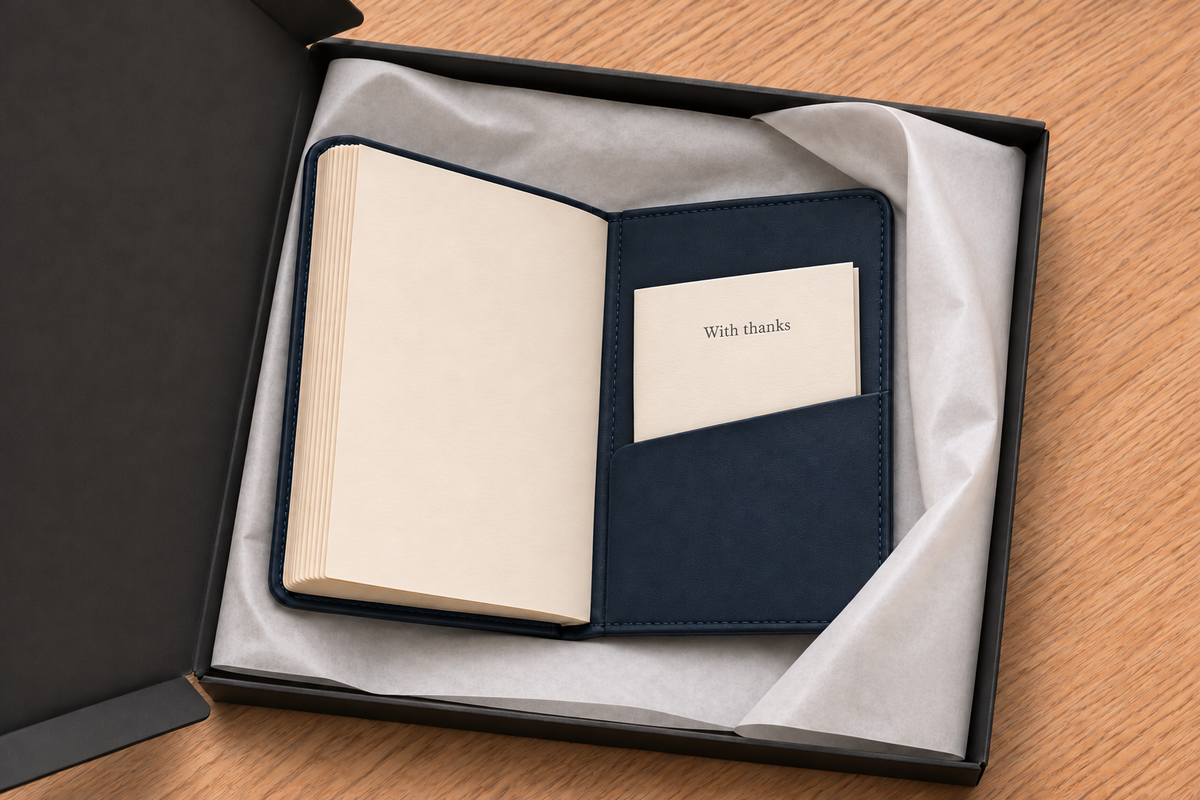
Imagine a notebook wrapped in tissue, with a card tucked beneath its cover. Inside, each colleague has written a few lines: a remembered kindness, a shared achievement, a wish for what comes next. Give the object a connection to the person receiving it, and the farewell has a clear centre.
Choosing a gift for an employee who is leaving begins with that connection. Think of the person beyond their job title: the colleague who always sketches an idea before explaining it, the manager with a beautiful fountain pen, the friend looking forward to unhurried afternoons. Let that small, familiar detail guide the choice.
Why the farewell matters, to the person and to the company
A farewell is a moment to recognise the person's contribution and give their time with the company a thoughtful close. Make room for a thank-you that belongs to them, with a gift and a few words chosen for this particular departure.
Begin with something concrete. Perhaps they trained the newest member of the team, brought patience to a difficult project, or made an unfamiliar office feel welcoming. In the accompanying note, name that contribution. “Thank you for helping us find our feet” offers a lovely starting point for someone who has guided others.
Give the occasion its own character, too. For a colleague moving into a new role, look towards the work ahead. For someone retiring, take inspiration from how they hope to spend their days. Avoid making the next chapter sound like another assignment.
Keep the presentation proportionate to the person. Consider a quiet exchange over coffee for someone who dislikes a spotlight, or a short gathering for a colleague who enjoys having everyone together. Let the gift sit within a farewell they would choose for themselves.
Gift for an employee who is leaving: choosing the right piece
Choose a farewell gift around a familiar interest or daily habit, then give it a personal connection to the time you have shared. Start with a few possible objects and imagine each one in the recipient's hands.
For someone who works things out on paper, consider a notebook with a leather cover and a pen chosen to accompany it. Picture the scale: something slim for a jacket pocket, or a generous page for drawings and meeting notes. Follow the format they already enjoy using. Leave the first page free for their own beginnings, with your message on a separate card.
A small desk tray is another direction for a colleague who loves a composed workspace. Imagine warm brown leather beside a favourite pen, or a deep colour drawn from their clothes and accessories. For a keen traveller, consider a luggage tag with restrained initials. Make that choice about their enthusiasm for travel, rather than the business trips they are leaving behind.
Research on gift-giving found that givers expected more expensive presents to receive greater appreciation, while recipients' appreciation did not rise with price. For this farewell, put the attention into the choice: a useful form, a colour they would select, a detail that recalls a conversation.
If the departure sits within a wider programme of staff appreciation, our guide to recognition gifts for individuals and teams offers a broader starting point. Here, keep returning to the one person whose name will be on the card.
Matching the gift to length of service
Match the gift to the person's contribution and the history you share, using length of service as part of that story. Give a brief but valued collaboration its own thoughtful farewell; give a long career room for a fuller account.
For someone leaving after a short project, consider a single useful piece and a note about what you accomplished together. A notebook chosen for the next role, with a message from the people who worked most closely with them, is an elegant direction. Keep the words specific to the work you actually shared.
For a long-serving colleague, gather memories from different chapters. Invite a former teammate to recall an early project, or place a photograph beside a handwritten account of a later achievement. If you choose a coordinated desk set, let the accompanying words explain the occasion without turning every object into a commemorative plaque.
One Swedish municipality's written farewell arrangements include flowers and a municipal gift, with a crystal vase after ten years of service. Take this as one employer's way of marking a milestone. For your own colleague, choose the form of recognition that feels right, whether that is a personal inscription, a carefully assembled book of messages or a piece intended for everyday use.
Who gives: the company, the manager or the team
Let the company give its formal thanks, and leave personal gifts from the manager or team to the relationships involved. Decide whose gesture the gift represents before composing the card.
For a company gift, write in the organisation's voice and name the contribution being recognised. A manager might add a separate handwritten note about a moment they remember. Keep those words direct: a judgement they admired, a difficult task handled with care, or something they learnt from the person leaving.
For a collection among colleagues, make participation voluntary and let someone close to the recipient bring the choice together. One Danish university department describes this approach in its written custom: a close colleague organises a voluntary collection, and the card names the givers. It is a useful model for a team gift, with a clear sense of who is giving and room for individual messages.
Offer everyone a chance to contribute a farewell message, independently of the collection. Keep the presentation focused on the recipient, without mentioning who contributed what. A few well-chosen words from a colleague can sit comfortably beside the company's formal thank-you.

A keepsake rather than a consumable
For a keepsake, choose an object the recipient would enjoy keeping in use, with a discreet reminder of the people behind it. Picture the piece on their own desk or among their personal belongings, beyond this one afternoon.
A notebook cover, a pen sleeve or a small leather tray offers a starting point for that idea. Choose one coherent object before considering a set. If you pair pieces, carry a colour or a simple proportion between them, and give each a reason to be there.
Keep the inscription equally considered. Initials offer a quiet personal direction; a short dedication gives more room for sentiment. Consider a name and a significant date, or a few words whose meaning the recipient will recognise. Put the longer story in the card, where there is space for everyone's voice.

Lunburg's consumer Inscription service offers initials, a dedication or a family crest hand-embossed into leather. For a company mark, Lunburg's corporate leather card holder offers blind debossing, an impression without foil, or foil stamping. Choose the personal or corporate direction according to what you want the object to say.
Through Corporate Services, businesses can adapt an existing Lunburg design with their leather, colours and branding, or develop an original product. For a farewell, let the recipient's taste guide those choices. Consider leaving the main surface quiet, with the company's message expressed in the accompanying note.
Timing and personalisation lead times
Choose a moment when you can give the gift without rushing, and allow for the making time of any personalisation you select. A farewell lunch, a final team meeting or a private conversation can each provide the setting; choose one that suits the recipient.
For its consumer Inscription service, Lunburg states that personalisation adds two to four weeks. Use that interval specifically for Inscription when planning the gift. Settle the wording early, giving the name, initials or dedication the same care as the object itself.
Before the presentation, leave time for colleagues to write their messages. Invite a particular memory rather than a polished tribute: the first day they worked together, a shared success, an ordinary kindness. Let each person keep their own voice.
When giving a gift for an employee who is leaving, keep the moment simple. Say what you appreciated, offer your wishes for what comes next, and give them space to open the card. A notebook, a small leather piece, a line in someone's handwriting: choose each element with the person in mind, then let them take it into the next chapter on their own terms.
Read more

Welcome Gifts for New Employees: What to Give and When
Choose a thoughtful welcome gift, compose a note and plan the moment of giving, with ideas for individual new starters and a whole year's arrivals.
Read more
How to Start Your Own Bag Brand: From First Sketch to First Production Run
Explore how to start your own bag brand, from choosing a first design and leather to approving a prototype and planning production.
Read moreCreate leather goods for your organisation
Tell us who the piece is for, how it will be used and the quantity you have in mind. Lunburg Corporate Services manages product development, prototype approval, production and delivery.
Explore Corporate Services