Buffalo Leather: Which Animal, and How It Compares to Cowhide
Buffalo leather means two different animals depending on who is speaking, and the confusion is built into the word.
In most of the world it means the water buffalo, a domesticated animal farmed across Asia, and this is the source of nearly all buffalo leather in commercial trade. In North America it often means the American bison, which has been called buffalo colloquially for two centuries despite not being one.
If a label says buffalo and gives no more detail, water buffalo is the likelier answer.
What is buffalo leather?
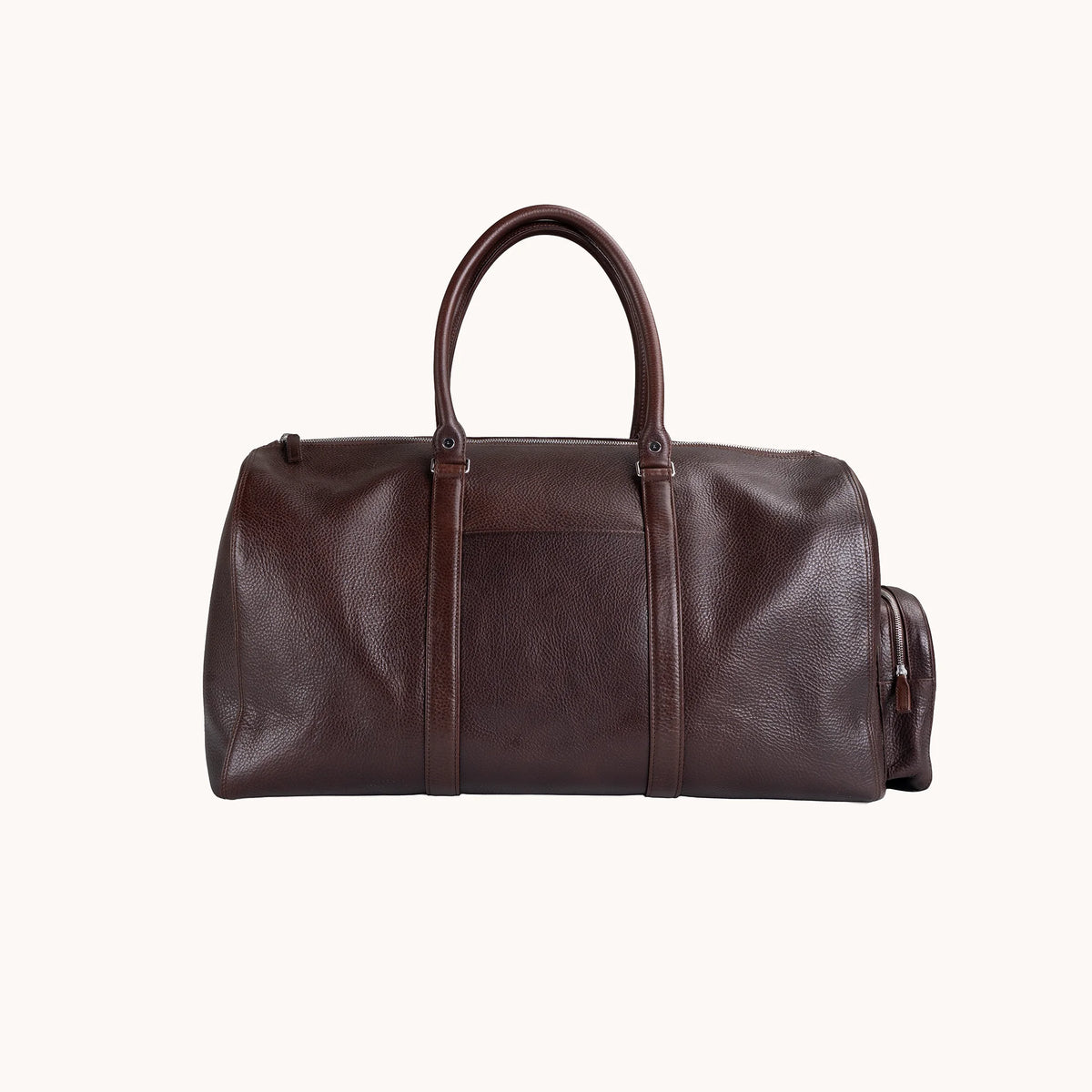
Buffalo hide is thicker and more heavily grained than cowhide, with a pronounced, irregular pebbling that is the animal's own rather than pressed in. The fibre structure is denser and coarser.
That gives it a distinctive character: substantial in the hand, visually rugged, and hard to mistake for a smooth calfskin.
Buffalo leather versus cow leather
| Water buffalo | American bison | Cow | |
|---|---|---|---|
| Grain | Pronounced, irregular, natural | Deep, textured | Finer, more even |
| Thickness | Thicker | Thick | Wide range available |
| Fibre density | Dense, coarse | Dense | Consistent, finer |
| Character | Rugged | Rugged, soft-handed | Refined, versatile |
| Availability | Wide | Limited, mostly North America | The trade standard |
| Best suited to | Heavy goods, work bags, belts | Heritage goods, softer bags | Almost anything |
The practical differences come down to two things.
Buffalo is thicker and coarser, which suits goods where weight and ruggedness are the point, and works against fine work where a close grain and clean folded edges are wanted.
Cowhide is more consistent and more available, in a far wider range of thicknesses and finishes, which is why it remains the default for structured leather goods.
Neither is better. They are different materials for different intentions.
Bison leather versus cow leather
Bison hide is prized for a deep natural texture with a softer handle than its appearance suggests. It is uncommon, produced at limited scale, and priced accordingly.
Against cowhide, the trade is character for consistency. Bison brings a distinctive grain and scarcity. Cowhide brings uniformity, availability and a much wider choice of thickness and finish.
Bull, bovine and the rest of the vocabulary
Bovine is the umbrella term and it covers cow, bull, calf and buffalo alike. When a label says bovine leather it has told you the family and nothing else.
Bull is a sex distinction rather than a species one, and it does matter: bull hides are thicker and coarser than cow hides, with heavier grain around the neck and shoulder.
Cowhide properly means the hide of an adult female. In ordinary use it has become a general word for cattle leather.
How buffalo leather wears
The heavy natural grain is forgiving in exactly the way pebbled finishes are engineered to be: the raised areas take the abrasion, so scuffs and scratches disappear into the texture.
Its thickness makes it durable but also limits what can be done with it. Fine folded edges and close stitching are harder to achieve in a heavy hide, which is part of why buffalo appears more often in rugged goods than in structured briefcases.
Where it is vegetable tanned and left aniline, buffalo will patina like any other hide meeting those conditions, and its deep grain makes the deepening particularly visible.
Related reading
Types of leather · Vachetta leather · Leather patina · Pebbled leather · Mushroom leather
Read more

Neatsfoot Oil on Leather: What It Does, and What It Does Not
The traditional leather dressing. It softens leather genuinely and it darkens it permanently.
Read more
Mushroom Leather: What It Is and Where It Actually Stands
A material grown from mycelium, then pressed and finished into sheets. It is not leather, and its makers do not claim it is.
Read moreExplore our Folded Edge Creations