Pebbled Leather: What It Is, and Whether It Is Real
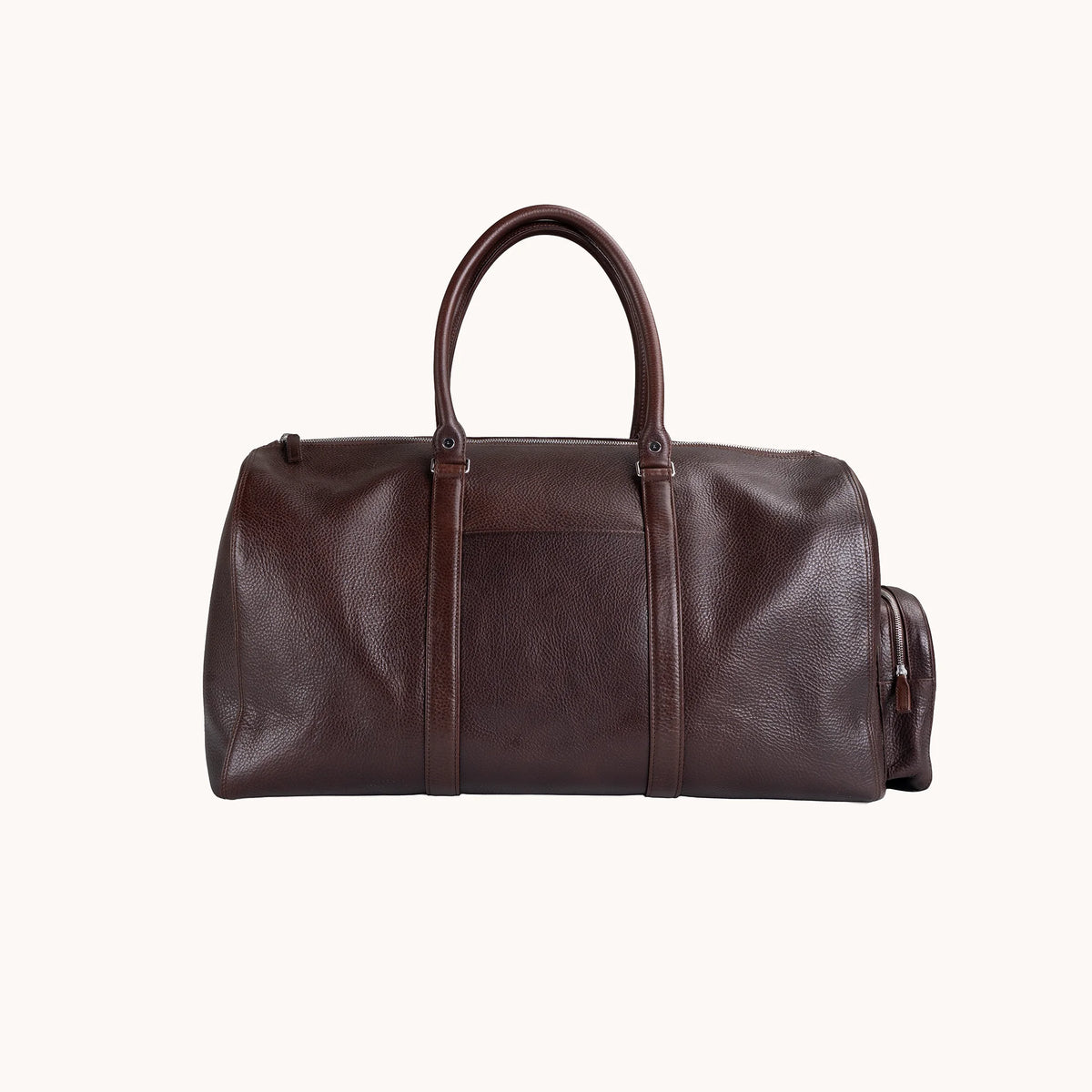
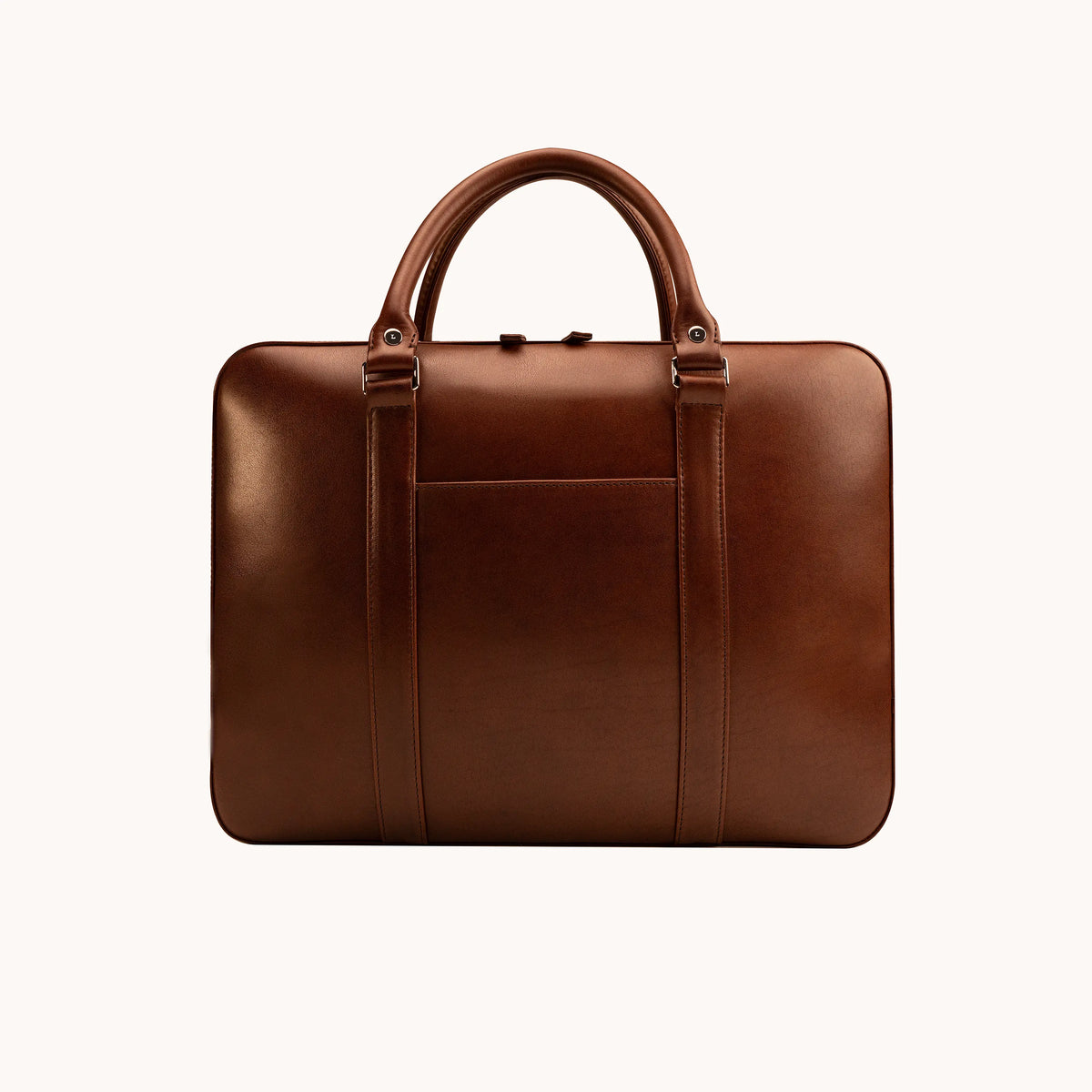
Pebbled leather has a raised, rounded texture across its surface that looks like fine cobbles. It is used constantly on bags because it disguises scuffs and scratches, and because it feels substantial in the hand.
The texture arrives one of two ways: it can be grown or it can be pressed. Almost all pebbled leather on the market is pressed, and knowing how to tell is the most useful thing on this page.
What is pebbled leather?
Pebbled leather, also called pebble grain, is leather whose surface carries a regular pattern of small raised rounds, so the surface sits at two levels rather than one.
That is the whole of why it is used. A pebbled surface does not last longer than a smooth one. It shows wear less. When a bag brushes against a desk or a car door, the contact lands on the raised tops, and the low areas between them are barely touched. A scratch that would run as one clear line across a smooth surface is broken into short marks across the tops, where the eye reads it as texture rather than damage.
The leather underneath is wearing at the same rate. You are simply seeing less of it.
It is a description of surface texture. It says nothing on its own about which layer of the hide was used or which part of the animal it came from.
How pebble grain is made: grown or pressed
Grown. Some hides carry a natural pebbling. It is irregular, it varies in scale across a panel, and no two areas are alike.
Pressed. Far more commonly, the texture is embossed: the leather passes under a heated plate or roller carrying the pattern, which presses it into the surface permanently.
Neither is dishonest, and embossing is a legitimate technique used on excellent leather. But the two behave differently, and there is a straightforward way to tell them apart.
Look for the repeat. An embossed pattern comes from a plate, and a plate carries a finite design, so the pattern repeats at intervals across the panel. A natural pebbling never repeats. Under raking light, on a large panel, the repeat is usually visible once you know to look for it.
And look at the scale. A natural pebbling changes across a hide, finer in some areas and coarser in others, because the hide itself changes. An embossed pattern is the same size everywhere it was pressed, including across areas where a real grain would have shifted.
Both of those are the same observation from two angles: a plate is uniform and an animal is not.
The same technique produces Saffiano, using a plate carrying a fine cross-hatch rather than a pebble. It is the same operation with a different die.
| Natural pebble | Embossed pebble | Saffiano | |
|---|---|---|---|
| Origin of texture | The hide itself | A heated plate | A heated plate |
| Repeats across the panel | Never | Yes | Yes, in a regular cross-hatch |
| Consistency | Varies | Uniform | Highly uniform |
| Can be applied over a corrected surface | No | Yes | Yes |
Refined pebble, polished pebble and other trade names
Several names attached to pebbled leather are trade or house names rather than material descriptions, and they are not comparable between sellers.
"Refined pebble" and "polished pebble" fall into this group. They describe a particular look a seller has chosen to name, generally a finer or flatter pebbling with a degree of surface polish. Neither is a grade, and neither tells you which layer of the hide is underneath.
This is the same pattern as "refined grain" elsewhere in leather vocabulary: a word that sounds technical, doing the work of a description. Ask instead which layer, which cut, what finish.
Is pebbled leather real leather?
Yes, when the substrate is a hide, and the pebbling is real in the sense that it is genuinely there in the surface rather than printed as an image.
The question underneath is usually whether the texture is the animal's own, and for most pebbled leather on the market the honest answer is that it was pressed in. That does not make it fake. It makes it finished.
The pebble texture is also widely applied to coated fabrics containing no leather at all, and telling them apart is harder than the usual advice suggests. The cut edge no longer settles it, because modern microfibre synthetics are built on non-woven fibre backings and their edges look fibrous too.
How much else you have to go on depends on the finish. On a lightly finished or aniline pebbled leather you can still read variation between panels, because hides differ and a synthetic roll does not, and the surface still has a smell. On a heavily pigmented pebbled leather you can read neither: the coating covers the variation and seals in the smell, and there is very little left to find.
Weight helps in both cases, and so does a seller who will name the leather. Beyond that, on a fully coated surface, the honest answer is that the difference is in the substrate underneath rather than in anything you can see.
Is pebbled leather good, and how does it wear?
For a bag, pebbled leather is a genuinely practical choice, for the reason above: contact lands on the raised tops and the pattern breaks up any mark, so scuffs and scratches read far less than they would on a smooth surface.
It is worth being precise about what that buys you. The leather is not more durable and the finish is not tougher. What you gain is that the piece looks unmarked for longer, which on a bag carried daily is worth a great deal even though it is not the same thing as lasting longer.
The trade-off is that embossing can be applied over a surface that has been sanded and corrected, and the texture will then conceal that too. A pebbled finish tells you nothing about what is beneath it, which is exactly why it is used on both excellent and indifferent leather.
The questions that cut through are the usual four. Which layer of the hide. Which part of the animal it was cut from, because a pebbled belly panel will sag exactly like a smooth one. How it was tanned, vegetable over weeks or chrome in a day. And what finish, since an embossed and sealed surface has no life of its own whatever is underneath it.
Caring for pebbled leather
- Brush dust out of the recesses with a soft brush before wiping. Dust collects in the low points and grinds there.
- Wipe with a barely damp cloth, following the texture rather than scrubbing across it.
- Dry away from heat.
- Condition sparingly, and work it in with a cloth rather than pooling it in the recesses.
- If the leather is aniline, expect the high points to darken and polish first.
Related reading
Saffiano leather · Types of leather · Aniline leather · Top grain leather · Nappa leather · Leather conditioner and oils
Read more

Aniline Leather: What It Is, and How to Tell
Coloured with transparent dyes and then left alone. The surface you touch is the leather itself.
Read more
A small toiletry bag, usually leather, made to hold shaving equipment and washing things for travel.
Read moreExplore our Folded Edge Creations