
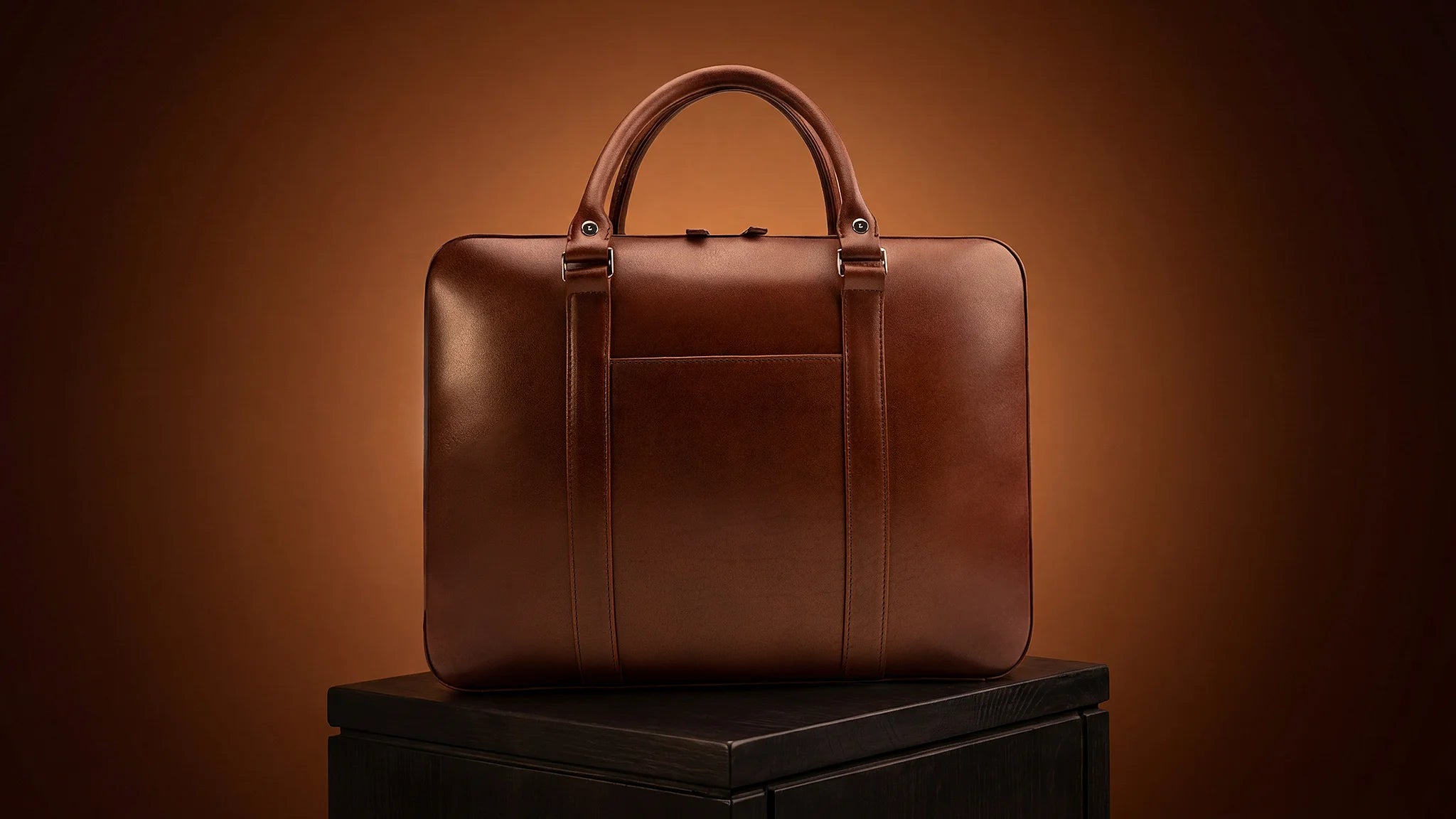

The Opus Briefcase: The Grand Complication of Leathercraft
Over eight days, 140 hand cut panels are united by 3000 cm of Rempliage
The hand-folded edge that defines our craft. 1,233 consecutive steps, each executed to a 0.1 mm tolerance; the slightest deviation voids the work.

The Opus Briefcase
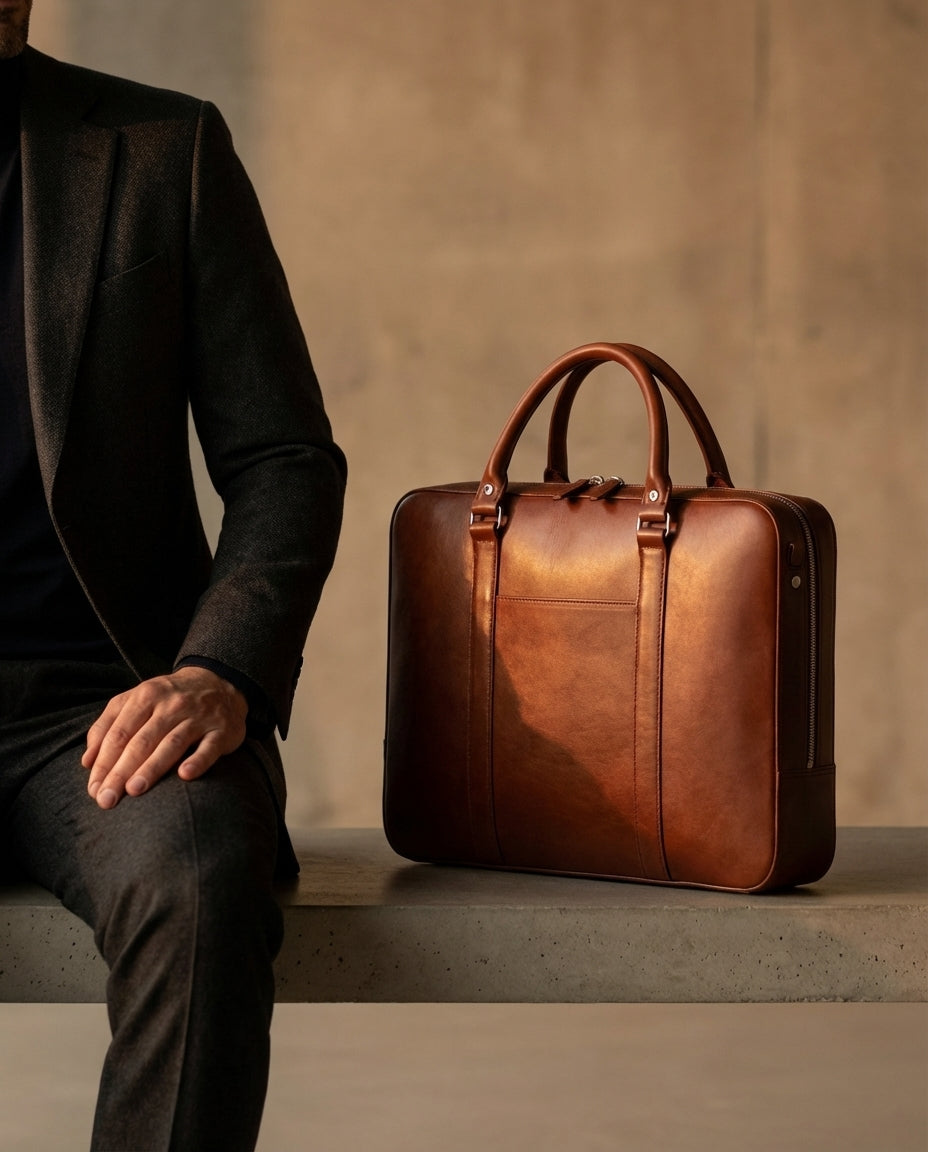
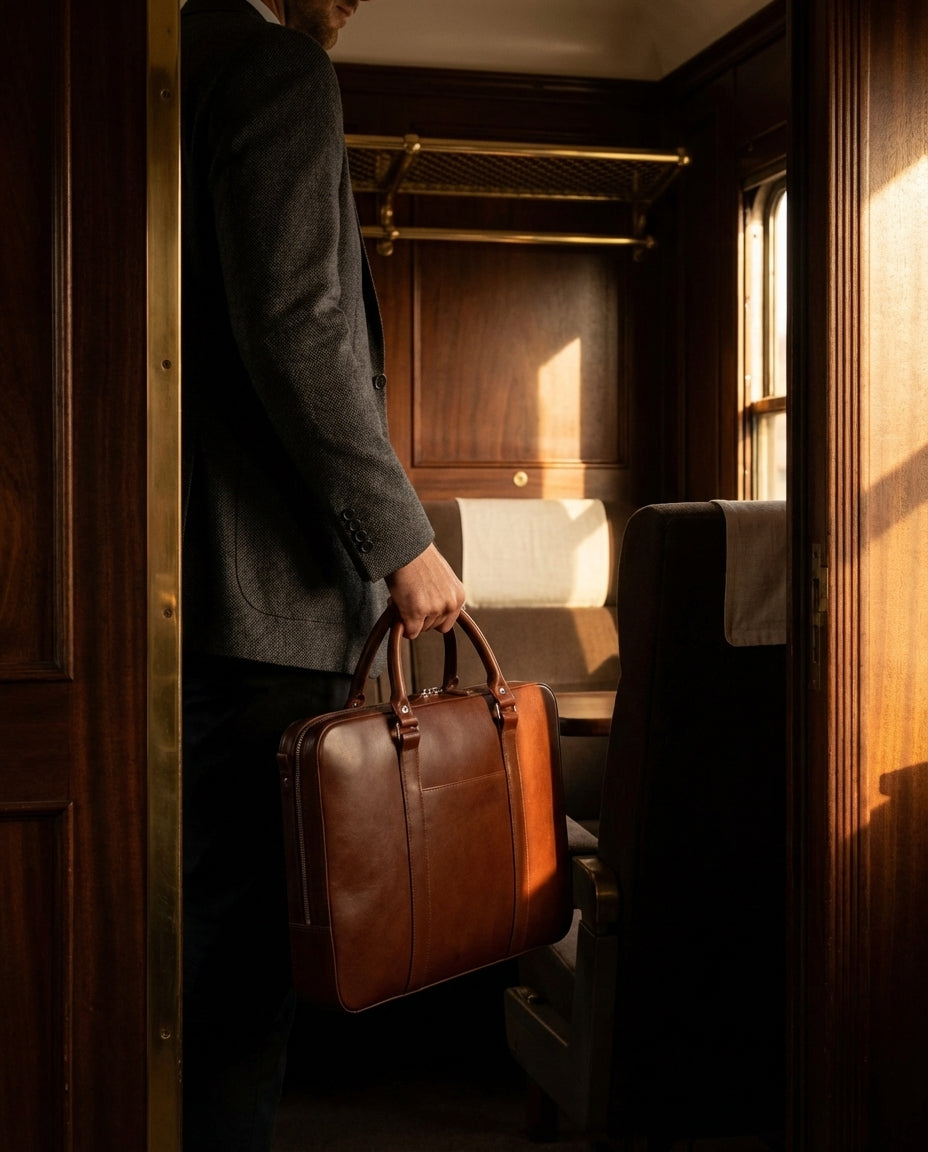
Choose the interior that matches your workflow
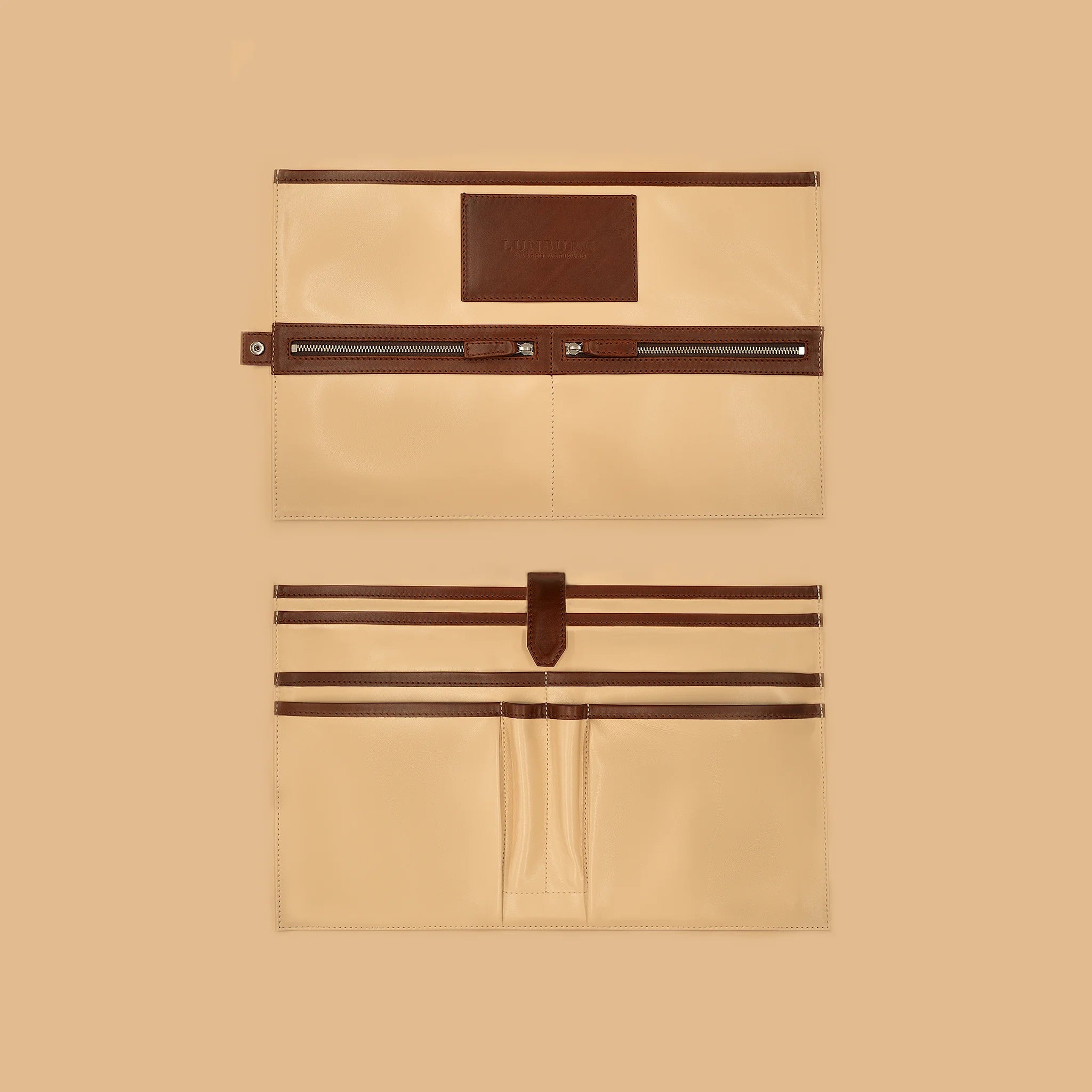
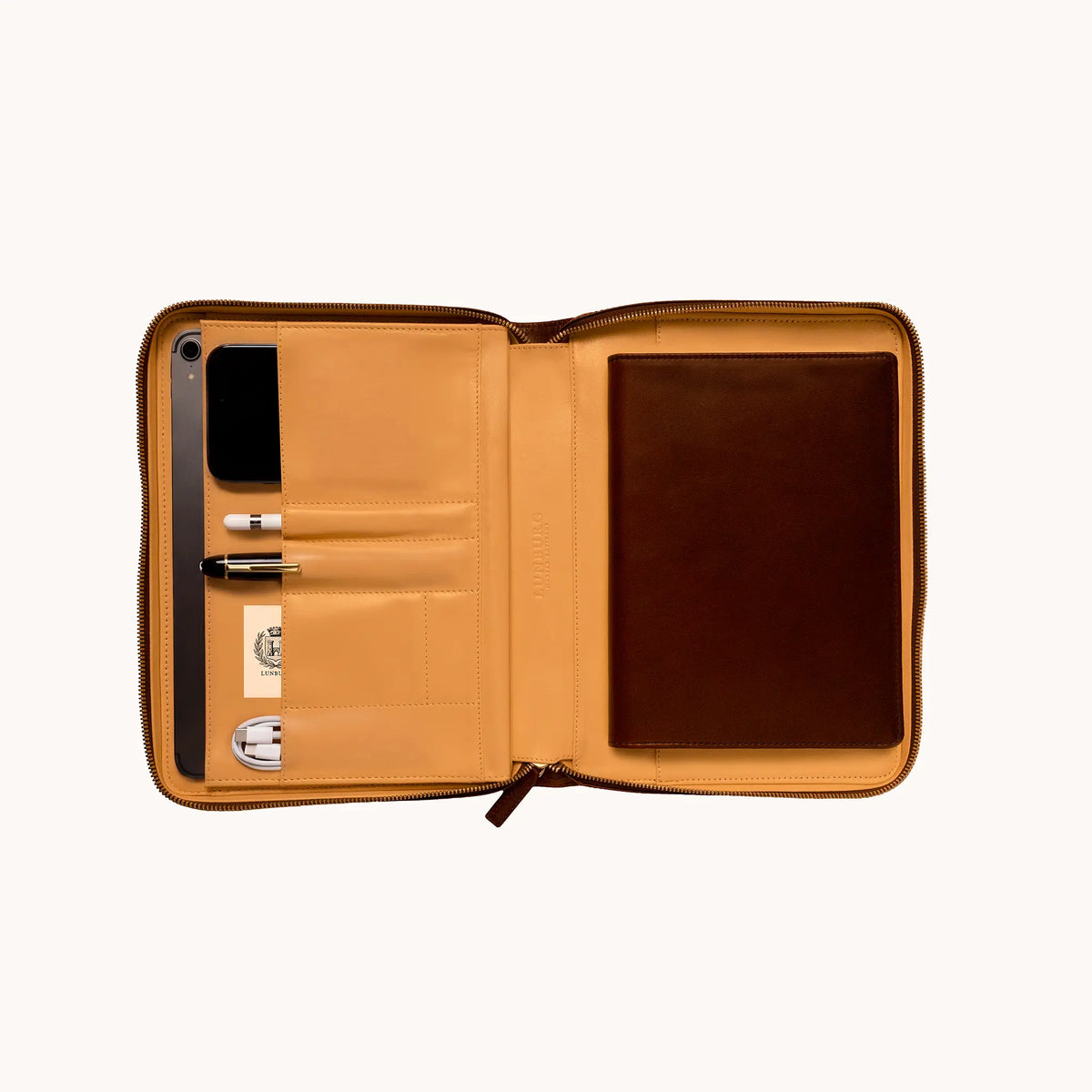
The Opus Integral
For digital-heavy workflows.
Dedicated padded compartments for laptop, tablet, documents, and accessories. One case replaces multiple organizers.
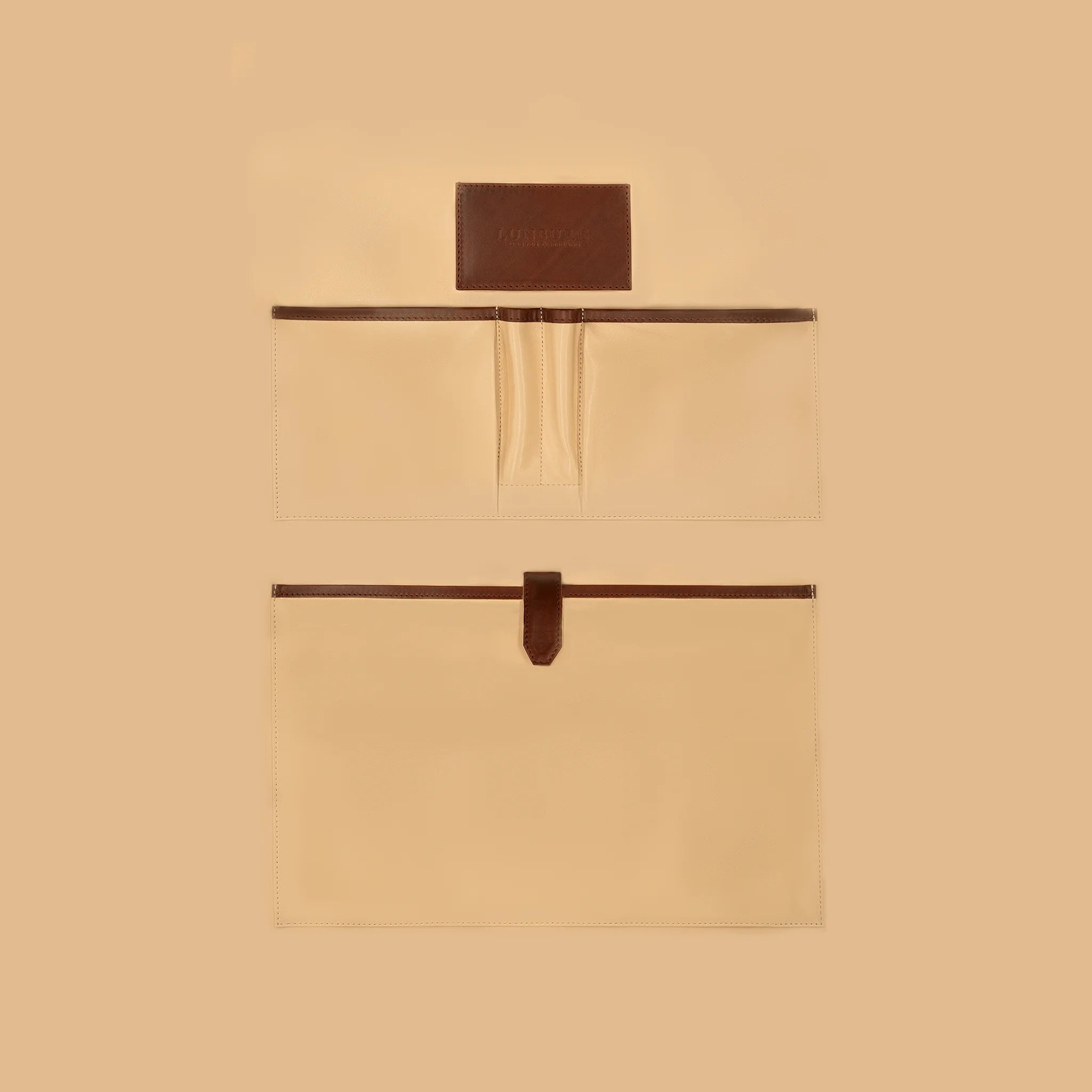
The Opus Essential
For laptop-primary professionals.
Device protection with minimal built-in pockets, and room to configure with your own organizers.
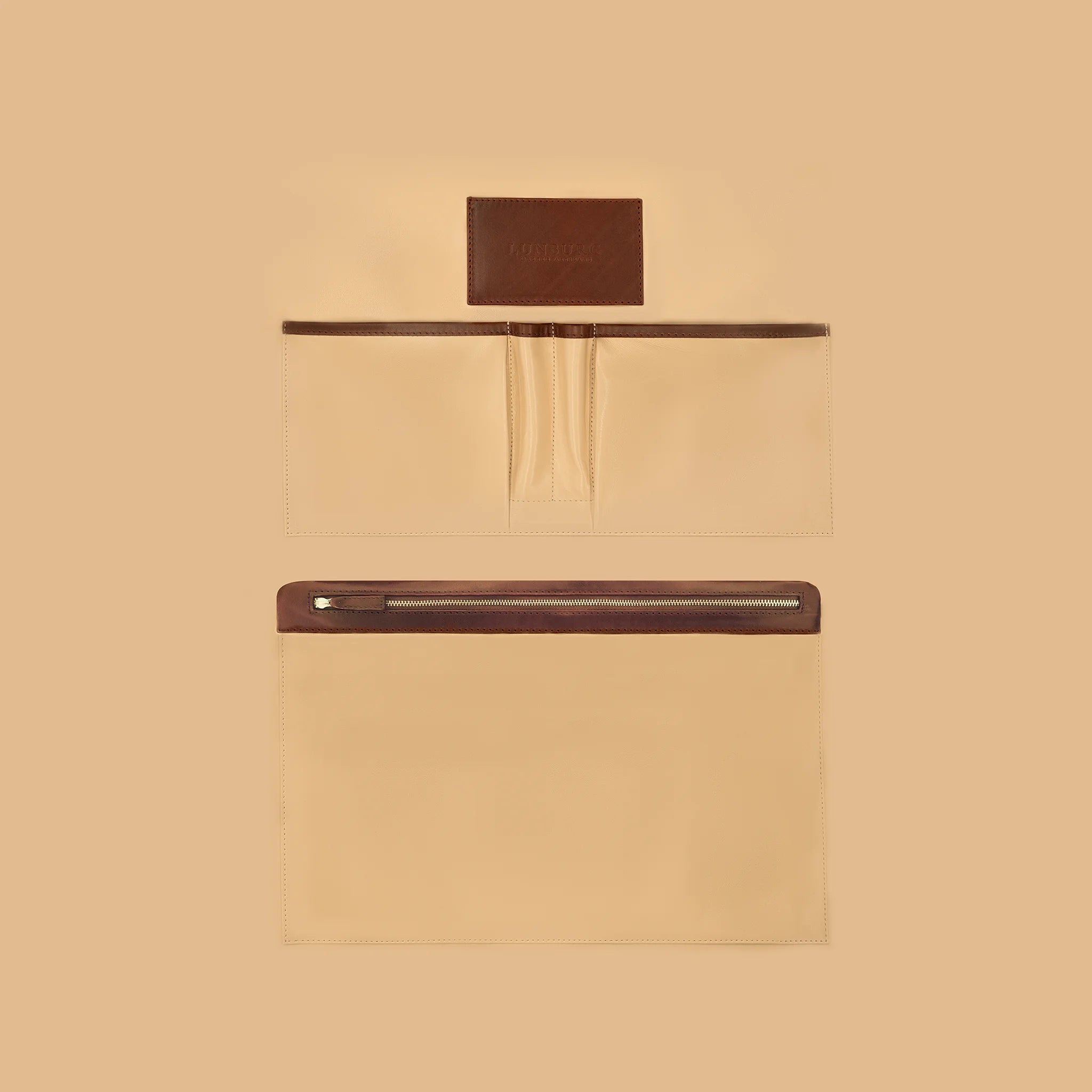
The Opus Classic
For professionals who prefer their own organizers or work in paper-heavy sectors.
Open volume with padded protection throughout.

Inspiration: Magnum Opus
Just as a numbered opus marks a composer's mature achievement, this collection marks the peak of our craft.
The magnitude of work required to align these panels restricts us to a very few examples per year.

The Art of Rempliage
The folded edge reveals no paint, no transition; only the unbroken warmth of grain folded upon grain.
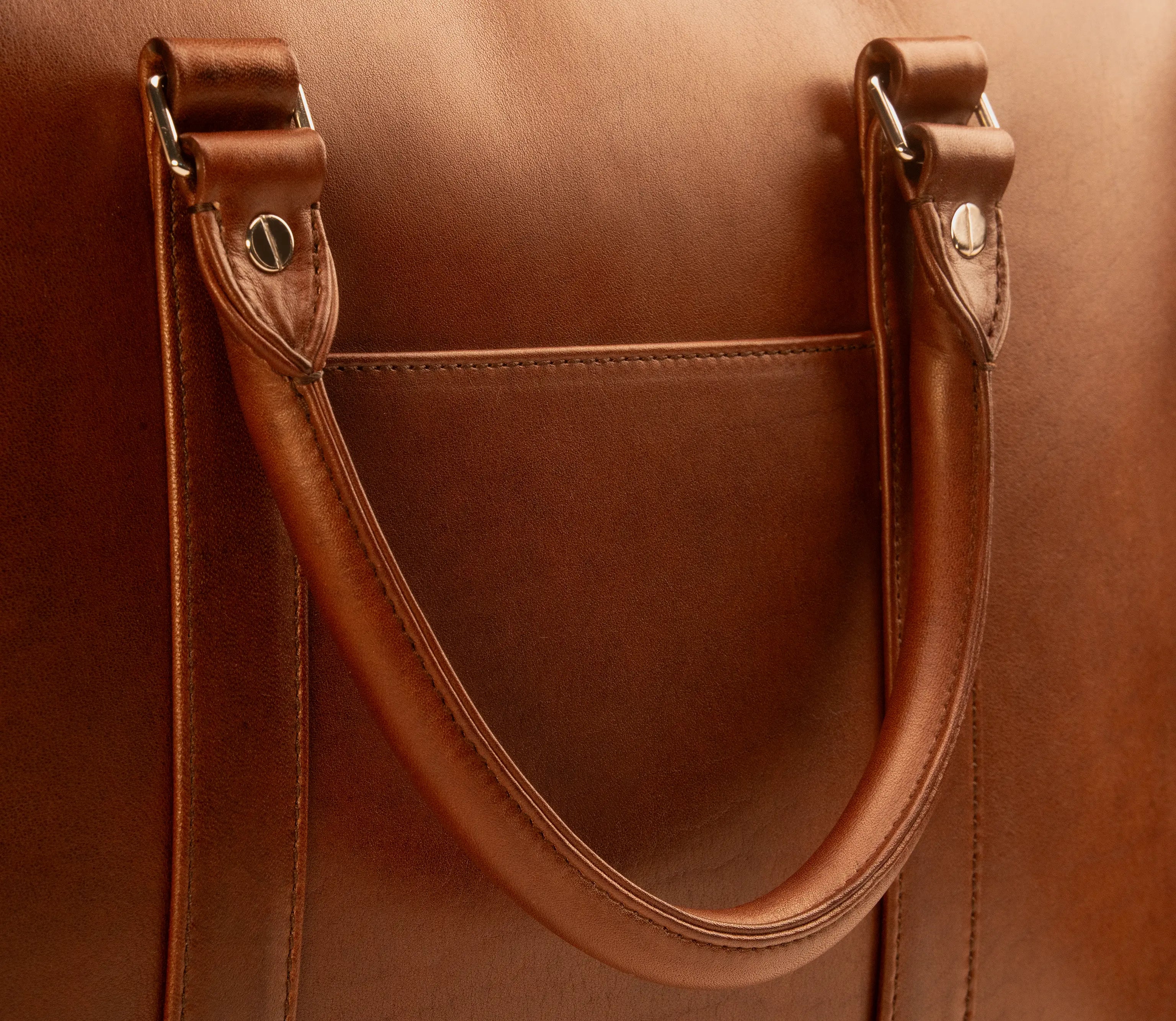
The Handle
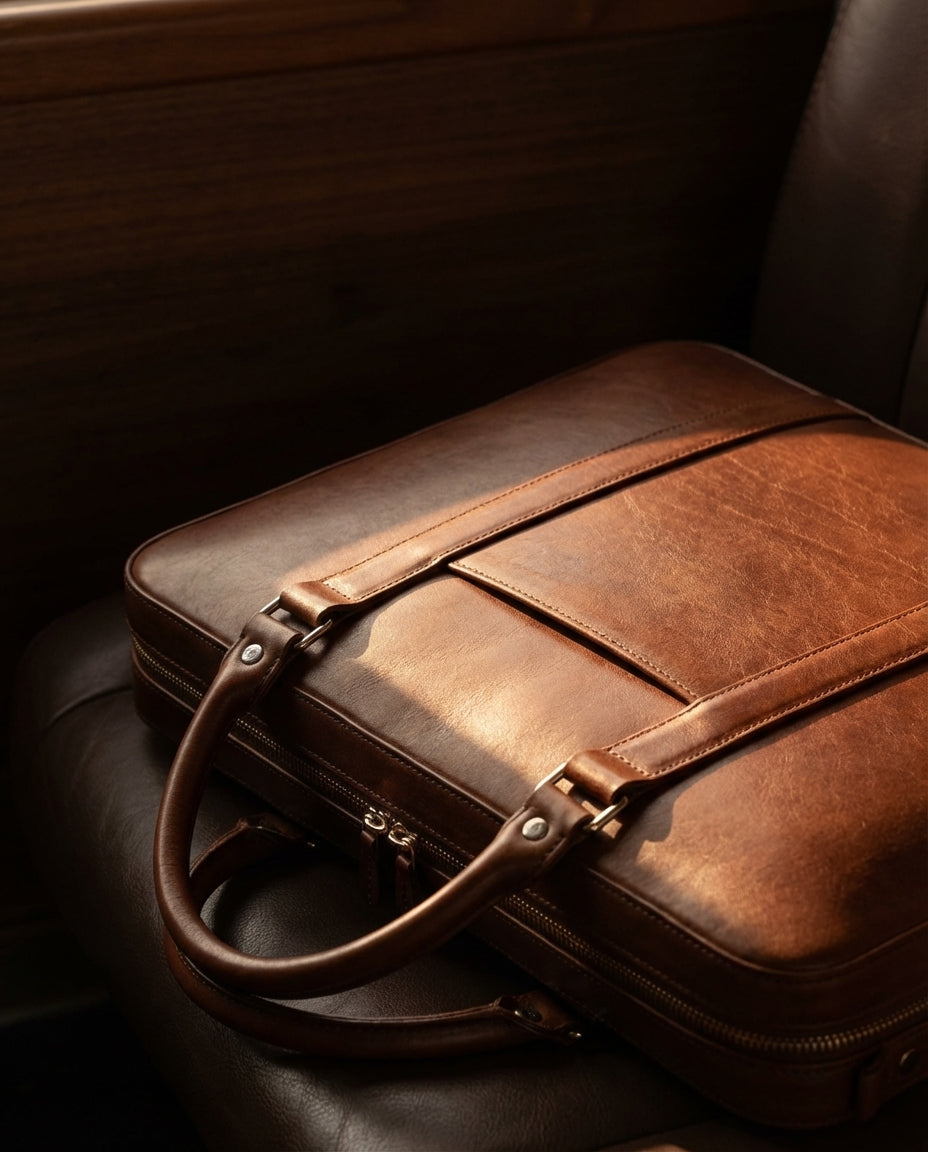
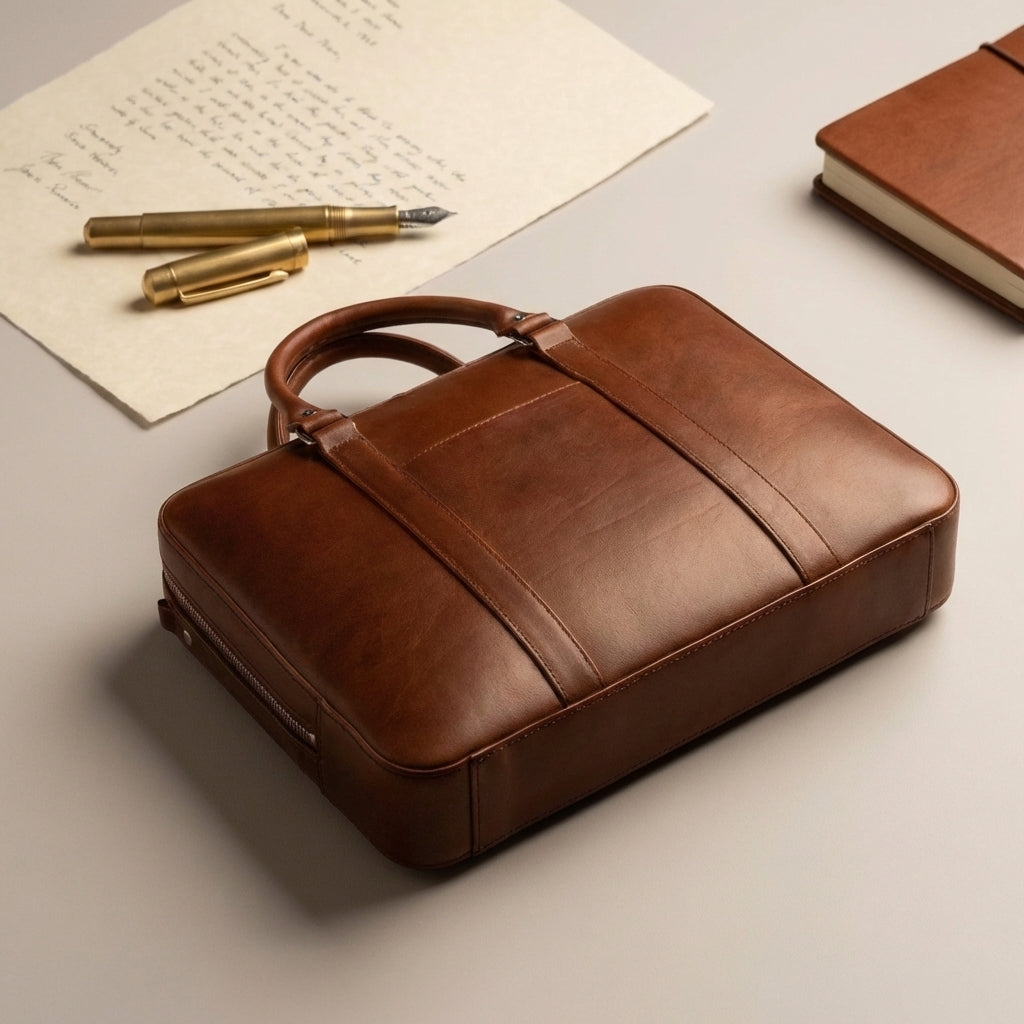
One unbroken loop of folded leather forms the handle. Designed not merely to be held, but to be felt.
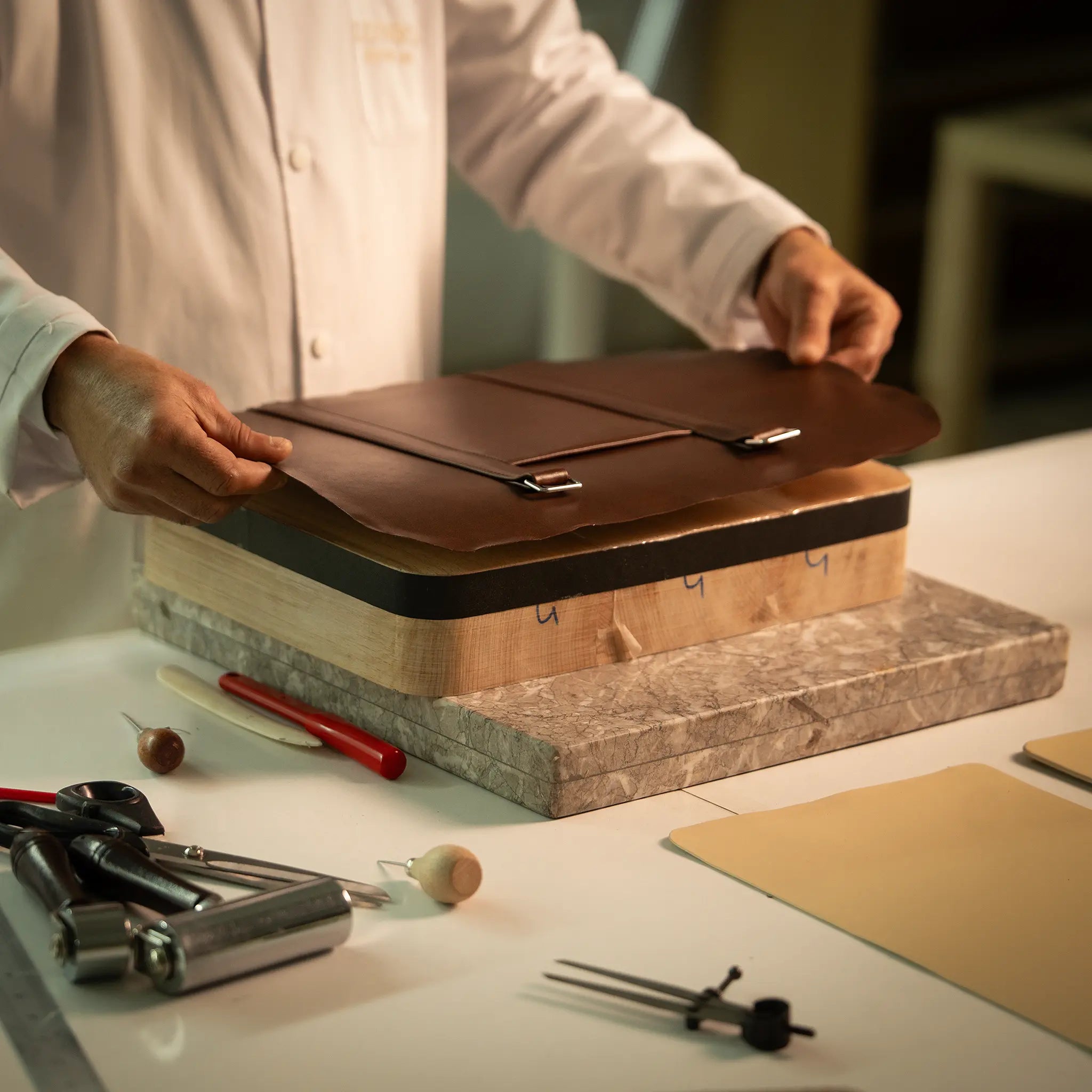
Structure That Endures
Precision layering on wooden lasts. The form holds its architecture for decades.
The Engineering
Designed using user-centric principles and extensive iterative prototyping. Every feature exists to solve a problem you encounter daily.

The Quiet Function
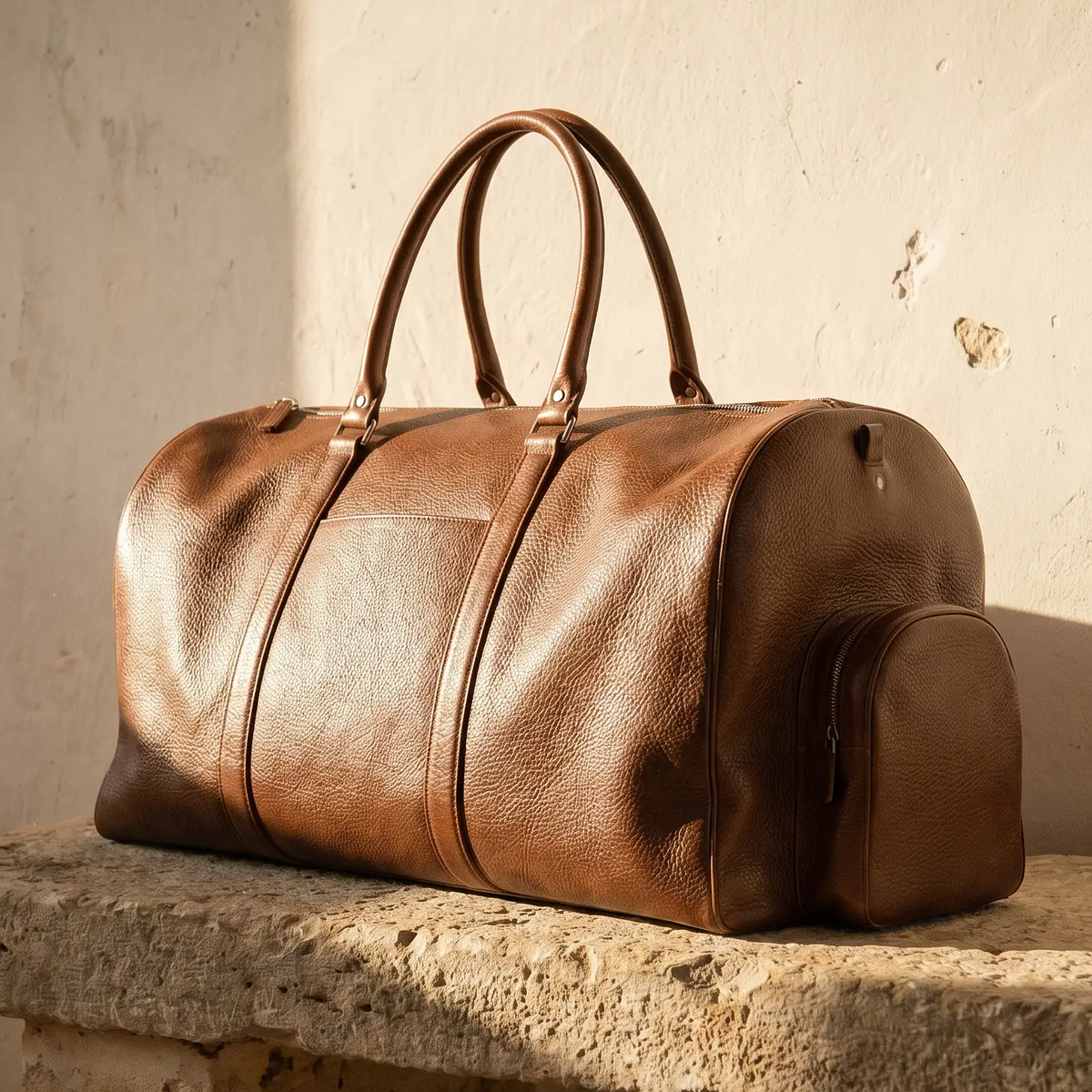
The hardware is engineered for silence. Shoulder strap attachments that eliminate metal contact. Feet that protect every surface. Enter any room without announcement.

Visibility
High-contrast, light-toned goat leather lining. Find what you need without searching.

The Master Artisan
The art of the folded edge was forged in Fes, over a millennium before Europe encountered it. Fes, one of the last few places where it can still be executed on pieces of this complexity.
No manual contains this knowledge. It lives in hands that read the hide, calculate the fold, and execute without hesitation.
It requires twenty to thirty years to master; each of our masters brings over forty.

"The result is an object no machine and few masters can produce."
Perpetual Leather
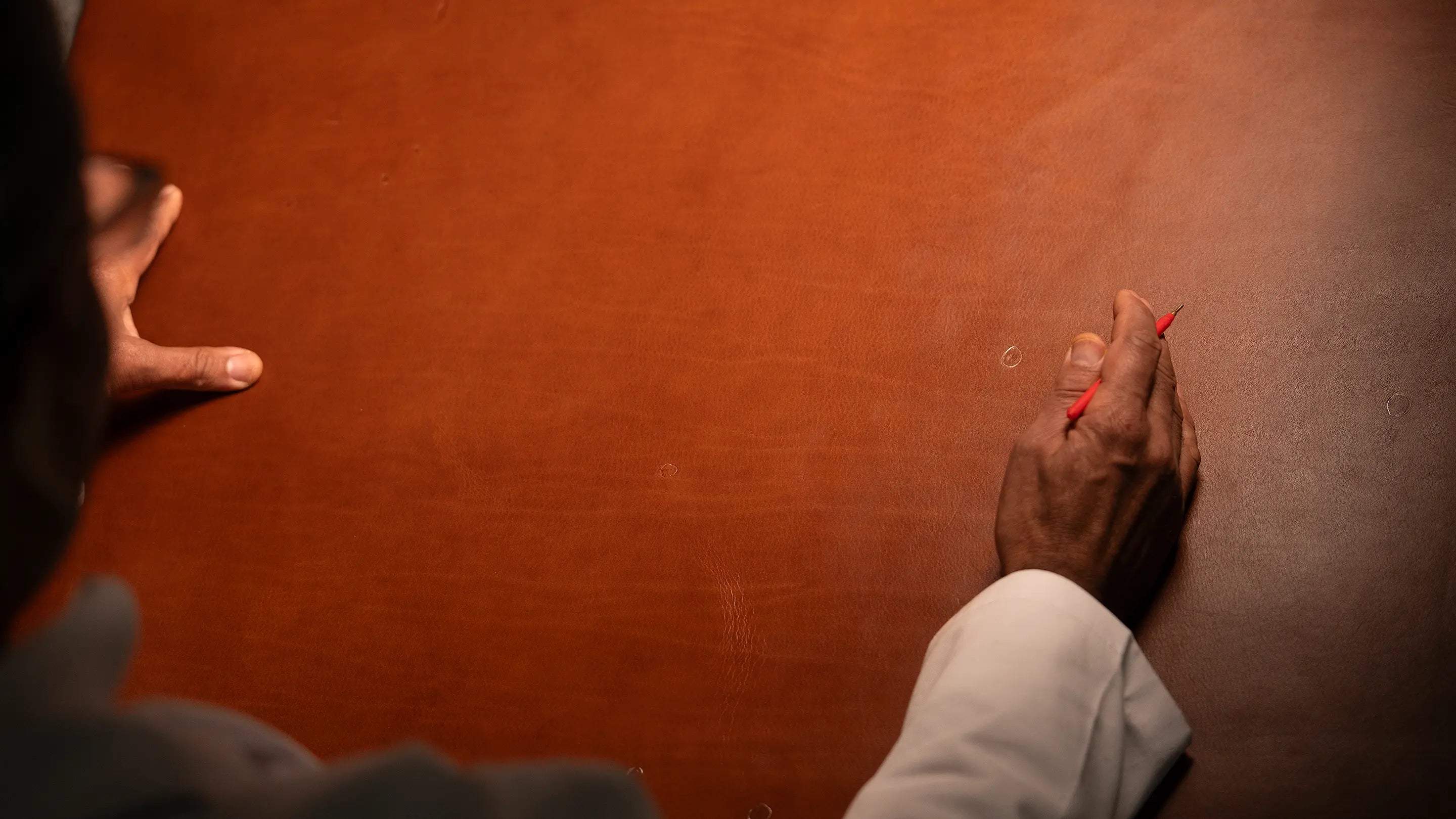
Perpetual Leather is our designation for a material engineered to mature, not degrade.
Sourced from Northern European farms, where cooler climates produce denser collagen structures. Tanned for 40 days in wooden drums at Tempesti, a Tuscan artisanal tannery founded in 1946. Chestnut and mimosa extracts build resilience that chemical processes cannot replicate.

The Fifty-Year Warranty
A fifty-year warranty is our philosophical position on permanence.
Our first instinct is always to mend, never to replace, so your patina endures.
Common Questions About the Opus Briefcase
The answer depends on where the error occurs. If a panel fails during skiving or folding, that panel is discarded and a new one must be cut, matched to the grain and colour of the original hide. If the error occurs during assembly, the consequences compound: adjacent panels already joined may need to be removed and replaced. Across 169 panels and 1,233 steps, the cumulative risk is immense. There is no undo. This is why each Opus demands a Master Artisan with a minimum of thirty years of formation. To reduce waste, we repurpose damaged panels into smaller components wherever the leather allows.
A simple seam, a piped seam, a painted edge: these are the standard methods for joining the main panels of a briefcase. An artisan with five years of experience can execute them competently. The Opus takes a fundamentally different approach.
Rempliage is applied to the main panel junctions themselves. This cannot be achieved on a flat surface. The folding and shaping of three-dimensional junctions requires forming the piece over a wooden last, against which the artisan presses and shapes each fold at every curve and angle.
Where a conventional junction exposes a cord wrapped in thin leather, an inverted stitch line, or a strip of paint, the Opus presents a clean folded edge of unbroken grain. The upper panel's edge is skived and folded back upon itself; the lower panel sits beneath it.
Each method also ages differently. A painted edge cracks and peels. A piped seam relies on multiple materials that deteriorate at different rates, eventually separating and exposing the internal cord. A Rempliage fold is the same leather as the panel. It ages as one material, developing patina rather than failure.
This refinement demands a Master Artisan with a minimum of thirty years of formation. At the Opus level, the craft and the durability are one and the same.
Before a blade touches the hide, a dedicated artisan studies the entire skin: its grain direction, density variation, and natural colour gradients. This artisan's sole responsibility is to orchestrate the panels into a composition of visual harmony. Each panel is positioned so that grain flows continuously across the exterior, colour transitions remain imperceptible, and the natural character of the hide reads as a unified surface rather than an assembly of parts. This is a compositional skill developed over decades, not a mechanical process.
The handle is built in three layers. At its core sits a full-grain leather cord that provides structural rigidity. This cord is wrapped in Poron Comfort, an orthopedic foam specified for defence applications where sustained performance under extreme conditions is non-negotiable. The entire assembly is then enclosed in Perpetual Leather through a full Rempliage handle construction, one of the most demanding executions in our atelier due to the extreme precision it requires. The leather provides the tactile warmth. The Poron delivers the comfort. The cord holds the form. Each layer is engineered for decades.
This was a founding decision. We believe an object's quality should be its own signature. The harmony of the design, the character of the leather, and the precision of the craft are the only marks of provenance required. An exterior logo would announce the brand. We prefer the work to speak for itself. Our name appears discreetly on the 316L stainless steel hardware and inside the briefcase, reserved for the custodian rather than the audience.
The positioning of saddle stitch as the ultimate expression of leather craftsmanship is a convention we do not share.
Saddle stitch is a competent and beautiful joining technique. We employ it where the construction demands it, such as areas a machine cannot reach. However, a precisely calibrated machine stitch delivers equivalent structural performance. Our artisans achieve proficiency in saddle stitch within six months. By contrast, the Rempliage construction that defines our work requires a minimum of thirty years of formation.
The distinction matters because the longevity of any leather good is not determined by how its panels are stitched together. It is determined by what happens at its edges and junctions. These are where failure begins. Paint cracks. Piped seams separate, exposing the cord beneath. These are the points that betray a piece after years of use.
Rempliage eliminates this vulnerability entirely. The edge is the leather itself. We believe this, not the stitch, is where craftsmanship reaches its highest expression.